Yvonne Moriel, a conversation at Jazzfestival Saalfelden
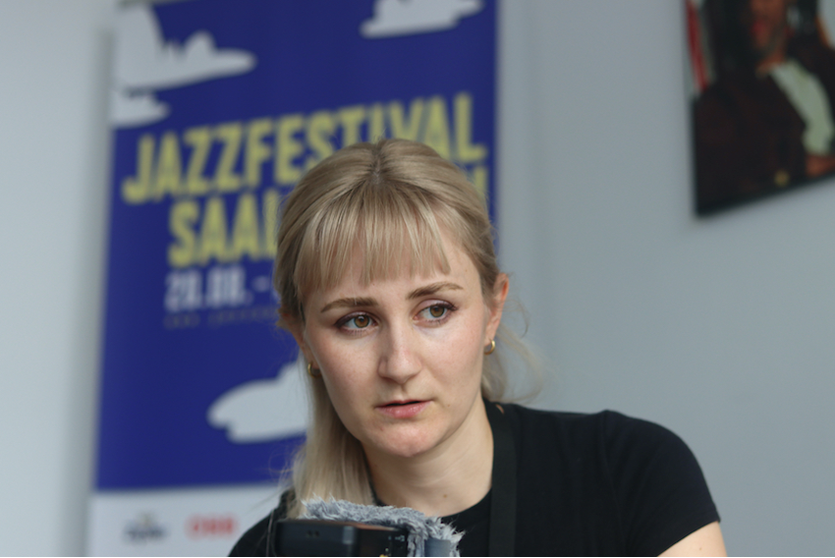
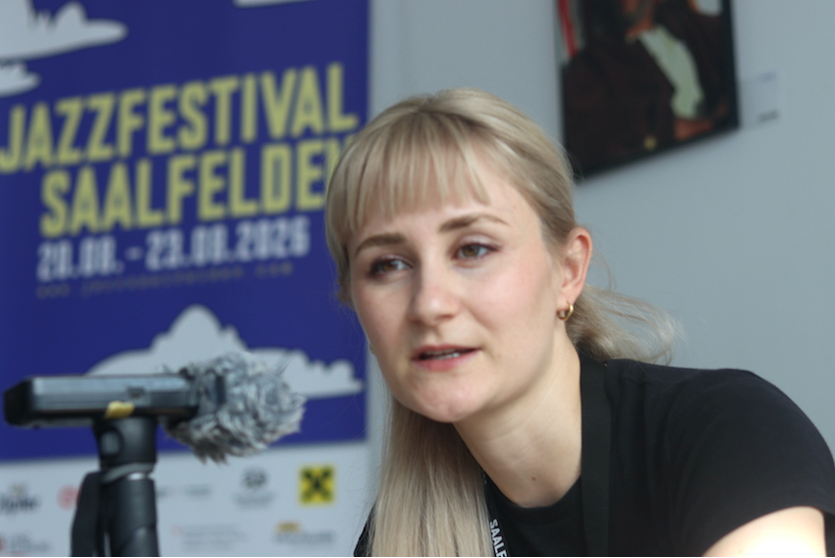
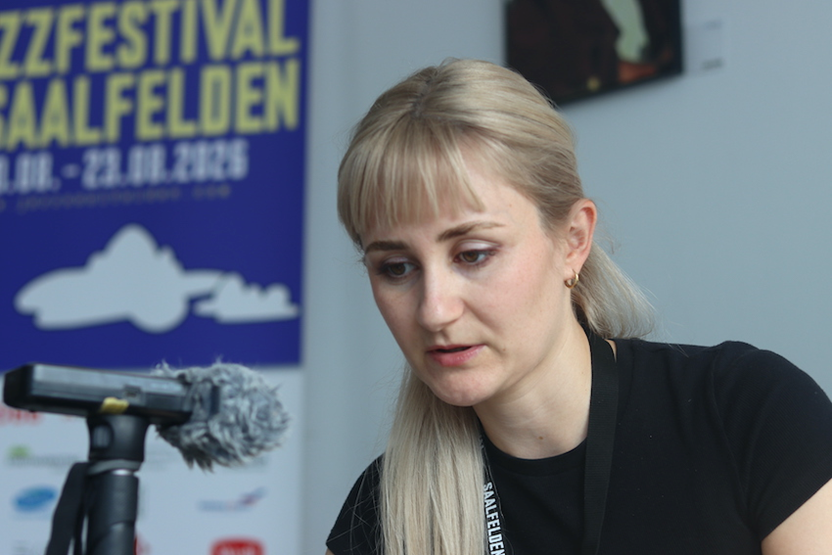
On the second day of Jazzfestival Saalfelden, Yvonne Moriel — a highly regarded Austrian musician, composer, and bandleader, and the winner of the 2024 Austrian Jazz Prize in the Newcomer category — opened the festival’s Main Stage at Congress Saalfelden.
Yvonne Moriel, who had already captivated audiences in Saalfelden in previous years, presented a commissioned work with her sextet, Strange Motion, created especially for the 46th edition of Jazzfestival Saalfelden. She invited five musicians with whom she had never played before: Antonis Anissegos on piano and keyboards, Miriam Adefris on harp, Manu Mayr on acoustic and electric bass, Toma Gouband on drums, and Max Andrzejewski on drums. Yvonne Moriel played saxophone.
I spoke with Yvonne Moriel after the concert, in the press room at Congress Saalfelden.
I’m here with Yvonne Moriel, a very young and talented musician and composer—a jewel of the Austrian jazz scene. Thank you very much for speaking with me…
Yvonne Moriel: It's a pleasure.
Yvonne, regarding your presence here in Saalfelden, this is not your first time performing at the festival. You have played avant-garde jazz and new music here. What kind of music have you performed?
Yvonne Moriel: I've played more often here.
How many times?
Yvonne Moriel: The first time I played here was in 2022, and from then on, I played each year. It was at a young age when I got the possibility to play here. I stood in for my teacher at the time, when I had already finished my master's degree, but I started with Fabian Rucker. He did the opening concert that year. I jumped in for him at Christop Cech's Jazz Orchestra. It was really amazing. I heard a lot of very new music for me at that point. That really shaped my understanding of Jazz.
You were playing very avant garde jazz, new music from Cech, what kind of music was it?
Yvonne Moriel: Christop Cech has a very special way of composing for a larger ensemble. It's a very special mixture and you can't really say it's big band music. It's kind of avant garde-ish. rockish jazz. Fabian Rucker was the first alto player for Christoph Cech. But it was at the same festival. And so he gave me the opportunity to play instead of him because he already played the opening. It was a great opportunity for me to come here for the first time. It was on the main stage with Christoph. So this was a nice start. In 2023, I got the opportunity to play here with “Sweetlife”, my own quartet, and the next year I did flash mobs, which are ten very spontaneous concerts that happened all around Saalfelden, at the craziest locations. We played up in the church tower or just somewhere in a flower shop, and I played with a lot of different people.
Fantastic. Last year, I saw you performing with Anna Tsombanis on the boat…
Yvonne Moriel: It was the same day I played with Anna Tsombanis on Sunday, I played with Christian Lillinger on drums and Alex Kranabetter and Vincent Pongracz at Gruberhaller.
You have performed several times at Jazzfestival Saalfelden since you began your career. How does it feel to open the festival with a commissioned work—your own compositions—for the 46th edition of Jazzfestival Saalfelden?
Yvonne Moriel: Yes, it's a great honour to have been chosen for this commission. I really tried to do a project that I thought could fit this special slot because it's the main stage, it's the opening of the main stage. I really gave a lot of thought about what could be a good project for this. Because they let you do whatever you want, and you get the opportunity to invite people to Saalfelden also a few days before the concert. So from Monday on we could start rehearse and I had a few ideas of projects that I could do, but I chose to do something where I had a feeling it would fit this kind of slot, very well. I brought together six, for me, very new people that I didn't know before, from all over Europe. I thought about the kind of vibe and the kind of music I wanted to do and, then we worked for four days on the music that I wrote. Then we played the concert and I was very excited how it would turn out because, if it's a new project, everything can happen. You never know. That's kind of the special thing with this commission.
Regarding the music you composed exclusively for the festival, what inspired you?
Yvonne Moriel: I have a multitude of influences, but the first thing I thought of was I would like to have two drum sets, but with not the classic two drummers playing together. I wanted to have a focus on little sounds, and have a very special way of percussive view of the music. This was my first thought and from this one, I just tried to collect some ideas and they started to grow and I went on to search for people that I thought they could fit in this idea. When I had them, I went in depth with this idea and then the music started to grow. This is how the sound evolved.
What is the message behind your compositions? What is your goal?
Yvonne Moriel: I don't want to entertain. I guess I want to say something, I want to invite people to turn off their brain in a way, do not analyze what is happening, an audience that just feels what is happening. I always hope that people can totally dive into the music. For me, the music itself is a whole package and I try to create an experience where I also can dive in and forget everything. That's always my main goal when I'm on the stage that I can forget everything and just be in the music.
You just mentioned the two drum sets. I think you explained that you wanted to create an interaction between two percussionists—an exploration or perhaps a dialogue. Is that correct?
Yvonne Moriel: Rhythm like groove and bass are two very important things for me and for this project, I was searching for two people that had a very unique kind of approaching groove. I was very curious what could happen with two people that see groove in a very special way. I decided to ask Max Andrzejewski and Toma Gouband and it was really amazing just to watch them work, I'm not a drummer, It's hard to write for drummers if you're not a drummer yourself, but I had some ideas. I told them and it was amazing for me to see what they did with it. And like I said, for me, groove is a very important part, in all of my compositions and music.
Before I move on to that subject, how has your integration into “Shake Stew” developed since Astrid left the band and you joined? Has playing with Niki and Herbert provided some kind of inspiration or direction, or has it simply created a desire to explore those ideas in this project, “Strange Motion”?
Yvonne Moriel: It's called “Strange Motion” but it didn't have any influence. It was quite funny because now it seems kind of obvious, but I wasn't thinking about all that, because I also was asked if I wanted to do the commission, the opening, before I was asked to join “Shake Stew”, and this was one of my earliest ideas to have two drum sets and I also always pictured it not as two drum sets and drummers that play drums together, which is the kind of approach “Shake Stew” has. I always had in mind that I wanted more of this percussive and sound digging part and not just the focus on two drummers that do the grooves together.
Max, for example, also plays synthesizer at the same time when he does drumming. He also experiments a lot with different little percussive stuff. And Toma, has an own way of playing drums. He uses his own instruments. He doesn't even use a drum set. He has a lot of leaves and little phones. So he works with rocks and stones and natural stuff.
This is what I had in mind. So it was more rhythm, but it was not classic drum set playing. “Shake Stew” also has two drums, but that was not related in my thinking. It's the ten year anniversary of “Shake Stew”. So I also think it comes up a few times, but I also love playing with Niki and Herbert. They have such a strong energy. It's really a pleasure to play with them.
You just mentioned how you put Strange Motion together. You said that you did not know the musicians beforehand. How did you find them and decide that you wanted to bring them into the project? How did you contact them, and how did it all come together?
Yvonne Moriel: I really wanted to use this opportunity to find new people, to work with people I've never played with before and bring together a totally new group of musicians. So I thought, “okay, I will just listen to a lot of music”. I was asking people "Ah, tell me what kind of drummers or what kind of pianists do you like?" I was asking people a lot of questions. I was listening to a lot of music on YouTube, on Instagram and I was just trying to find new people. Then I just wrote them or called them, and told them who I was and what I was planning. And every single one of them was immediately in.
Fantastic. Did they already know you as a musician?
Yvonne Moriel: I don't think so. I think Manu Mayr, whom I knew before, he's also from Vienna, and Max Andrzejewski had heard of me because he knows Johannes Schleiermacher and Lukas Kranzelbinder from Shake Stew quite well. But I think, he had only heard of me, and the other ones didn't know me. Toma Gouband didn't know me at all. He's French. Miriam Adefris grew up in Austria, but she lives in in London for quite some time now. Antonis Anissegos is Greek, but I think he also lives in Berlin now.
There is a very rich combination of cultures and musical backgrounds in the group. What is your highlight from having performed at Jazzfestival Saalfelden so many times? Do you have a specific memory or moment that has remained especially vivid for you?
Yvonne Moriel: Well, all the projects I did here were very special for me. Of course, the opening this year, was the biggest one and if I would have to choose one, I think the opening would be the one that had the most impact on me.
Let’s look at your past as a musician. How did you discover that you wanted to become a musician, and when did that happen? What was your first instrument? Was it always the saxophone? What kind of music did you play, and what influences shaped your early steps? Which musicians influenced you at the beginning?
Yvonne Moriel: I come from a family where nobody is a musician or plays music. I was drawn to music very early on. My mom loves the arts in general, and she gave me the opportunity to try out a lot of things and also gave me the opportunity to have early musical education. I played the flute and I started to play the piano when I was six. I started playing the saxophone when I was eight. I was born in Innsbruck, but I grew up in Wattens. A few years after I started to play the saxophone, I started to play the double bass. And I grew up with classical music.
I did all of my instruments in classical music and I also received very early classical education at the conservatory in Innsbruck. Then I started to study classical saxophone and classical double bass at Mozarteum and at Anton Bruckner University in Linz. But after my Matura, I was not sure if this was going to be my profession. I loved music, but I wasn't in an environment of musicians. And my school wasn't like a gymnasium or something that special that focused on music. So I started to study medicine and there was a time where I lost the connection to music a little bit, but funnily enough, during my medical studies, I had a very random encounter with Jazz, and I discovered that this was a kind of music that I really enjoyed doing. I started to work more or just trying to learn this kind of music and this changed a lot. In 2019, I decided to become a jazz musician.
You won the Austrian Jazz Prize in the Newcomer category in 2024, correct?
Yvonne Moriel: In December 2024.
How does it feel to be so young and to have won this award? Was Sweetlife the project that brought you there?
Yvonne Moriel: No. I got the “Best Newcomer”, it was the first time that the Austrian Jazz Prize was given and of course it's a huge honour to get the first one. I was very happy about it.
Speaking of the Austrian jazz scene, you are very familiar with it because you are Austrian and frequently perform with Austrian musicians. You have also performed in my country, Mexico, as well as in Italy. In fact, you represented Austria at EuroJazz last year in Mexico…
Yvonne Moriel: We played three concerts in Mexico including the Euro Jazz Festival. All three concerts were amazing. I think the Mexican people are wonderful. They were very attentive and they gave us a lot of energy, which reflects, of course, in the music that we can give back. It was such a special experience. I loved playing there.
Were you performing with Sweetlife?
Yvonne Moriel: Yes.
You have also performed in the Big Apple. How does it feel to play in such a mecca of jazz?
Yvonne Moriel: It was very special. We played in Washington, D.C. and in New York, it was kind of surreal, but amazing. That was very special. I really appreciated it.
Regarding audiences in New York City, Mexico, and Austria, what are the differences? How would you describe these three audiences?
Yvonne Moriel: I don't want to compare because the audiences can change so much in a country, just like each concert can be totally different. But for me, the Mexican audience really stood out. It's not very often that you feel such an openness and appreciation for your music. Also very often it happens that I'm not sure what people are thinking during the concert, and afterwards they come to me and tell me it was amazing, But with Mexican audiences, they show you in the moment, and they give you the energy in the moment, which is very special. That was very cool.
You are Austrian, you play with Austrian musicians, and you have also performed abroad, so you have a broad perspective. I have a two-part question. How do you think the Austrian jazz scene will evolve and develop? Do you believe there is a characteristic that allows us to speak of “Austrian jazz”? If so, what makes it different from, for example, Nordic jazz? Without putting labels on it, of course, do you think a distinctive identity is emerging in Austria?
Yvonne Moriel: It's maybe easier to see it from the outside if you're not Austrian. But for me, there is not one Austrian sound of jazz. There are some great artists here and there are people that also go out and play with different international artists and try out different stuff and dare to do unusual things. I find this very cool. This is a way of how I also try to make music. I can't say that there is one Austrian sound of music.
When you said, “the way I try to make music,” it was easy to understand what you meant. Your music has a very distinctive sound and goes beyond traditional jazz and the conventional integration of instruments. You also use very complex rhythmic structures. I am not a musician, but it is easy to hear how you integrate electronics into your music. Why do you explore that area? Is it because your generation has been strongly influenced by electronic music, or is there another reason?
Yvonne Moriel: I see this as a way of expanding existing sound possibilities. I try to combine acoustic sounds and I also work on a lot of special techniques on the saxophone where you can do different kinds of sounds on the instrument itself. I work on this and I also try to expand my sound via electronics, this gives you the opportunity of just create new ideas, and stay curious. So this is, I think where this comes from.
With your Sweetlife Quartet project, what brought you to that music? Where did the name come from? And regarding Strange Motion, why did you choose that name? You also have another project that I tried to hear at the Kultursommer Wien Festival, but unfortunately, I couldn’t attend. Could you tell us about it?
Yvonne Moriel: Sweetlife is the first project I did, I started working on some own music during Corona, together with Lukas Klement and Ross Stanciu because I just wanted to create a project with a very special sound. And this is how we created Sweetlife. There is a first EP that we released. But it's not what the project Sweetlife is now, but it was the basis, and then I had the music and I wanted to do a live take of this music. I started to play with Stephanie Weninger (Moog and keyboards) and Raphael Vorraber on drums. I wanted a sound where I had a bass synthesizer and keys played by one person, so that the core of the project was just a trio.
We started to just work on the existing music and try different arrangements and find the live sound. Then we tried different approaches to have a fourth person. And here at Jazzfestival Saalfelden, we play with Lorenz Widauer the first time, he's a trumpet player. And after this, we decided that this was a nice lineup because somehow it has a bit of the classic jazz quintet, but with a modern touch on it, without double bass, but with Moog synthesizer. This was how the live project SweetLife was created. We recorded an EP in 2024 and an album in 2025.
And in 2024, I was asked by Vincent Pongracz, who has a an amazing concert series in Vienna called Synesthetic Wednesday, if I would like to curate it with him for the year 2024. And we did nine different concerts and we tried to find new constellations that we could try out there. The band you mentioned is called "Nothing Causes Anything". This was one of those projects we did, and we were just trying out different things. This project is with Vincent Pongracz on the bass clarinet. He plays the bass on the bass clarinet, and we have Alex Kranabetter. He's a trumpet player, and he has a grained sound, there's a lot of noise stuff and he has a special way to play the trumpet, with a lot of electronics and very special effects. He's great.
And then we also had drums and we did 40 minute sets at this concert series and it felt really good. I enjoyed working with Vincent in general. Afterwards it just happened that we were asked for another gig and then we continued to play. We also played in Saalfelden and it just happened that we continued to work together, but we didn't record yet. I hope to record very soon. It's a lot of fun.
Strange Motion, like I said, was created for this special opening of Jazzfestival Saalfelden. I created it just for this occasion, but I would love to dig in more because it felt really nice to work with these people. I would love to dig in deeper and see what can happen. I did the composing and a lot of thinking before, I started in January to think about stuff and also asked the people. Then I had a little of time where I was doing a bit of creative, uh, searching and stuff. But in June and July, those were the months where I really worked on the project.
What have been your experiences, impressions, and highlights since joining Shake Stew, this fantastic rock-star jazz band? What has it been like to perform with them, particularly during yesterday’s concert here in Saalfelden?
Yvonne Moriel: It's a very special band and it's very cool to be part of Shake Stew. It's very interesting, though, to join a group of people that have worked together before for such a long time… It's their tenth anniversary and I joined them last year for their, I think 10th album. So they are very active. Somehow it felt very natural for me to join them. I think we instantly had a very good connection. I really loved the people that play there. We had a lot of amazing experiences and concerts. Only now in this short time already.
And what about the concert in Vienna?
Yvonne Moriel: We just played a very, very crazy show, at the Vienna Popfest, where we were the headliner in front of, I think, ten thousand people. And it was an experiment, but it was really cool. I loved it. We are going to play in Elbphilharmonie Hamburg, for example, now in December. So it's very extreme the range of experiences you can make with this band. It's pleasure to play with them.
Regarding yesterday’s concert, how did you feel about it and the audience’s reaction? It took place in Stadtpark, which is the popular part of the festival, correct?
Yvonne Moriel: I got a lot of very good feedback. It was quite a spectacle and a very crazy project. But I think that's Lukas his thing, to do crazy projects. This always gives the possibility for very special things to happen. Yesterday was a very special moment. Things like this don't happen every day. I love to do a little bit of crazy stuff.
Have you ever performed in Belgium?
Yvonne Moriel: I've never played in Belgium. I would love to come there. One thing that I really love about this job is the possibility to explore new countries and new cities, the scenes and the audiences there. This is a huge privilege for me to be able to get to know so many new surroundings. It's stressful to be on the road all the time, but I love it and I would love also to experience the Belgian look on jazz and how people react to my music. That would be amazing.
Interview and photos © Federico Garcia, 2026
Other
In case you LIKE us, please click here:

Foto © Leentje Arnouts
"WAGON JAZZ"
cycle d’interviews réalisées
par Georges Tonla Briquet

our partners:






Luchthavenvervoer zonder stress
Hotel-Brasserie
Markt 2 - 8820 TORHOUT
Silvère Mansis
(10.9.1944 - 22.4.2018)
foto © Dirck Brysse
Rik Bevernage
(19.4.1954 - 6.3.2018)
foto © Stefe Jiroflée
Philippe Schoonbrood
(24.5.1957-30.5.2020)
foto © Dominique Houcmant
Claude Loxhay
(18.2.1947 – 2.11.2023)
foto © Marie Gilon
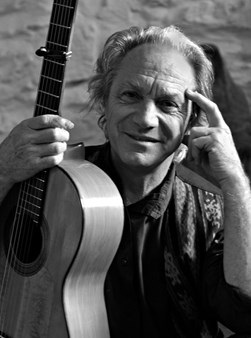
Pedro Soler
(8.6.1938 – 3.8.2024)
foto © Jacky Lepage
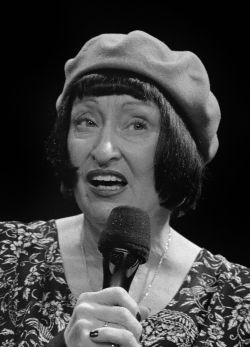
Sheila Jordan
(18.11.1928 – 11.8.2025)
foto © Jacky Lepage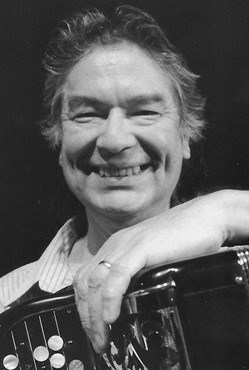
Raúl Barboza
(22.5.1938 - 27.8.2025)
foto © Jacky Lepage
Special thanks to our photographers:
Petra Beckers
Ron Beenen
Annie Boedt
Klaas Boelen
Henning Bolte
Serge Braem
Cedric Craps
Luca A. d'Agostino
Christian Deblanc
Philippe De Cleen
Paul De Cloedt
Cindy De Kuyper
Koen Deleu
Ferdinand Dupuis-Panther
Palma Fiacco
Anne Fishburn
Federico Garcia
Jeroen Goddemaer
Robert Hansenne
Serge Heimlich
Dominique Houcmant
Stefe Jiroflée
Herman Klaassen
Philippe Klein
Jos L. Knaepen
Tom Leentjes
Hugo Lefèvre
Jacky Lepage
Olivier Lestoquoit
Eric Malfait
Simas Martinonis
Nina Contini Melis
Anne Panther
France Paquay
Francesca Patella
Quentin Perot
Jean-Jacques Pussiau
Arnold Reyngoudt
Jean Schoubs
Willy Schuyten
Louise Stubbe
Frank Tafuri
Jean-Pierre Tillaert
Tom Vanbesien
Jef Vandebroek
Jean-Marie Vandelannoitte
Geert Vandepoele
Guy Van de Poel
Cees van de Ven
Donata van de Ven
Maurits van Hout
Harry van Kesteren
Geert Vanoverschelde
Roger Vantilt
Patrick Van Vlerken
Marie-Anne Ver Eecke
Karine Vergauwen
Frank Verlinden
Jan Vernieuwe
Anders Vranken
Didier Wagner
and to our writers:
Mischa Andriessen
Robin Arends
Marleen Arnouts
Werner Barth
José Bedeur
Henning Bolte
Paul Braem
Erik Carrette
Danny De Bock
Denis Desassis
Jean-Pierre Devresse
Pierre Dulieu
Ferdinand Dupuis-Panther
Federico Garcia
Paul Godderis
Stephen Godsall
Jean-Pierre Goffin
Claudy Jalet
Chris Joris
Bernard Lefèvre
Mathilde Löffler
Claude Loxhay
Ieva Pakalniškytė
Anne Panther
Etienne Payen
Quentin Perot
Jacques Prouvost
Jempi Samyn
Renato Sclaunich
Yves « JB » Tassin
Herman te Loo
Eric Therer
Georges Tonla Briquet
Henri Vandenberghe
Jean-Jacques Vandenbroucke
Peter Van De Vijvere
Iwein Van Malderen
Jan Van Stichel
Olivier Verhelst