Shabnam Parvaresh, a conversation at Jazzfestival Saalfelden 46
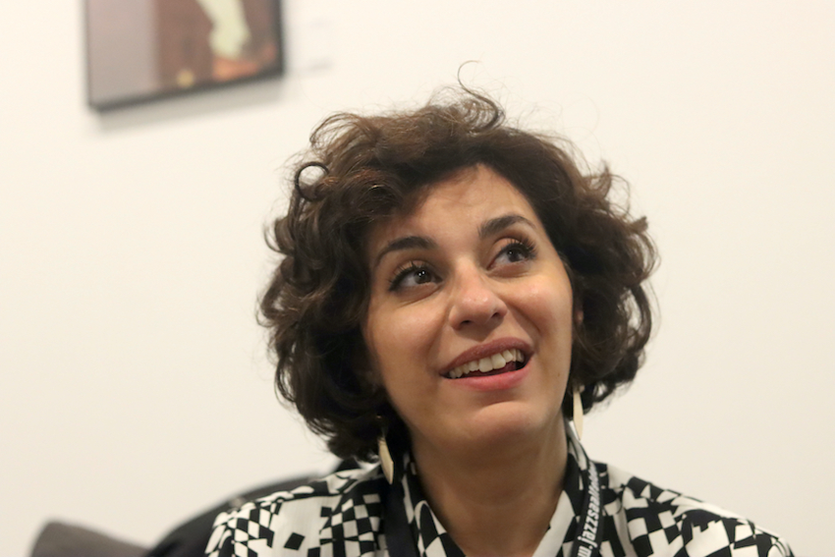
After her impressive concert with the Sheen Trio, I had a delightful conversation with Shabnam Parvaresh, an Iranian musician, composer, and bandleader. She performed with the Sheen Trio on the Main Stage at the Congress Saalfelden on the third day of Jazzfestival Saalfelden 46, Saturday, August 22, 2026.
Shabnam Parvaresh, the founder of the Sheen Trio, plays bass clarinet and clarinet. Together with Australian guitarist Ula Martyn-Ellis and German drummer Philipp Buck, she delivered a marvelous performance featuring music from the trio’s debut album, “Gozar”, as well as their new album, “Transitory”.
Shabnam Parvaresh, you are a fantastic musician. You were born in Tehran, Iran, and have lived in Europe since 2014, when you came to study clarinet. You play both the bass clarinet and the clarinet…
Shabnam Parvaresh: I also play the flute.
Let's talk initially about your presence in this fantastic Jazzfestival. How did you feel playing on this great stage they have at the Congress Saalfelden? Is this your first time in Saalfelden?
Shabnam Parvaresh: Yes, it is my first time in Saalfelden and it was a dream to play in this festival. I've always seen videos and photos from here. It was such an honour to play on the main stage. I also said it at the concert. We were very much touched and honoured to play on this stage with such a history. Fantastic festival.
Fantastic musicians…
Shabnam Parvaresh: Yes.
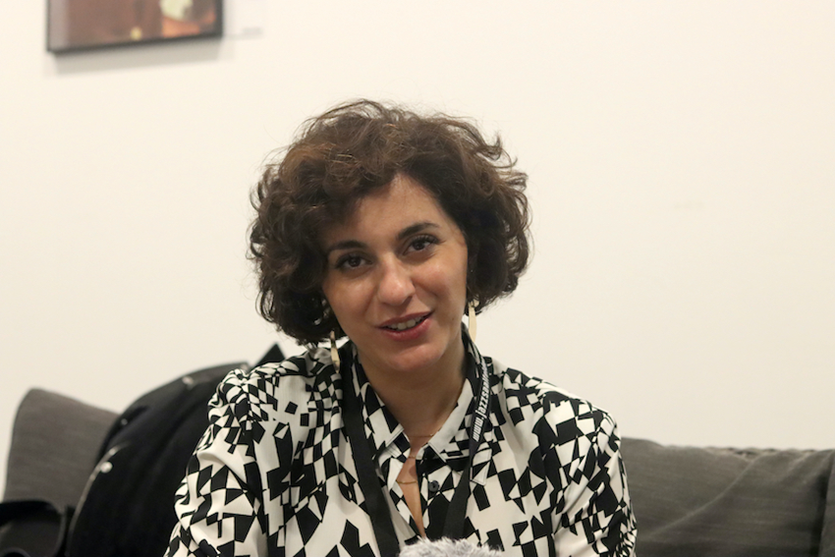
Your trio, Sheen Trio, is amazing. If I’m not mistaken, you presented “Transitory”, your latest album, which was released this year…
Shabnam Parvaresh: Well it came 30th of January 2026 on Unit records.
What inspired the name Sheen Trio?
Shabnam Parvaresh: My name is Shabnam. Shee is the 16th alphabet in Persian language. So it's a Sheen trio.
How and where did you meet the other musicians? You have Ula Martyn-Ellis on guitar and Philipp Buck on drums. Where are they from, and when did you meet?
Shabnam Parvaresh: Ula Martyn-Ellis comes from Australia and she's in Germany since, I think she was ten years old or eight years old. I'm not sure. Philipp Buck is German, and we all met in Osnabrück, actually. We all studied in Institute for Music, in Osnabrück. We all studied jazz in different years, of course. But then we became friends and we played and I felt the energy and thought we could do a band together.
You founded the Sheen Trio in 2019, is that correct?
Shabnam Parvaresh: End of 2019. So our first concert was in 2020 and it was just shortly before Corona. So, it's a Corona band actually (laughter). It's such a long way since we released two albums. “Gozar” was published by Berthold Records and the second one, "Transitory", by Unit records.
Do you have a preference between the two albums?
Shabnam Parvaresh: Yes, the second one.
Why?
Shabnam Parvaresh: Well, many things because Ula joined us, very shortly before we recorded the album. I had another guitar player in the band, but it didn't work out. So, we just played one concert and then we went to the studio. I really like it that the pieces are not mature, but they are very honest, but "Transitory" I feel like we have found our language together, and there is a sense of trust because this music, what we do, we take risks, we play every time differently. There are so many parts that are free improvisations and so we don't really know where it's going to take us, but this is for me music: to be able to risk things and to try new things. So it will be alive and we won't get tired of it, at some point. Every time it’s new.
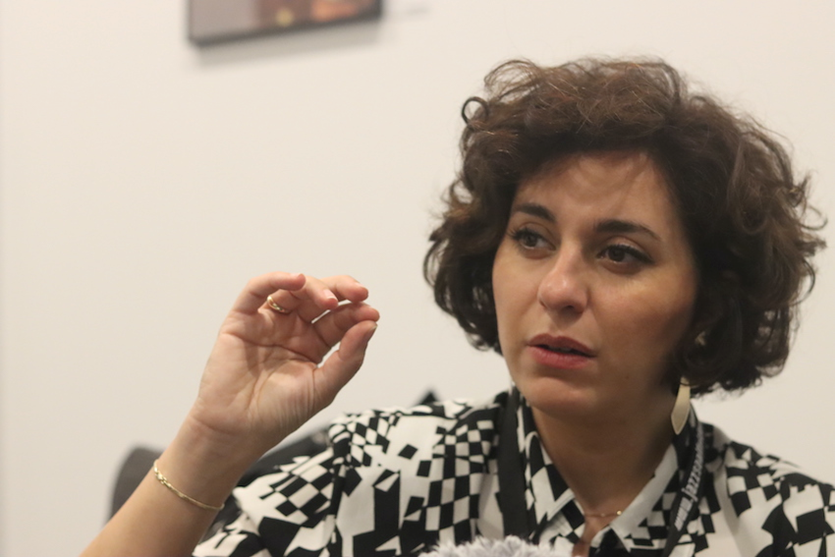
When you went into the studio to record, was the music also improvised at that moment?
Shabnam Parvaresh: Yes. There are some parts that are written, but some parts are completely free improvisation.
Is that where the title “Transitory” came from, or what inspired the title?
Shabnam Parvaresh: The idea comes from the situation that we're living in at the moment. Our world is changing so fast. There are so many things happening around the world. Also in my country, you get up every day in the morning and you just go through the news and it's like, you don't know where to go with it. It's frustrating to know that sometimes you have no control. It's about this frustration, about the changes about the fast transitions that we are seeing in our world now.
The album seems to reflect on our society and our so-called civilized world—and on humanity in general…
Shabnam Parvaresh: Exactly.
It is very sad. I wouldn’t necessarily go there myself, but perhaps we can explore that subject together if we have enough time…
Shabnam Parvaresh: Yes.
Regarding the inspiration behind the compositions: they are very free and constantly evolving. I’m not sure whether that is the right way to describe them, because there is still a foundation—perhaps a sense of harmony or structure. I’m not a musician, so I may not have the right vocabulary…
Shabnam Parvaresh: No problem (laughter). So it's very different. There are many melodies, there are many rhythms. Sometimes there are harmonies and, it's a mixture of everything. So you can find anything in the music that we are playing.
What happened when you were at the studio, there was a mood. There was a moment. Now you were in front of an amazing audience that loves discovering…
Shabnam Parvaresh: Absolutely.
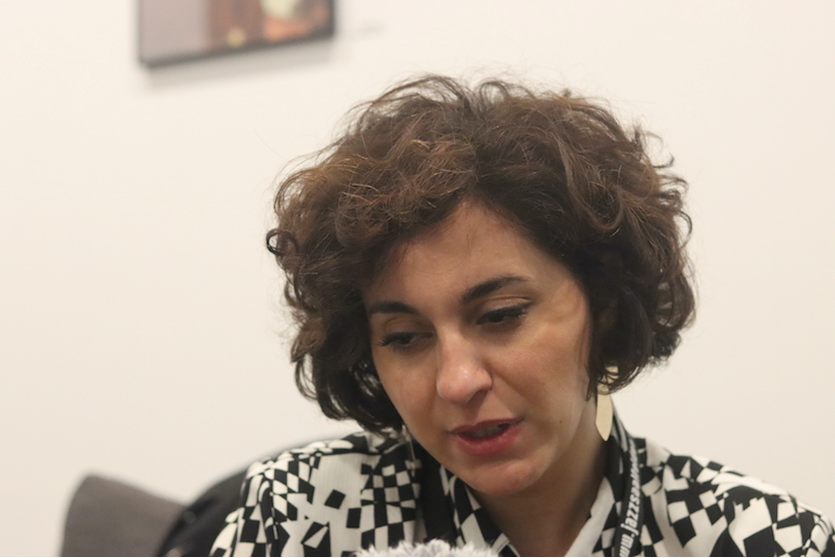
And I believe that the kind of people coming here are very educated, musically speaking and very respectful and grateful...
Shabnam Parvaresh: Absolutely. We all felt the incredible positive energy from the audience. This is such an amazing moment when you feel that, because I find it always like, you give something, but what you get it is even more. And, this, giving and receiving, it goes on and on in a circle and that's also what makes music more alive. I think it's such a beautiful moment.
Did the lights, the poster behind you, the atmosphere, or the spirit of the festival itself influence your music today?
Shabnam Parvaresh: Of course (laughter). The atmosphere always helps, but I think the most important thing is the energy of the audience. That's such an incredible feeling. You feel it immediately when you're on the stage. And of course, in Saalfelden, I also said it in the concert that it's really such an honour to play in such a place with so much history. I've seen my heroes playing on this stage. So, we also felt the pressure of course. But, we’re incredibly honoured.
It was a fantastic concert. Is there anything I may have missed—something you would like to express? Regarding the compositions, you mentioned that they are created as a team. How does that collaborative process work?
Shabnam Parvaresh: Indeed, it's the trust because we trust each other and we want to take a risk.
What message would you like to share with the Austrian and international audiences—especially with the people who will read this interview—about music and your spiritual connection with the world?
Shabnam Parvaresh: I only can say just to be open and try new things and communicate. I think we lack so many communications at this moment. Everything is either black or white, and we don't have any grey areas. But there are so many aspects and points in the grey area that we can find peace in it. Everything is not just black and white. This is what would be my wish.
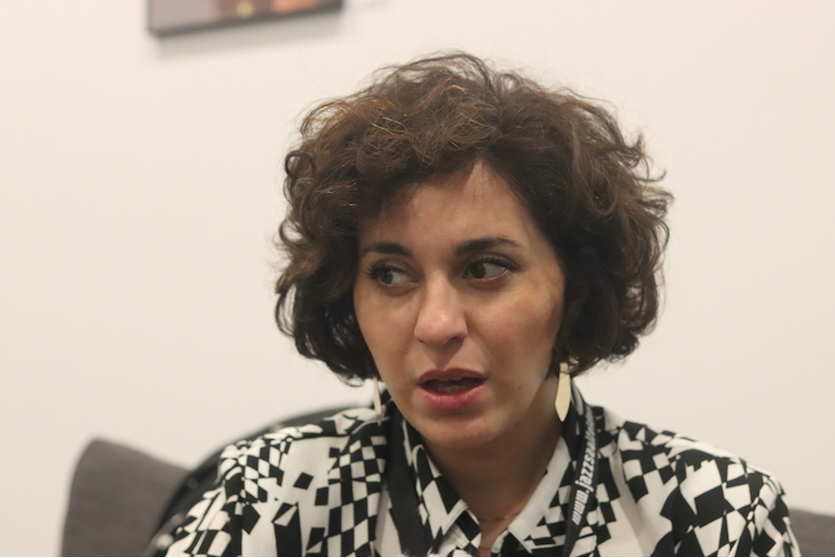
Are you planning to come to Belgium one day and give us the pleasure of hearing your music and your trio?
Shabnam Parvaresh: I would love to, but until now it hasn't worked out. So I just need the right connections, we would love to play one concert. Also we would love to play in clubs. I mean, we don't have any problems. That would be amazing.
I hope that happens. You are a truly fantastic musician. Thank you very much, Shabnam Parvaresh.
Shabnam Parvaresh: Thank you so much.
Interview & photos © Federico Garcia
Other
In case you LIKE us, please click here:

Foto © Leentje Arnouts
"WAGON JAZZ"
cycle d’interviews réalisées
par Georges Tonla Briquet

our partners:






Luchthavenvervoer zonder stress
Hotel-Brasserie
Markt 2 - 8820 TORHOUT
Silvère Mansis
(10.9.1944 - 22.4.2018)
foto © Dirck Brysse
Rik Bevernage
(19.4.1954 - 6.3.2018)
foto © Stefe Jiroflée
Philippe Schoonbrood
(24.5.1957-30.5.2020)
foto © Dominique Houcmant
Claude Loxhay
(18.2.1947 – 2.11.2023)
foto © Marie Gilon
Pedro Soler
(8.6.1938 – 3.8.2024)
foto © Jacky Lepage
Sheila Jordan
(18.11.1928 – 11.8.2025)
foto © Jacky Lepage
Raúl Barboza
(22.5.1938 - 27.8.2025)
foto © Jacky Lepage
Special thanks to our photographers:
Petra Beckers
Ron Beenen
Annie Boedt
Klaas Boelen
Henning Bolte
Serge Braem
Cedric Craps
Luca A. d'Agostino
Christian Deblanc
Philippe De Cleen
Paul De Cloedt
Cindy De Kuyper
Koen Deleu
Ferdinand Dupuis-Panther
Palma Fiacco
Anne Fishburn
Federico Garcia
Jeroen Goddemaer
Robert Hansenne
Serge Heimlich
Dominique Houcmant
Stefe Jiroflée
Herman Klaassen
Philippe Klein
Jos L. Knaepen
Tom Leentjes
Hugo Lefèvre
Jacky Lepage
Olivier Lestoquoit
Eric Malfait
Simas Martinonis
Nina Contini Melis
Anne Panther
France Paquay
Francesca Patella
Quentin Perot
Jean-Jacques Pussiau
Arnold Reyngoudt
Jean Schoubs
Willy Schuyten
Louise Stubbe
Frank Tafuri
Jean-Pierre Tillaert
Tom Vanbesien
Jef Vandebroek
Jean-Marie Vandelannoitte
Geert Vandepoele
Guy Van de Poel
Cees van de Ven
Donata van de Ven
Maurits van Hout
Harry van Kesteren
Geert Vanoverschelde
Roger Vantilt
Patrick Van Vlerken
Marie-Anne Ver Eecke
Karine Vergauwen
Frank Verlinden
Jan Vernieuwe
Anders Vranken
Didier Wagner
and to our writers:
Mischa Andriessen
Robin Arends
Marleen Arnouts
Werner Barth
José Bedeur
Henning Bolte
Paul Braem
Erik Carrette
Danny De Bock
Denis Desassis
Jean-Pierre Devresse
Pierre Dulieu
Ferdinand Dupuis-Panther
Federico Garcia
Paul Godderis
Stephen Godsall
Jean-Pierre Goffin
Claudy Jalet
Chris Joris
Bernard Lefèvre
Mathilde Löffler
Claude Loxhay
Ieva Pakalniškytė
Anne Panther
Etienne Payen
Quentin Perot
Jacques Prouvost
Jempi Samyn
Renato Sclaunich
Yves « JB » Tassin
Herman te Loo
Eric Therer
Georges Tonla Briquet
Henri Vandenberghe
Jean-Jacques Vandenbroucke
Peter Van De Vijvere
Iwein Van Malderen
Jan Van Stichel
Olivier Verhelst