Mario Siedl, a conversation at Jazzfestival Saalfelden #46
Artistic Director of Jazzfestival Saalfelden
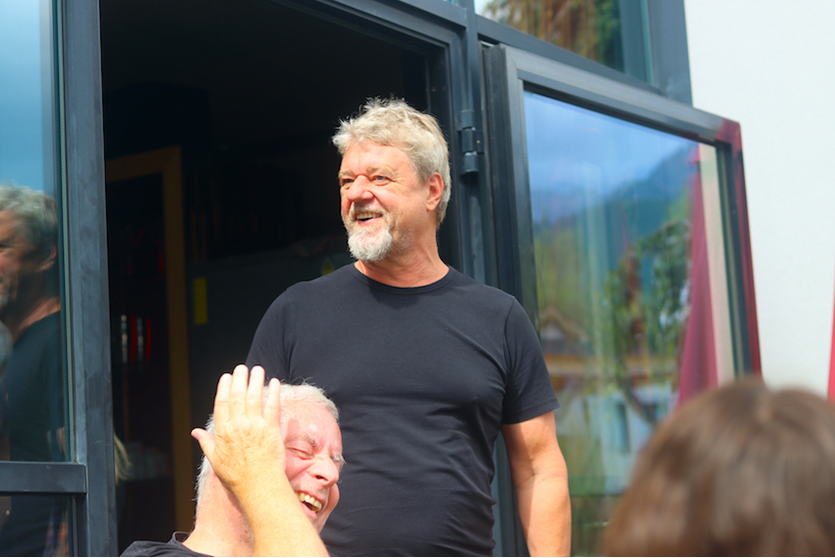
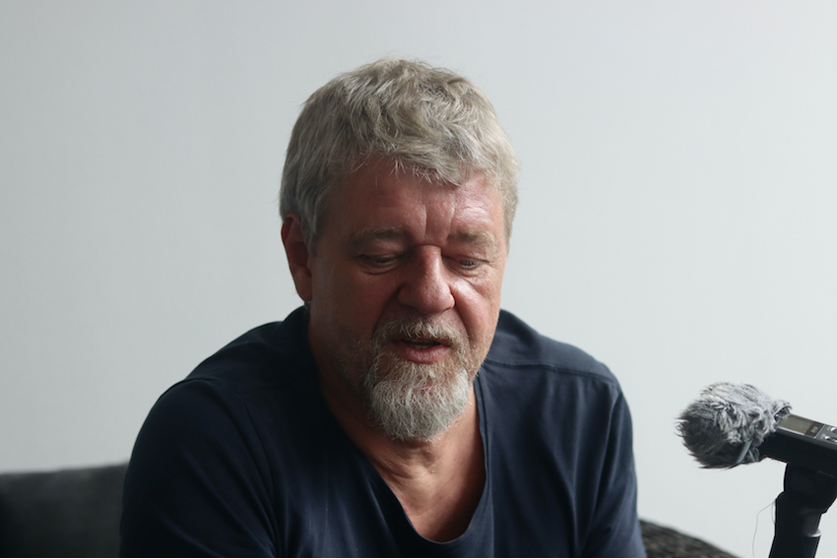
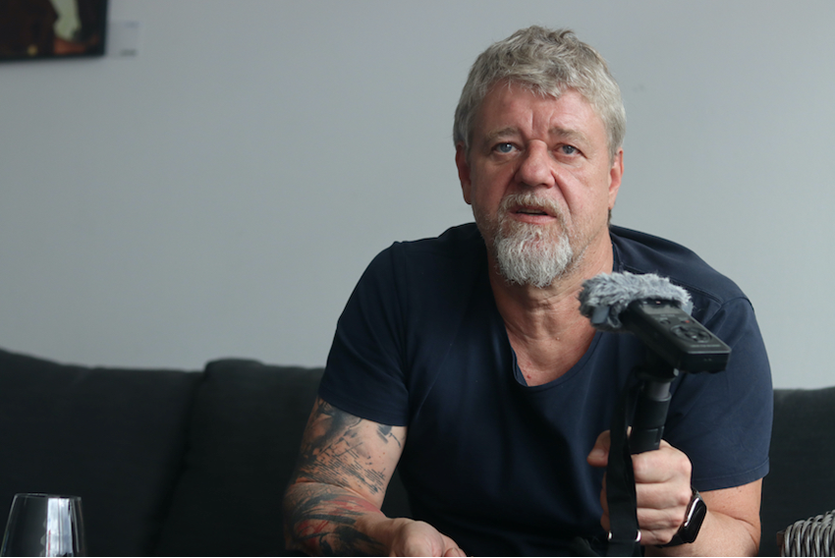
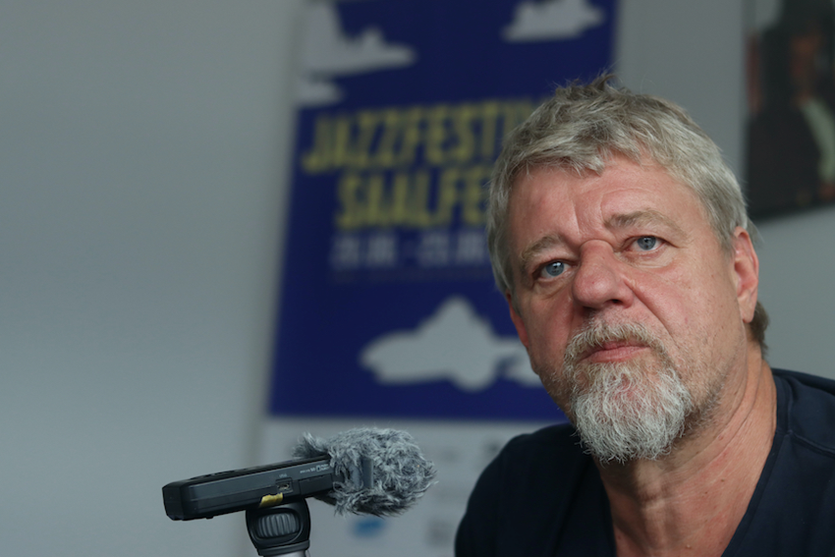
I’m on the terrace of the Congress Saalfelden with Mario Steidl, one of the main driving forces behind this fantastic festival. He has been here for more than twenty years and has helped bring the dream of Jazzfestival Saalfelden to life.
What have been the highlights of Jazzfestival Saalfelden since its foundation? You weren’t here at the beginning, but I read that the festival started in 1978 under a different name: “Three Days of Jazz”. You recently published a beautiful magazine featuring the first poster from 1978. What have been the highlights since you joined the festival? Do you happen to know who performed here in the early years? I saw some amazing names on the posters, including Don Cherry and the Vienna Art Orchestra.
Mario Steidl: That's a short answer, I can say everybody was here, except Miles Davis. He was not here. But really all the big names back in the 70s, 80s, 90s: Abdullah Ibrahim, Don Cherry, John Zorn, … only to name a few.
Of course, the festival started on a very small place where I live now. I was still a little child. The first time it took place in a horse stable, where they started organizing concerts and where they also started the festival "Three days of Jazz". And since then, the festival developed in different ways. First in the stable and then it was out in the tent. Now it's here in the center of Saalfelden. And I'm still proud and very happy that I have the honour to program this festival.
We’ll come back to the subject of curating your fantastic programs, but you inspired me to ask two questions. You said you were a child when the festival began. As you grew up—or perhaps even as a child—did you attend any of the festivals? Do you have any precious memories from that time? What brought you to Jazzfestival Saalfelden, and how did you eventually become its artistic director?
Mario Steidl: I do have strong memories about the festival when I was a child or a teenager, because our parents always said: "Don't go there to the hashish, heroin-smoking weird long haired people!". And of course, because they said "don't go there", we went there. And at that time, in the 80s, the festival still was quite new. We can still remember, restaurant owners making notices outside of the festival: "We don't like to have visitors of the Jazzfestival Saalfelden here". But that has quite changed.
And to your second question, I have to say when I was 16, before I came to jazz I was very into metal music, and I still am, sometimes you also can see that in my program. I can remember, I heard jazz when I visited my uncle, he was a real jazz freak. And also one of these persons of whom my mother said, "Don't go there, he has long hair" but you know, these were the cool people. So that's why I visited my aunt and my uncle. As a 16 year old, I heard the music he had running and I was completely impressed. It was Don Cherry's "Brown Rice". That was my step in a new world. And he gave me the tape, on the other side, I can remember, there was Pharoah Sanders "Jewels of Thought".
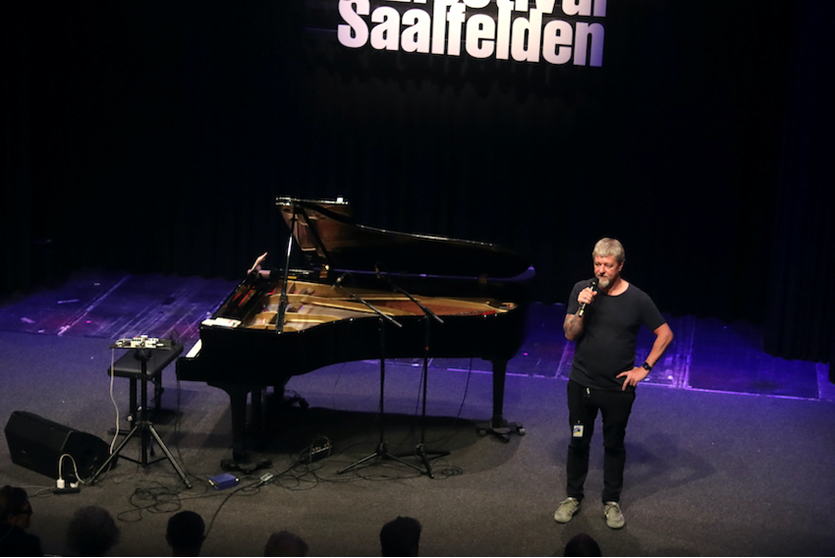
Then I dived into this jazz world, and I found it was such a wide world. It was such an open field. It was so amazing. What you usually don't have that much in metal that all the musicians play with everyone, and then you listen to a Miles Davis album and see the musicians. And then I found another album. "Ah, there are the same musicians there". So everybody is collaborating with everybody. People are improvising. It's a free musical world.
And it's also when I was 15 or 16 that I started visiting the festival in Saalfelden. In the same period I studied for cook, and later on I decided to leave that and to study. And so I started to work for the festival, to build up the tent. Until 2004 the festival took place in a tent. There was one guy, Reinhard Gottlieb, who was my mentor, because he saw that I worked for the festival to get the ticket and that I was really into the music and that I loved the music. We became very close friends, and we spent long nights at his home to listen to music and he told me everything: "You have to know this. You have to know that. Have you heard this? and he did this one. This musician played with this musician..." and so I came really into the music.
In 2004, we had a huge financial crash. I still worked for the festival to build up the tent. My mentor also was one of the organisers of the festival at that time. Unfortunately, he died 2009, and he asked me if I wanted to take over the organisation. But I only was 30 at this time, and I said, "no, I can't do that. I have no experience and I don't know anything about music". He said, "you know enough about music! I told you so much and I know your taste and you know the spirit of the festival". So I took over in 2004 with my wife at that time, Michaela Meyer. I'm divorced now, but she built up the festival with me after the restart, because before she was a booking agent in New York, together with... I can't remember the agency, but they booked Steve Coleman, Dave Douglas a.o. She was from Austria, but lived in New York and always came over in the Summer to do all the contracts. So she was kind of the producer of the festival and that's how we met. So, we two overtook the festival in 2004.
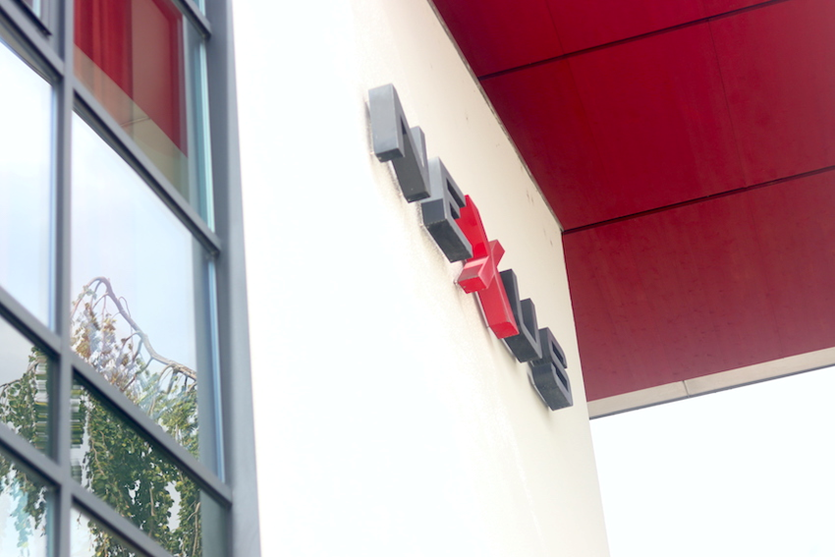
How did the smaller spin-off festival, "Three Days of Jazz", come about? It takes its name from the original festival and takes place in January. How did the idea develop, and how many concerts are held each year? This year, I believe there are more than sixty concerts as part of the 46th edition. What is the musical focus of Three Days of Jazz?
Mario Steidl: We started the festival, I think it's the 10th edition now in January, because we found one year between the Summer festivals was too long. Of course I also run the club Nexus, which also came out of the festival. So, we decided to do something smaller in the winter, 200 people every year and not more. It’s not experimental-avantgarde music as we have during the Summer. It's only nine concerts, but it's a beautiful, nice get together with nice musicians. Audience that joins us every year. It takes place in the Nexus, our club.
We always open with a concert in the church. We also have a very beautiful gothic museum in the next village beside of Saalfelden, Leogang, where we also do concerts. It's kind of a smaller edition, but very nice, because all the musicians come, then we meet at my home always on my pond, which is usually always frozen, to play a kind of curling that we are used to play here. So it's a nice get together where you also have a bit more time with each other. Often there are musicians that you already know and it's a bit more intimate maybe, and you have more time for each other.
Do you repeat projects?
Mario Steidl: No, we don't repeat projects. No, it's always new projects.
Is the programming for the winter spin-off festival also very international?
Mario Steidl: In the winter it's not at all local. It's focused on Europe because in the winter we don't have the budget to fly in people from let's say Japan or wherever, like we can do in the Summer. But in the winter it's a smaller festival, smaller audience.
You curate the main program each year. What does that process look like? What criteria do you use when selecting one band or project over another? What genres are you looking for? There are now so many different directions in jazz. What motivates you to bring a particular project to the festival?
Mario Steidl: As I said before, what I love in jazz is the open, the wide field, and it's so diverse. There are so many influences. I'm not into the traditional jazz and I'm always searching for the open stuff, the adventure. I always say, as I'm old enough now, I dare to say I have no idea about music, I have no idea about music theory. I started with this festival and I renewed the festival together with Daniela from 2019 onwards, because before we had like 20 concerts. Now it's 60.
But I travel a lot. I visit a lot of other festivals. I always listen to music, no matter if I'm cooking, working or whatever. And when I say I have no idea about music, but when I hear something, the first impression is, "wow, this is new, this is exciting. This is completely different. This is something that you've not heard before" or what I also often do when I hear music and I like music, I always think in venues, where can it take place? Not every project fits on a big stage like here with 1300 people. Some projects need a small or smaller room or like tomorrow, we do a concert in the middle of a forest, or we do a concert on a Hermitage and of course, I always think what will surprise the audience. We are so lucky that we have an audience that is so loyal and always curious. I know they come to Saalfelden because they want to explore something new and not big names that they have heard already in ten other concerts, and this gives me a huge freedom and I really love it to book new projects that have not been taking place in Austria before.
On the other hand, since we renewed the festival and we have lots of different stages, I also started presenting musicians in different contexts. It’s often that you have a musician and it's like before 2019, when we only had 20 concerts, it was so often that I heard music and I thought by myself, "oh my God, it's such a beautiful project, but I don't have the room for it", because it should work in another room. And so I went out to explore other places like book binderies, museums, whatever, woods in the nature and things like that. And the musicians really love it. And I also found out, "this musician not only has one good project, he maybe has 3 or 4 other ones”, and I started to invite musicians to present themselves in our festivals with different projects. That's what I really like to do, to offer musicians to do what they want or have different projects. When musicians who know the festival already, call me and say, “I have a new project” and they do not say “I want to play on the main stage because it's the biggest stage. I have an idea. I have this project that would work so pretty in the industry hall in the Otto-Gruberhalle”, and I have someone who also contacted me this year and said, “can we do something in your beautiful white box” in our club, in the exhibition hall, or Lukas Kranzelbinder called me and said, "hey, it's ten years ago when you gave me the commission for “Shake Stew” and it really went up, and I'd like to celebrate it, but not just by playing another concert and doing something new with the local marching groups, which is something connecting local people with international people, connecting a marching group or locally-focused music with international Jazz Musicians”. It was really great and I loved it. I'm always open for these new things. And it's so nice to develop the festival together with musicians.
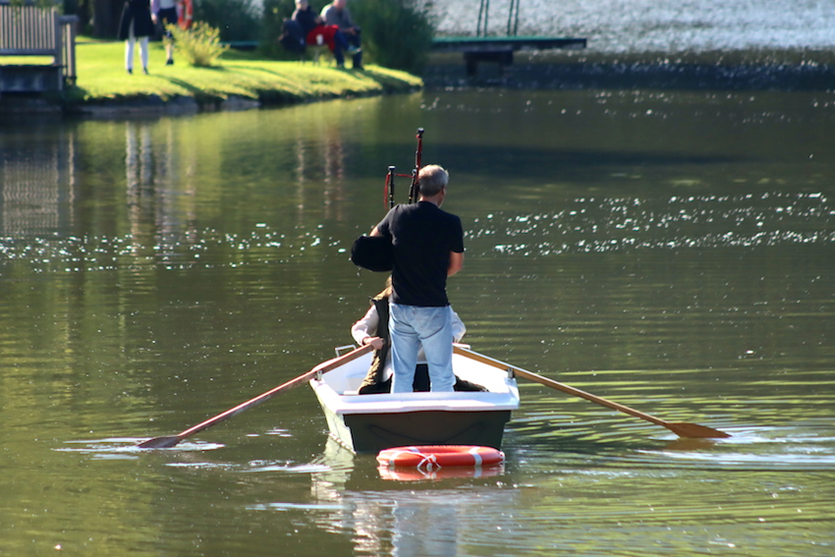
I loved the idea of the rowing-boat concerts on Lake Ritzensee. Last year was my first festival, and that was one of the highlights for me. I’m Mexican, so I feel especially encouraged to ask you this question: Is the Latin American jazz scene on your radar for future collaborations with musicians? There are many amazing projects, although, of course, bringing them here involves crossing the ocean.
Mario Steidl: It doesn't matter if it's crossing the ocean. Let me try to explain it this way. When I started with this job 20 years ago, every year I received some CDs from musicians. Now, it's thousands of emails. You get CDs, you get whatever you get. But from some countries I don't get that much. I really should check out what's going on in South America. But of course we have musicians like Camila Nebbia, Leo Genovese,...
When did the idea of commissioning an opening concert begin? Last year, you presented a wonderful opening concert with Leonhard Skorupa, an outstanding composer and instrumentalist. This year, you did it with Yvonne Moriel, and it was magical as well. How did the idea arise of commissioning a musician to write music specifically for the opening concert of Jazzfestival Saalfelden?
Mario Steidl: I did it from the beginning on because I think it's very important as a festival who is based in Austria. Of course we also get subsidies from the Austrian government. And so for me, it always was and still is important to present the Austrian scene. And that's why every year there's a commission given to an Austrian musician to open the festival. They already come on Sunday, to rehearse, to invite whoever they want. Nationally, internationally, we pay for flights, we pay the fee, we pay for hotel and everything. Just to give people the opportunity to develop new projects and also I see our festival as... How shall I say? We're in the middle of nowhere here in the mountains, but I think we can present Austrian musicians. Or we can be something like an international window. And there are many promoters here. So it’s a great opportunity because they are also booking other musicians to their festivals. That's also our idea. That's very important.
Maybe a strange question: what role do you see artificial intelligence playing in the festival—perhaps already, or in the future? Is that something you can imagine incorporating into the festival?
Mario Steidl: Not in music, so far, we had a project of an Austrian musician, two years ago. He was working also with AI, with, uh, mini robots that were making music, but no, we have music that's hand played. I know what you all can do with AI, but I think Frank Zappa said “it smells funny”, but it doesn't smell funny anymore. I think it's still one of the most innovative music genres, if you can say genres. And that's what I still like in jazz because the influences come from everywhere. That's what I was also exploring when I was young, that there are influences from electronic music, metal music, new music, everything. Jazz always grabbed everything. What was coming out new and made it to its own style. And that's what I really love. It's just openness. So Jazz is not just a genre or a music style. It's a kind of attitude.
Jazz is a way of living…
Mario Steidl: It's a way of living. Absolutely!
You, as Austrian, are extremely knowledgeable about music, and you clearly love it. You are the person working behind the scenes at this iconic Austrian jazz festival—one that showcases both jazz made in Austria and with international artists. Some of the musicians are not Austrian, but they live and work here, while others come from abroad. As you said, the festival offers the world a display of what is happening in Austria. How do you see the Austrian jazz scene at the moment, and how do you see its future? Besides the opening concert and the presentation of other Austrian projects, what are your plans and dreams in this area? Do you think we can speak of an Austrian jazz tradition or identity? Could we describe it as a distinct form of Austrian jazz?
Mario Steidl: No, I wouldn't say it's a style. There’s not an Austrian style like the Nordic Jazz, or like a French style or a German style or whatever, but I think we have a really great scene and I think the best example, Erwan Keravec, the bagpipe player was one. I saw him at another festival and I said, "hey, would you like to do something here? " And he said, "yeah, of course". And we talked and did the concert on the church tower and on the rowing boat. And I said, "would you like to do something else? Like on any stage you want and invite somebody?" And he said, "send me the lineup". And he picked Lukas König besides Rob Mazurek.
So that means that international musicians know Austrian musicians, and there's a few of them, who are really known across Europe, if not worldwide, like also "Shake Stew" which came out from a commission that we gave. They're the rock stars of jazz. They played even in Mexico, in the States and everything. I think only “Rammstein” also played the States and also “Shake Stew” did.
So I think we have a very wide scene. Of course, we are a small country. So, I really try all the music. I always tried to present Austrian musicians who are into our style. Of course, we also have Austrian musicians who do like the traditional stuff, which also is fine, but maybe just doesn’t fit in our concept. But I try to present all the others, everything that's coming out new. But we're a small country, and the scene comes always in waves. You have a new generation, then the wave goes up and you have so many great projects, for me or for us as promoters. Then it goes down because you had the projects presented already. Then you wait for the other wave, but it's really such a wide variety of musicians who come up and are always guests of our festival. I think Austria also has a very good structure to support musicians. I think also we as festivals, we have to support the Austrian scene.
How is Jazzfestival Saalfelden perceived internationally? I’m not only referring to musicians and promoters, but also to jazz lovers like me—people who may not know much about music.
Mario Steidl: Well meanwhile, every year we have 50 promoters who come to Saalfelden. But that’s not only because we present lots of new stuff, but it's that we are connected with many festivals within the European Jazz Network. So we know each other and lots of us are traveling around to other festivals as I do. There's something like a crowd of 30 people that you mostly see everywhere. It doesn't matter if you go to Portugal, France, or Norway. I know most of the time I will meet Oyvind from Oslo. I will meet Nadine from Berlin and so on and so on. So it's kind of a family. And this family is, I think the older people, I mean, I'm 54 now, but I know the generation before me, lots of them, they were not working together. They had this idea: "I'm the best. I want to have this project be presented at my festival for the first time. And nobody else should know before because I want to be the best".
Now we talk to each other. We say, "have you heard about this?" or we're on the phone or we meet and say, "hey, I'm still searching an act. I don't find anything. I have this and this and this, and for my performance I need something to send the people home late at night on Saturday or something. What do you have or What can you recommend?" So it's really a kind of working together, recommending musicians, new projects. And that's what is a family.
What are your ambitions for the 50th edition? Are you planning a special celebration for the festival’s fiftieth anniversary?
Mario Steidl: The 50th edition...
That will be in four more years. What do you envision for it?
Mario Steidl: I have no idea because the times are really difficult now, see, whole Europe is moving to the right. Which makes it not easier. Subsidies are getting cut and so we'll see, but I think, something will happen. We will have an idea. And because I always want to do something new and not create a festival with the same stages every year and the same ideas every year. Like these two special projects this year with “Shake Stew” and the local bands and, or with Marta in the Nexus. I'm pretty sure that we will find something.
Is there a specific direction you follow in your curatorial work? I’ve noticed that you are drawn to experimental approaches, free jazz, and crossovers. Is there a particular characteristic that guides your programming, especially when you are selecting projects?
Mario Steidl: I think you should ask the audience. But no, I think it's the wide variety. It's the openness to different styles. As you said before, it doesn't matter if it has influences from metal or from new music, electronic music, performance, whatever. I just try to be open minded and to present a program with a huge variety.
Something like this happened last night. I was eagerly looking forward to hearing the extraordinary Swiss musician Andreas Schaerer…
Mario Steidl: Yeah, I love him. We are good friends.
Then something unexpected happened: you created the kind of improvisational situation many groups explore—the magic of building something from nothing…
Mario Steidl: Yes. It just happened last night because, Andreas Schaerer had to cancel because he was ill. And I thought, “so what shall I do now? Two days before the festival”. Of course, you have other bands in mind that you could book already for the next year and whatever, but two days before everybody is booked somewhere else. So I thought “okay, I'll ask somebody” and I ask Jim Black, because I know he knows the audience. He knows the spot, he knows the stage. He's very into our festival. He's every year at this festival, even if he does not play. I asked him: "Hey, would you like to put together something? And in a short time with musicians who are here already?" And that's what he did. I think you have to have the courage to say, "well, this is not like a session in a bar. You put something together for an audience with 2300 people. Late night within two days". So I really love him for that. And I really love that all the musicians, he talked to said "yeah, of course, let's do it".
How many people attend the festival and listen to the concerts? You mentioned that there are more than sixty concerts this year. One of the beautiful things about the festival is that it is so popular that many concerts can be offered free of charge in the Stadtpark…
Mario Steidl: Indeed. The idea opening the park for free is because I said "we need to involve the locals". I don't want any more like it was earlier. When this festival was becoming like a spaceship? It was only for an exclusive audience who is really focused on jazz. We need to include the locals. And now that's why we do these pop things and everything in the park where now the international audience and the locals can meet there. And from there on, because we also have lots of concerts, jazz concerts with free entrance, they say, "oh, let's go to this concert I don't know, it's Jazz, but let's check it out". And yes, sometimes it can be hard to understand like in the Gruberhalle but the people go there, and then they are there and they say, "oh wow, that's jazz?. I didn't expect it".
I have seen that since we have started this, we see that young people come because they get into jazz, before they wouldn't buy a ticket, even if it's for €3, because they think they don't like jazz. But if it's for free, they go in and explore jazz as something they didn't expect and say, "oh, wow, this is with electronics and this is Jazz. I didn't expect that. Next year let's try to buy a ticket for the Main Stage". And in the meantime, you see that all the standing tickets are sold out because the young people follow up to as a new audience. Ten years ago I also said, "we need to do something because otherwise our festival does not exist anymore for biological reasons, because the audience gets too old". And that's a problem all over Europe, this discussion, not so intense in the bigger rural areas, in the bigger cities, but you need to work to get the younger audiences into jazz. When we were young, we found music by talking to other people, but now, they have bloody Spotify, whatever, and they are cached into their algorithm and they don't go out any more. So we need to lead them by the hand and see. There are also some other things.
I don’t know whether you had the chance to experience Thursday’s concert in the park? The audience reaction was phenomenal. The children were dancing, and the Jamaican singer even brought some of them onto the stage…
Mario Steidl: Yeah.
Finally, what message would you like to give to the jazz musicians who may read this interview one day—to those who are already performing on stage, to people studying to become jazz musicians, and to those who dream of becoming jazz musicians or singers? What would you tell them?
Mario Steidl: Go and visit other jazz concerts. It's really interesting because sometimes I do something like a workshop with musicians, with young musicians, with students. And the first thing I asked them, what was the last concert that you have visited? "Um, um, um, ah, Last year", and I said, "what do you expect? Who should come to your concert if you don't go to other concerts?" In every city there’s more or less a jazz scene and you can connect with other people because you can learn from them. You get to be part of a family, and that's how new projects come out. Also visit festivals to see what's going on, to learn, to meet people. That's what I would say.
Text and photos © Federico Garcia
Other
In case you LIKE us, please click here:

Foto © Leentje Arnouts
"WAGON JAZZ"
cycle d’interviews réalisées
par Georges Tonla Briquet

our partners:






Luchthavenvervoer zonder stress
Hotel-Brasserie
Markt 2 - 8820 TORHOUT
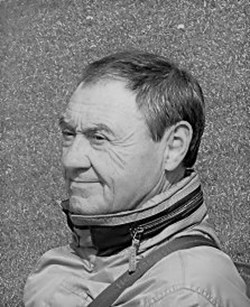
Silvère Mansis
(10.9.1944 - 22.4.2018)
foto © Dirck Brysse
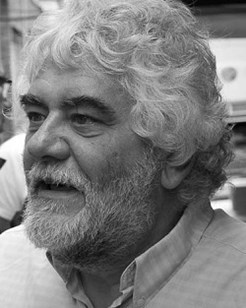
Rik Bevernage
(19.4.1954 - 6.3.2018)
foto © Stefe Jiroflée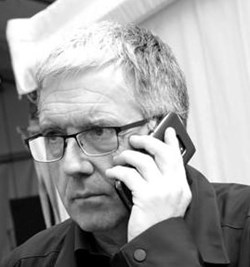
Philippe Schoonbrood
(24.5.1957-30.5.2020)
foto © Dominique Houcmant
Claude Loxhay
(18.2.1947 – 2.11.2023)
foto © Marie Gilon
Pedro Soler
(8.6.1938 – 3.8.2024)
foto © Jacky Lepage
Sheila Jordan
(18.11.1928 – 11.8.2025)
foto © Jacky Lepage
Raúl Barboza
(22.5.1938 - 27.8.2025)
foto © Jacky Lepage
Special thanks to our photographers:
Petra Beckers
Ron Beenen
Annie Boedt
Klaas Boelen
Henning Bolte
Serge Braem
Cedric Craps
Luca A. d'Agostino
Christian Deblanc
Philippe De Cleen
Paul De Cloedt
Cindy De Kuyper
Koen Deleu
Ferdinand Dupuis-Panther
Palma Fiacco
Anne Fishburn
Federico Garcia
Jeroen Goddemaer
Robert Hansenne
Serge Heimlich
Dominique Houcmant
Stefe Jiroflée
Herman Klaassen
Philippe Klein
Jos L. Knaepen
Tom Leentjes
Hugo Lefèvre
Jacky Lepage
Olivier Lestoquoit
Eric Malfait
Simas Martinonis
Nina Contini Melis
Anne Panther
France Paquay
Francesca Patella
Quentin Perot
Jean-Jacques Pussiau
Arnold Reyngoudt
Jean Schoubs
Willy Schuyten
Louise Stubbe
Frank Tafuri
Jean-Pierre Tillaert
Tom Vanbesien
Jef Vandebroek
Jean-Marie Vandelannoitte
Geert Vandepoele
Guy Van de Poel
Cees van de Ven
Donata van de Ven
Maurits van Hout
Harry van Kesteren
Geert Vanoverschelde
Roger Vantilt
Patrick Van Vlerken
Marie-Anne Ver Eecke
Karine Vergauwen
Frank Verlinden
Jan Vernieuwe
Anders Vranken
Didier Wagner
and to our writers:
Mischa Andriessen
Robin Arends
Marleen Arnouts
Werner Barth
José Bedeur
Henning Bolte
Paul Braem
Erik Carrette
Danny De Bock
Denis Desassis
Jean-Pierre Devresse
Pierre Dulieu
Ferdinand Dupuis-Panther
Federico Garcia
Paul Godderis
Stephen Godsall
Jean-Pierre Goffin
Claudy Jalet
Chris Joris
Bernard Lefèvre
Mathilde Löffler
Claude Loxhay
Ieva Pakalniškytė
Anne Panther
Etienne Payen
Quentin Perot
Jacques Prouvost
Jempi Samyn
Renato Sclaunich
Yves « JB » Tassin
Herman te Loo
Eric Therer
Georges Tonla Briquet
Henri Vandenberghe
Jean-Jacques Vandenbroucke
Peter Van De Vijvere
Iwein Van Malderen
Jan Van Stichel
Olivier Verhelst