Lukas Kranzelbinder, a conversation at Jazzfestival Saalfelden #46
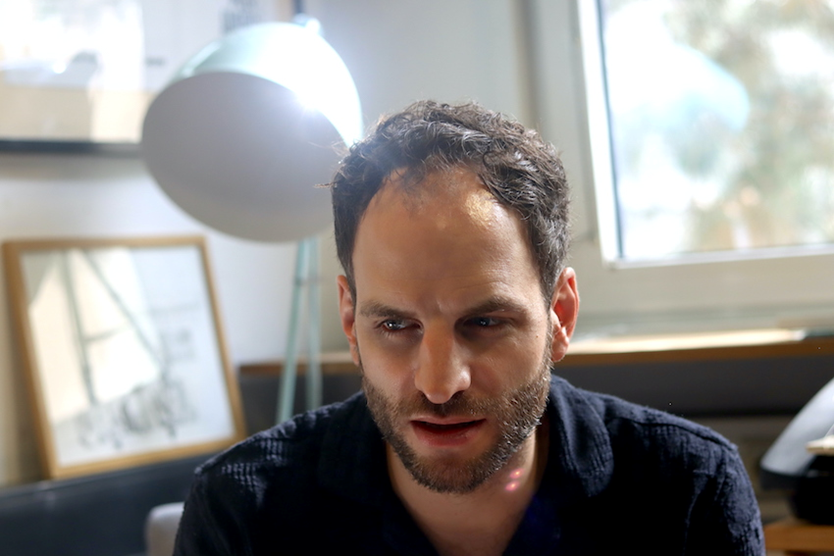
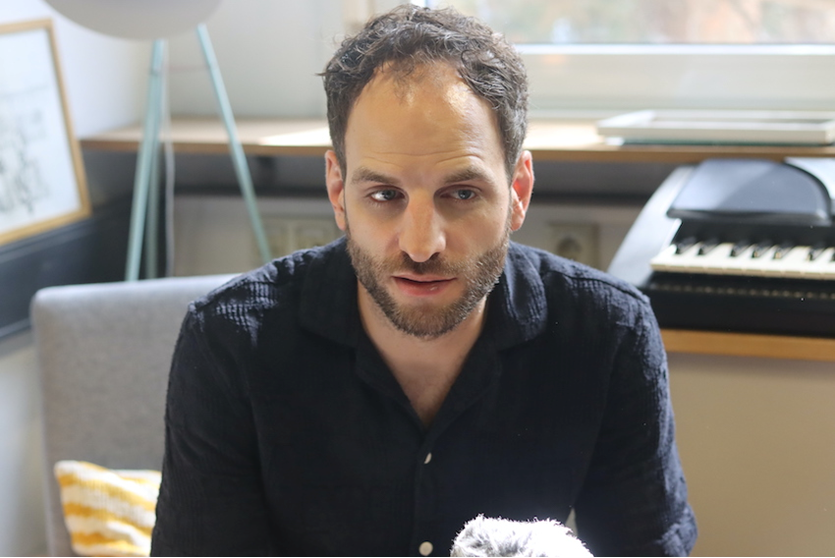
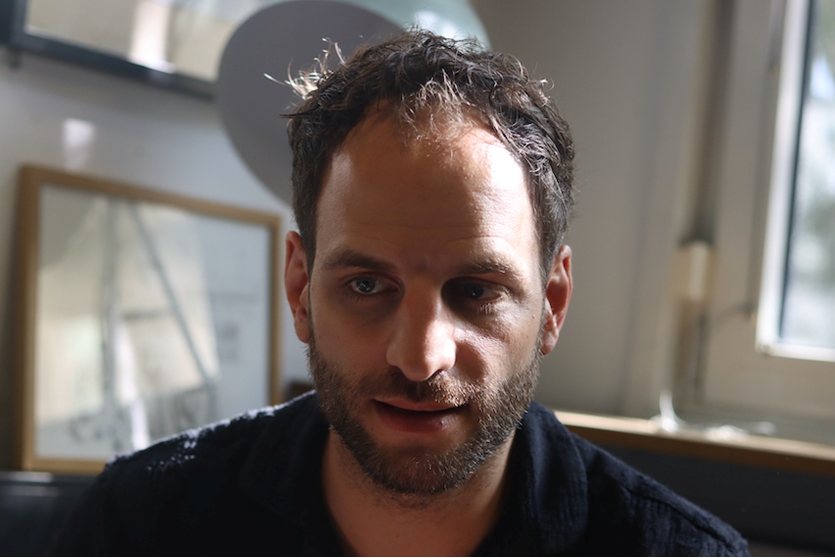
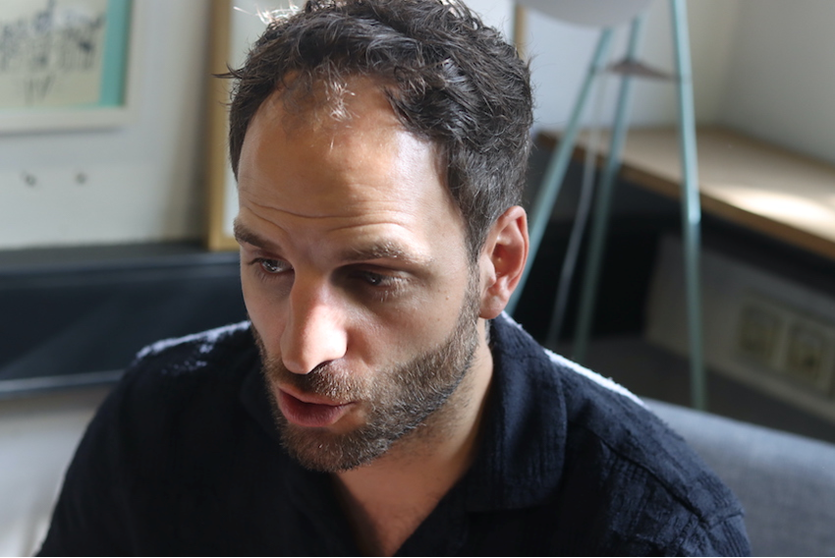
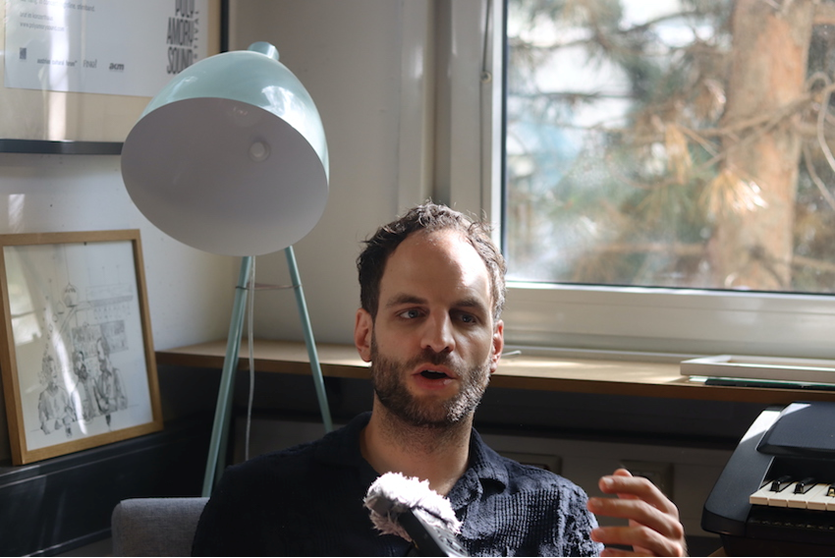
I had a delightful and wide-ranging conversation with Lukas Kranzelbinder at his studio in Vienna, two weeks after his performance at the 46th Jazzfestival Saalfelden.
At the festival, Lukas Kranzelbinder performed extraordinary music with his septet, Shake Stew, and with several other musicians. He opened the festival with the traditional hike into the mountains, where the group performed a memorable open-air concert. He was also invited by Almut Kühne, a German singer to perform in a trio with her and Max Andrzejewski, a German drummer. Their magical performance took place in the Kollingwald on Sunday morning. Later that night, Lukas organized and led the closing event of Jazzfestival Saalfelden: a mesmerizing, long-lasting jam session at the café-bar of Kunsthaus Nexus.
He was also the person behind, without a doubt, the highlight of the festival’s third day—and possibly of the entire 46th edition: the wonderful parade concert “The Big Shake—A Saalfelden Homecoming”. The event featured “Shake Stew” alongside the local brass bands Bürgermusik Saalfelden and Eisenbahner Stadtkapelle.
Here I am in Wien Mitte with an Austrian giant of jazz and crossover music—perhaps we could even call him a jazz rock star in this wonderful country. I’m with Lukas Kranzelbinder, and we’re going to talk about his many different projects, especially his decade-long participation in the fantastic Jazzfestival Saalfelden.
It’s fantastic to be here in your studio. I really appreciate the opportunity. You have moved from one project to another throughout your career, and you are still very young—only thirty-eight years old. I never would have guessed your age...
Lukas Kranzelbinder : Yes, I got 38 last Sunday. I'm always surprised by that myself. I think I live the life of a 40 year old, actually.
But your eyes look like those of an old soul. I feel that you really are an old soul…
Lukas Kranzelbinder : Yes. I always felt at least ten years older than I am. Also when I was young. And it's weird because I have two kids and they're 13 and 10 already. So I got my wife and we were really young when we got our daughter, we were 24. And right now I feel I have the life of a 40 year old at least, but I'm still 38. So, yes, I think that's lucky.
Perhaps it’s destiny. You started recording at a very young age. If I’m not mistaken, your first album was “Lukas im Dorf”. You recorded it in 2010 with a quartet. Are you still playing with those musicians?
Lukas Kranzelbinder : Yes. That was my first band.
In 2010 you had a quartet. Are you still playing with these guys?
Lukas Kranzelbinder : No. Not anymore. We actually recorded already in 2009, I think.
You also have a magnificent trio with two other giants of the Austrian jazz scene, Herbert Pirker and Mario Rom...
Lukas Kranzelbinder : Yes.
They are both great musicians who also play in your large-scale project, “Shake Stew”...
Lukas Kranzelbinder : Yes. I play with Mario Rom and Herbert Pirker since a long time. You can see here the young photos, since 15 years now we have the trio, they are both one of my main partners. I think they're both the ones that I played the most concerts with.
You also had another project called “Expressway Sketches”. What was that project about? You played with an extraordinary German composer and musician, Tobias Hoffmann, as well as Max Andzejewski, whom I’m not familiar with...
Lukas Kranzelbinder : Yes. He also played in Saalfelden this year with Yvonne Moriel at the opening concert. He played drums at the opening concert.
One of the 2 drummers of Yvonne Moriel…
Lukas Kranzelbinder : He was in this band as well. It was actually his band. First they had a trio called “Expressway Sketches” where they wrote music with only ten minutes each piece. They invited me to their band when they decided to do a surf music special where we played our own compositions, but very much in the style of 60s instrumental surf music like The Shadows, The Ventures,... So there was a period when we recorded two albums, and it was a lot of fun because Tobias Hoffmann is one of my oldest musical partners as well. Although he lives in Cologne, I share quite a strong connection with him musically.
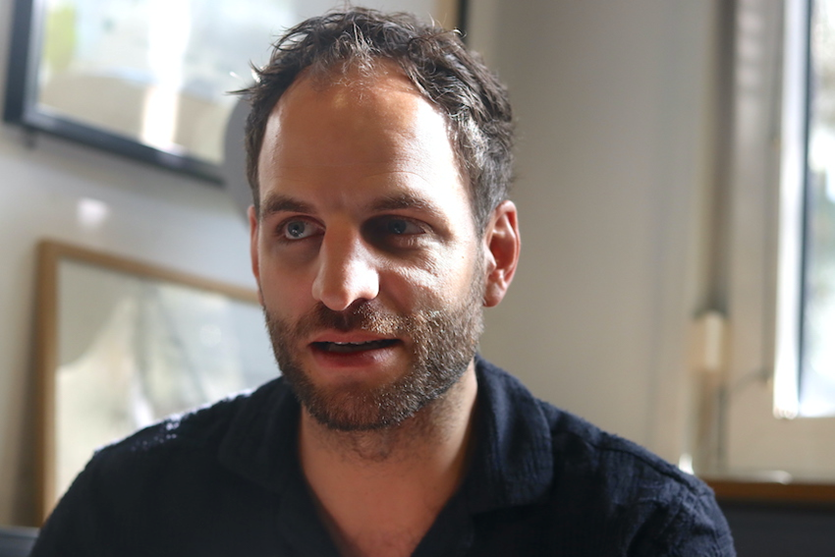
That’s amazing. I was reading that you are not Viennese. You were born in the beautiful region of Carinthia—in Klagenfurt, is that correct?
Lukas Kranzelbinder : Yes,
In front of the Worthersee, I think…
Lukas Kranzelbinder : Yes. Correct. It's quite funny. I was born there, but I grew up here in the third district for the first seven years. Then I moved back to Klagenfurt until after I finished school. Then I came back here. But still, I was always between Vienna and Klagenfurt, I guess. But I spent my whole youth in Klagenfurt.
What is the jazz scene like in Carinthia? More than its general level, what is happening there today?
Lukas Kranzelbinder : When I grew up in Carinthia, it was the time of Jörg Haider. So the right wing populist who was the governor of Carinthia for 16 years, I think. And with that, a lot of the cultural institutions were suffocated by the political right wing. But in Klagenfurt, at least there was one guy, Raimund Spöck, who kept the Chick open, the cafe im Künstlerhaus and the Verein Innenhofkultur. For many, many, many years, he hosted concerts in Klagenfurt in small settings. I visited a lot of those concerts. Those were the shows that I saw that got me into jazz music. There also was a festival, a jazz festival back then for a few years that was called Jazz over Villach. I saw Joe Zawinul play there. He was a very big influence. I was already 13, I think. So I was not that young. It was in 2004, a year before he died actually. But nowadays there's a festival, I think that Hans Jalovetz from Kulturforum Villach is doing the JazzHochBurg, who is keeping the spirit alive. And then the Karintische Sommer has a little bit of jazz in its program, but generally the club scene is not as strong because it's still suffering from all those years of cultural wasteland during the Jörg Haider years, I think.
You also have another project called “Jazz Adaption”, featuring fantastic artists and the beautiful voice of Christian Rainer, who is also from Germany. Have you been collaborating with him since 2015?
Lukas Kranzelbinder : Yes. that project we did in 2015, and it was a very special project because we did a kind of experimental music theater version of Jedermann, which is the main piece of the Salzburger Festspiele since 100 years. We used that. I rewrote the text a little bit, and Christian Rainer improvised a lot. We did this as a very big project in Carinthia in 2015, which was completely insane, but lots of great musicians were involved. To this day, I also had the pleasure, to play a concert in China together with Christian. (he shows the poster) He's not on the poster because he was a special feature, but that was a performance of Naked Lunch of William S Burroughs. So he was performing from the book and we were playing live. So we traveled to China together, which was quite a special experience,
Not many groups go there…
Lukas Kranzelbinder : No, not too many. He's amazing.
Yes, I saw that you have been working together for quite some time. That must be fantastic. You play double bass in that project, if I’m not mistaken…
Lukas Kranzelbinder : Indeed.
You are a multi-instrumentalist. You started with the piano, as I understand it…
Lukas Kranzelbinder : Yes, as a kid. I studied piano, and then I switched to bass. I mostly play double bass, but I also play electric bass sometimes, and especially in the surf band and in “Shake Stew” as well. And then I play the guembri, which is this Moroccan bass that is used mainly in Gnawa music. I played that a lot. Then I also play some other stuff. I like to play the Mbira or the kalimba. I also use this cigarbox guitar, a three string guitar. So any kind of instrument, that gets me inspired I try to use.
What fascinated me was seeing you play at the jam session at Kunsthaus Nexus. You were the leader, and you played the double bass with one hand while holding a kalimba in the other. You were playing both instruments at the same time. It was amazing…
Lukas Kranzelbinder : Well, sometimes when I start something, it's really hard to stop it. So I need to switch to the other instrument, gradually. So this sometimes leads to that.
You also founded the fantastic seven-piece project Shake Stew. You truly consolidated the presence of this septet at Jazzfestival Saalfelden, where you have become something of an icon. You open the festival with a hike into the mountains. Where did the name “Shake Stew” come from? What inspired you to give the project that name?
Lukas Kranzelbinder : I thought that I needed a name for this group that sounded quite good, but doesn't have a clear actual meaning because I wanted a name that when people hear this name, they only connect it to the band, to the music. So if you call your band something you don't like, I don't know, like, "bar con amigos", or “Gray Amp” or “Brown Chair” or whatever. Then you immediately have kind of an idea what it is. But with “Shake Stew”, you have these two words that kind of sound familiar and nice, and then you can connect it with the band. That was a bit of the idea.
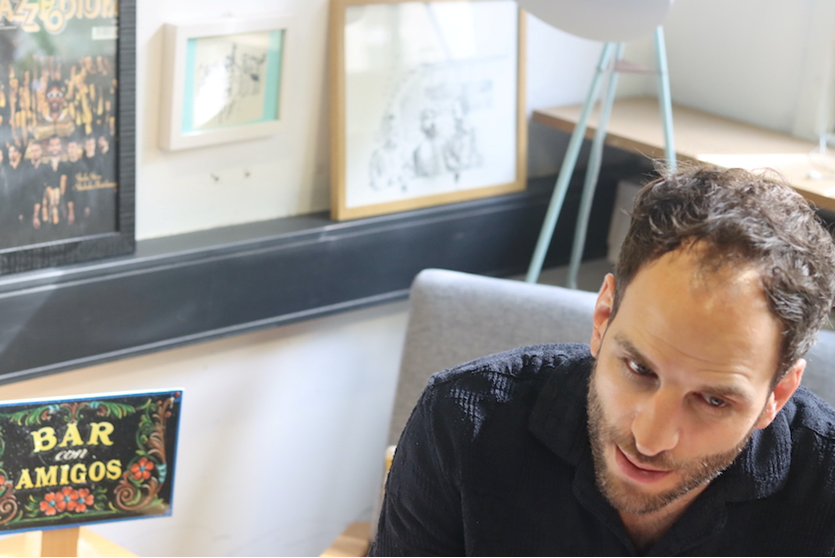
There are seven musicians in the group, including you, and the lineup has evolved over time. At least two excellent saxophonists have been part of the band: Clemens Salesny and Astrid Wiesinger, who was with the group for quite some time. Now you have the outstanding saxophonist Yvonne Moriel. You also have great musicians such as Johannes Schleiermacher, who has been with the band for a long time. You also brought in an incredible German double bassist who is now teaching and leading the bass department at MUK...
Lukas Kranzelbinder : Yes. Oliver Potratz.
And you have this Austrian giant with the trumpet, Mario Rom. And the drummers and percussionists Niki Dolp and Herbert Pirker. Where and when did you meet these musicians? How did you decide, “Okay, Lukas, let’s bring these musicians together to form Shake Stew”?
Lukas Kranzelbinder : Well, at the moment I was playing with the trio Interzone for quite a few years already. I really enjoyed the format of playing in a trio, that is very intimate and you have a lot of space, but I thought for the festival opening in Saalfelden, I wanted to do a bigger band and I wanted to do something that is kind of an experience in terms of the whole thing, the music, the looks and everything, and I thought about the people that would fit my musical idea mainly. It was not so much about the instrumentation first, but then it kind of developed that I thought: "I definitely want to do two drums. I definitely want to do a second bass, because sometimes when I write basslines, I hear stuff that I can't play myself at the same time". So I thought, with two basses, it's kind of a good idea. And then you have possibilities. If the bass players are different types of bass players, then you have a broad range, and then three horns.
So this was the main idea. And at that time, Johannes Schleiermacher started to play with the trio as a guest. I was a big fan of his playing and he's a big part of Shake Stew ever since. And also the other ones, the lineup changed a little bit over the years. Herbert Pirker, stopped after the opening concert and Matthias Koch took over on drums until 2020. Then Herbert came back and now he's again in the band since six years. And, like you said, Clemens Salesny was the alto saxophonist first, then it was Astrid Wiesinger from 2021 onwards and since 2025, Yvonne Moriel is playing with us.
So there's some natural transition, some movement, which is normal because it's a band that plays a lot. We are constantly on the go. So this is something that you need to really want to do because you get messages every second day. So you have to want that, and that's how it developed over the years, I guess.
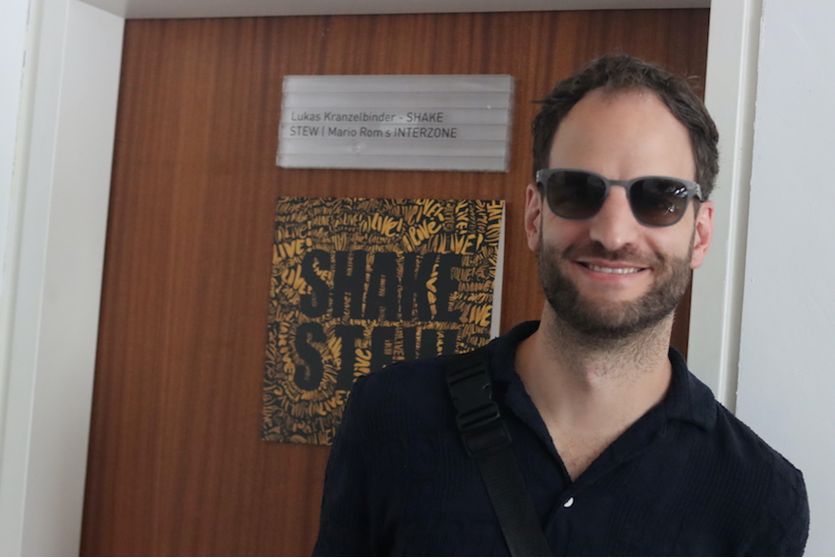
From the very beginning until today, what does “Shake Stew” mean to you socially, philosophically, and musically?
Lukas Kranzelbinder : For me, it's mainly, like the biggest possible musical luck you can have as a musician and as a composer as well. Because I found the medium with this band where I feel like I can really translate my musical ideas into the energy and the kind of experience, how I want music to be and how I would like my music to be played. The stuff we experience on stage, those moments are like, I'm obviously there. I'm playing the music on stage, but I still feel like, "wow, this is incredible". This is exactly how I would love to play music, which is a huge privilege because I think a lot of people search for their whole life for the kind of bands or formations to do the same, translate the ideas that they have. And I have “Shake Stew” since ten years and all the stuff that I write kind of works beautifully with this band. So I'm really thankful for the possibility to have this band.
Actually, you feel it. The presence of hypnotic African groove rhythms is very clear and powerful in your music. Who or what influenced you in that direction? Was it perhaps Fela Kuti? who established Afrobeat as a distinctive African musical style. Is Afrobeat an influence or an inspiration for you?
Lukas Kranzelbinder : I listen to a lot of music from different places around the world. I have to say in the last ten years of “Shake Stew”, I try to be more careful about how to name the certain influences, because most of the time our music is like the first thing that comes to mind are a kind of African beats and music. But then I think that there's been like a problem, I don't know, but definitely a huge topic in Western journalism that there's no such thing as African music. You can talk about Afrobeat or Gnawa music or Ethiopian jazz from the 70s or something like this. But a lot of times it's mostly described just as African music. And I tried to be much more specific by what our influences are. Also, I understand what you and what most of the people mean by it. I understand the thing. And I think, this has more to do with my own experience of how I want to listen to music and what kind of feelings I'm longing for music that is always very physical and always something that makes me want to move or that lifts me up, and it doesn't have to be groove stuff only.
Even the quiet stuff has to be physically very intense. That's what I'm longing for. And I think if you look at our beats, there are a few of the tracks in the albums where you could say, "okay, this has a strong Afrobeat influence and that stuff". You can definitely say that, but not too much. I think there is also a lot of influences from kind of Krautrock, which I also listen to a lot. The main journey was that I already studied jazz music in the university when I started to study at school when I was 16 or 17, first in Klagenfurt, then in Vienna, and then in Linz in the Bruckner University. And during my university time, everyone told me, "You got to check out Wayne Shorter, then you got to check out this and that from that time", which is amazing. I love all that stuff.
I love jazz and I love to listen to it. I listened a lot to Charles Mingus and I've been a huge Ornette Coleman fan, but it took me several years to realize that there was other music that touches me more emotionally or does something with my body when I listen to the Wayne Shorter Quintet. I love it on an intellectual level, but on a physical level, if I listen to our music, for example, or also if I listen to Cuban music or Congolese rumba from the 50s it touches me in a different way. And I think those are the influences that you hear in the band as well, because none of this is really related to traditional jazz. I think everything is related because it's all black American or black African music or black music. A lot of it is just based and rooted in Africa, in different parts of Africa. And a lot of inspiration comes from there, I would say, but in general, I think it's more about the physical approach to music.
You also mentioned that you like Gnawa music. The soul of Gnawa lies in the low frequencies of the guembri. When, why, and how did you decide that you wanted to play the guembri?
Lukas Kranzelbinder : Well, there were several things coming together. One thing was that “Interzone”, that we played a concert in Morocco, because the name “Interzone” comes from William S. Burroughs. He named Tangier the city in northern Morocco “the Interzone”, because it was an international zone. It was divided after the Second World War in four different zones. And a lot of bohemians from America, the beatniks, they traveled there and stayed there. Also a lot of people from the art scene. It was a crazy time, I think, but that's what he called “Interzone”. So this is the band's name.
The time of Janis Joplin, Led Zeppelin, Cat Stevens, the Rolling Stones....
Lukas Kranzelbinder : Even a bit earlier, like Jack Kerouac. And then Alan Ginsberg was there, Anyway, we wanted to play, I tried to get a concert there and we managed to get a concert there. I got in touch with Gnawa music, because my teacher, Peter Herbert, the bass player, he had a guembri at home and he had some bootleg recordings from Gnawa music as well. And then one thing led to another. I saw some Gnawa bands in Morocco when I was there, and I asked Peter if I could borrow his guembri and he gave it to me for quite a long time. And because it's a traditional one, I had quite a hard time learning it because there is no teacher in Austria. I had to watch to what I found on the internet and listen at recordings and after a while, I just realized that what I really liked are the repetitive motifs. You can hear that in my music, where it's like there are not a lot of notes, but it's more about how you play these notes than what notes you play, or how many notes you play. It's like you keep going with one pattern and you come into kind of a trance-like thing. And for that, the guembri was amazing because it's just like one octave. The sound is incredible. It's very beautiful. You can immediately feel that it's the ancestor of the bass. When I started, I really played a lot of guembri over the years. I think it also influenced my bass playing a lot, because you just have one octave and it's just a few notes, and then you just play with those notes and you realize, "okay, I can make melodies with less and less notes". And that's very, very useful.
And that's the trance part…
Lukas Kranzelbinder : Creates a trance.
It is amazing to watch you play. Whether you are playing the Guembri or the double bass, you seem to enter a trance...
Lukas Kranzelbinder : I try to, although I have to say that with the “Shake Stew” songs we have, I think I use the guembri as an instrument, as a sound, but the lines I play and the songs I wrote for the band, I don't think there is a lot of Gnawa music in it. We had one track on the "Gris Gris" album, but I play electric bass on that one. That's kind of really Gnawa triplet feel. But apart from that, the stuff that I play on the guembri is not related to Gnawa music. It's just like normal music where I like the sound of the guembri more. You can argue that some of the patterns, like everything, comes from somewhere. But it's interesting, I don't try to play Gnawa music. This is not something that I want to do. It's just something that influenced me, but I don't want to copy it in any way.
In terms of instrumentation, there is something that not many jazz projects use: two drummers. One example is the “Sun Ra Arkestra”, which sometimes used two drum kits, as did “Art Blakey and the Jazz Messengers”. However, some of the best examples come from rock music, such as “King Crimson” and the “The Allman Brothers”...
Lukas Kranzelbinder : It's funny because I never listened to King Crimson or The Allman Brothers before I had the band. Only afterwards, when everyone told me this is like King Crimson I started to listen to this music, but I didn't know it before.
In your music, not only do the drums appear in pairs, but so do the saxophones. You also play double bass alongside Oliver Potratz. Why did you decide from the very beginning to work with two drummers?
Lukas Kranzelbinder : Well, because I think that you have much more possibilities with two drums. It's a lot of work, but in general, you can play things and have kind of grooves that you can never have with one drum set. And also because I believe in the power of community, and then the power of two people playing together on one thing gives you a different kind of power. The different ways we use the two drums, sometimes it's like really two drum sets together try to make one groove. But I think there are quite a few, also in Saalfelden there were quite a few concerts with two drums, but most of the time there is not a huge concept behind the two drums. In our experience, it's a lot of practice and work, because what you need when you play with two drum sets is each drummer to leave out stuff that he would normally play, so the other can play it. So you work on grooves and then it's really weird to, for example, not play the bass drum on one or at a different beat, but because the other plays it. So it was a lot of practice and still is. We practice a lot to just get to hear two people at the same time.
And the two saxophonists, and the two acoustic double bass players. Why?
Lukas Kranzelbinder : I have to say, I never saw the symmetry in the two saxophones. I only realized this later, but for me, an alto saxophone and tenor saxophone are not the same. It’s even more different than an electric bass and a double bass. For me, it's just too different. So I always found the three horns are like three of them, so it's like two and three. That's how I always thought. But of course it's two saxophones. You're right. With the bass, it's this idea, that if you have different kind of bass players, you can have quite a big range of possibilities. It's like someone playing the really low grooves and then someone playing higher up some other stuff. Then you mix it with two different sounds, then electric bass-double bass, two electric basses, two double basses, guembri-electric bass, guembri-double bass or all kinds of combinations. I think there are a lot of beautiful possibilities with that.
For the past ten years, you have been an essential part of Jazzfestival Saalfelden. As I mentioned, you often open the festival by leading a hike through the mountains. This year, it was called “We Hike Jazz: Naturkino”. What does it feel like to be one of the main figures opening the festival, carrying your very heavy instrument into the mountains and performing outdoors? In the forest, you don’t have the same kind of resonance as you do in a concert hall. Instead, the trees and the natural surroundings become part of the sound…
Lukas Kranzelbinder : It feels amazing. It's amazing to play outdoors. It just feels very natural to me because I always felt we have so many mountains in Austria and there's so little music there, it's really surprising. I don't know why that is, but, there are some concerts from time to time. But it's not a regular thing to make music on the mountains. It's not something that happens naturally. So I thought it's good to just start and go out there, go on the mountain and just play. Of course, for the double bass, it's quite a different sound out there because you have no room, no walls and not something like an acoustic chamber. But if you hear a trumpet on the mountain top, you suddenly know why they built the trumpet. It has such a huge sound. And I love to play, I play outside very much. I'm happy that the festival agreed to do this for such a long time already because it's such a special way. It also does something to the music. It changes the way you improvise.
You also had the pleasure of playing for the second time with the great South Korean drummer Sun-Mi Hong. You performed with her last year at Fuchs, in a fantastic concert that I saw. This year, you opened the festival with her on the mountain. I was not there…
Lukas Kranzelbinder : That was amazing. I think she's a fantastic drummer. And I'm just so happy that Saalfelden gave us the opportunity to meet again and play this year. We had Sun-Mi Hong from South Korea, Camila Nebbia from Argentina was playing saxophone, and Aymeric Avice from France was playing trumpet. So to have different people, different musicians, different nationalities on the mountain, I chose them. And when you play up there, it's just magic. So it's a really cool chance to do that.
That must be an extraordinary experience for a musician—one of those precious moments. The mountain and the forest were truly wonderful. Let’s talk a little about the concert in the Kollingwald forest, because it felt like pure magic, almost like a dream. You came from one side playing the guembri, while Almut was singing—or, rather, creating something beyond singing. Her voice sounded like many birds, creatures, and fairies. Then Max arrived and began drumming on the woods...
Lukas Kranzelbinder : it was beautiful. I enjoyed this concert also very much.
It was pure improvisation, right?
Lukas Kranzelbinder : It was completely improvised from the beginning to the end.
Did you sketch a little bit the way you would start?
Lukas Kranzelbinder : No no no. Nothing. Well, we talked about that. We wanted to walk through the woods and we didn't want to start on stage. That's what we talked about. But everything else was improvised. And it was a very beautiful experience for myself as well, because it reminded me of the power, if you have the right people in the right moment. A purely improvised set can be incredibly magical. I didn't choose the people, Almut invited me. It was not my project. Almut Kühne invited me because we never had the chance to really play before. And Max Andrzejewski, like I said, I know him for a long time, but it really felt completely naturally. And I think the way we played together, 50 minutes non-stop, like a pure trip. It had beautiful parts. Everyone felt we went in the same direction. It was magical. It was a journey. Definitely.
So spiritual…
Lukas Kranzelbinder : It was very spiritual. I was very touched by that. It was one of my highlights. Yes.
After that, you held a wonderful jam session. You are a very spiritual person, even in the names you choose for your projects. You called this one the “Spiritual Unity Session”, and it was amazing. Before we talk about the jam session that closed the festival, please tell me about your experience performing in the streets of Saalfelden in the concert parade “The Big Shake—A Saalfelden Homecoming”. “Shake Stew” played together with the local folk bands “Bürgermusik” and “Eisenbahnmusi”. What did you mean by that title?
Lukas Kranzelbinder : Well, first of all, it was quite big, inviting 70 people to play with us. It was quite a big shake. It made a lot of noise and it was a homecoming because ten years ago we were founded in Saalfelden. The last ten years we were on a journey that was unique. And now we had a kind of a homecoming, and it was also very nice for me to invite the traditional bands, marching orchestras from Saalfelden to be part of this. That was a huge community project, and it involved a lot of hobby musicians that are really not into jazz normally. They're like all kind of other stuff. They just play for fun and to have them involved in, and walking through the city, playing our music with them and then improvising, even together, it's just something where music really is like the power of the universe, bringing people together and creating this matching. I think you could really feel that in this project. It was much more than what quite a few people thought that this was kind of a gimmick to make fun, like a fun project. “So haha, we are gonna play with the traditional people, and they will walk around and haha”, but musically it was so, so, so magical for me that it was really a blessing how it worked.
These are my humble words as a non-musician—someone who is simply very perceptive and loves music—but it felt like poetry…
Lukas Kranzelbinder : Yes.
It was poetry: the joining of the “Heimat”, or homeland, with folk music, the brass band, and the magic of your music. As I understand it, the musicians were playing pieces from your compositions from “Ten One Two”, your tenth-anniversary double album. You performed all the way from the Rathaus to the popular Stadtpark, where Mario Steidl created the idea of bringing music to the local community…
Lukas Kranzelbinder : Yes. That's beautiful. I loved it.
The park was full of local people—tiny children from about three to ten years old, girls and boys, their grandparents, and everyone in between. They were all dancing, and their faces showed pure joy and bliss...
Lukas Kranzelbinder : It's true, it was an amazing project. I loved it so much. I'm thankful that we did it. I'm working right now to bring it, to make it happen again sometime next year or the year after. We'll see. But it was a unique celebration for our anniversary. Yes.
What was your experience of that jam session? Where you were the person who brought those musicians together? What was the highlight of that moment for you?
Lukas Kranzelbinder : It ended at three in the morning, I think, or something like this. Well, the idea behind it was that every year, there are so many musicians meeting in Saalfelden that don't play with each other. You have all the bands that play with each other, and everyone knows each other. So I wanted to create an environment where people can play a little bit with each other at the end of the festival, just to celebrate and unite our spirits and everything. I think this started also six years ago or something like this. And it's been a huge success. It's even nearly a too big success because you can't get in any more. It's so full most of the time now that it's really packed. But what happens every year is that different people come there and meet, and I try to coordinate it a little bit so that people who want to play with each other can have a moment and just play, it's basically like meeting for a drink, but meeting to play with each other. That's the power of music.
What have been your highlights over these ten years as part of Jazzfestival Saalfelden? Are there any particularly precious moments that you carry in your heart? You mentioned your plans for 2027 earlier. Do you already have plans for your various projects—a recording, perhaps, or a major tour?
Lukas Kranzelbinder : Well, first of all, for Saalfelden, it's pretty hard to talk about the last ten years because there's been a lot of amazing stuff. Of course, the opening concert with “Shake Stew” will always be the most special thing and will be in my heart forever. Then I also like to cherish and think back about the 2018 concert with Shabaka Hutchings as a guest. I was also in Saalfeld in the last show on the Saturday night. That was also amazing. Then one of the highlights of the hikes I have to say was the hike with Ted Poor, the American drummer and Cuong Vu, the trumpet player and Astrid Wiesinger. And that year, we also played a trio concert with Astrid, Ted, and myself. And that was also amazing, I think the trio concert back then, and the one in the woods this year, those were the most fluent, most natural free improvised concerts I ever played. But so many of the sessions were amazing.
At the moment, of course, I have to say that this “Big Shake” project was the biggest highlight of all ten years because it was kind of a culmination of everything. And it was such a community event that it was amazing. Anyway, this festival is incredible. So I'm just lucky to be a part of it for so many years.
Plans for the future. We're already working with “Shake Stew” on our biggest show in Vienna next year in the arena on June 12th, 2027. We want to play "Arena Open Air", which is like a huge step for us, but we decided to do this because this year we got invited to "Popfest" and played in front of 10,000 people. That was crazy, and we feel like there's a chance to be able to do this.
So we now need to bring 2500 people to join us there. And we also work on some new recordings. The third part of our anniversary album, ‘Ten Three’, will be coming out next year. And we're working on finishing this. Then I also am in the final stages of a new album, a new project of mine with Mona Matbou Riahi, the clarinet player, and Miriam Adefris, the harp player who played with Yvonne this year at the opening concert in Congress Saalfelden.
We recorded a trio album last year for BMC in Budapest and this will come out in March, I think. Then also next year, we'll probably release an album with a quartet that I played with in Bolzano at the "Südtirol Jazz Festival" for four years, where we do five hour concerts each year. We play five hours non-stop with three dancers. It's kind of a ritual performance. The festival booked it for five years. We do it every year, five hours every year, the same people. And we recorded some of it, and it's with Delphine Joussein, the flute player from France. Then Johannes Schleiermacher is in it and Julian Sartorius, the drummer. So this is also something that is coming up.
And “Interzone” will also release a new album next year in autumn, I think. So I think lots of beautiful stuff coming up, lots of good stuff happening. And I'm just surfing the wave.
You have visited the country where I was born. Will you be returning to Belgium where you have already performed? Is Belgium on the map for Shake Stew or for one of your other projects?
Lukas Kranzelbinder : I hope so. I hope we come back. We had a great experience at “Brussels Jazz Festival 2023” to play there, and the day before we also played in Brussels. It was amazing because we played there. And then the next day we went to a theater and saw Maâlem Hamid El Kasri, who is one of the biggest Malems of Moroccan Gnawa music still alive. It was an incredible concert. But I hope that we find a way to play there again.
Interview & photos © Federico Garcia
Other
In case you LIKE us, please click here:


Foto © Leentje Arnouts
"WAGON JAZZ"
cycle d’interviews réalisées
par Georges Tonla Briquet

our partners:






Luchthavenvervoer zonder stress
Hotel-Brasserie
Markt 2 - 8820 TORHOUT
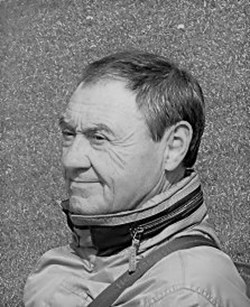
Silvère Mansis
(10.9.1944 - 22.4.2018)
foto © Dirck Brysse
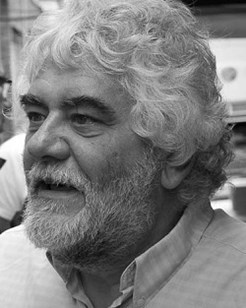
Rik Bevernage
(19.4.1954 - 6.3.2018)
foto © Stefe Jiroflée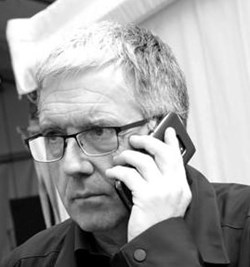
Philippe Schoonbrood
(24.5.1957-30.5.2020)
foto © Dominique Houcmant
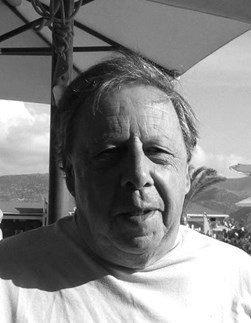
Claude Loxhay
(18.2.1947 – 2.11.2023)
foto © Marie Gilon
Pedro Soler
(8.6.1938 – 3.8.2024)
foto © Jacky Lepage

Sheila Jordan
(18.11.1928 – 11.8.2025)
foto © Jacky Lepage
Raúl Barboza
(22.5.1938 - 27.8.2025)
foto © Jacky Lepage
Special thanks to our photographers:
Petra Beckers
Ron Beenen
Annie Boedt
Klaas Boelen
Henning Bolte
Serge Braem
Cedric Craps
Luca A. d'Agostino
Christian Deblanc
Philippe De Cleen
Paul De Cloedt
Cindy De Kuyper
Koen Deleu
Ferdinand Dupuis-Panther
Palma Fiacco
Anne Fishburn
Federico Garcia
Jeroen Goddemaer
Robert Hansenne
Serge Heimlich
Dominique Houcmant
Stefe Jiroflée
Herman Klaassen
Philippe Klein
Jos L. Knaepen
Tom Leentjes
Hugo Lefèvre
Jacky Lepage
Olivier Lestoquoit
Eric Malfait
Simas Martinonis
Nina Contini Melis
Anne Panther
France Paquay
Francesca Patella
Quentin Perot
Jean-Jacques Pussiau
Arnold Reyngoudt
Jean Schoubs
Willy Schuyten
Louise Stubbe
Frank Tafuri
Jean-Pierre Tillaert
Tom Vanbesien
Jef Vandebroek
Jean-Marie Vandelannoitte
Geert Vandepoele
Guy Van de Poel
Cees van de Ven
Donata van de Ven
Maurits van Hout
Harry van Kesteren
Geert Vanoverschelde
Roger Vantilt
Patrick Van Vlerken
Marie-Anne Ver Eecke
Karine Vergauwen
Frank Verlinden
Jan Vernieuwe
Anders Vranken
Didier Wagner
and to our writers:
Mischa Andriessen
Robin Arends
Marleen Arnouts
Werner Barth
José Bedeur
Henning Bolte
Paul Braem
Erik Carrette
Danny De Bock
Denis Desassis
Jean-Pierre Devresse
Pierre Dulieu
Ferdinand Dupuis-Panther
Federico Garcia
Paul Godderis
Stephen Godsall
Jean-Pierre Goffin
Claudy Jalet
Chris Joris
Bernard Lefèvre
Mathilde Löffler
Claude Loxhay
Ieva Pakalniškytė
Anne Panther
Etienne Payen
Quentin Perot
Jacques Prouvost
Jempi Samyn
Renato Sclaunich
Yves « JB » Tassin
Herman te Loo
Eric Therer
Georges Tonla Briquet
Henri Vandenberghe
Jean-Jacques Vandenbroucke
Peter Van De Vijvere
Iwein Van Malderen
Jan Van Stichel
Olivier Verhelst