Christoph Huber, a conversation at jazzfestival Saalfelden…
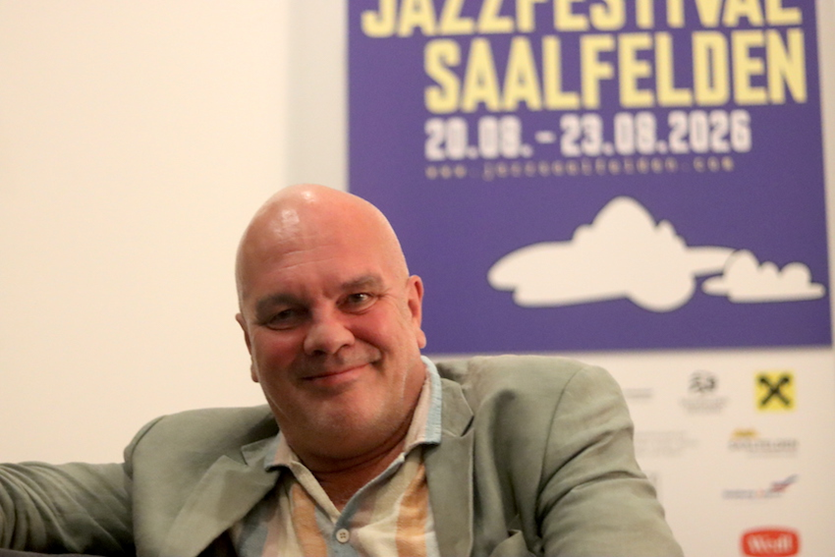
During the 46th Jazzfestival Saalfelden, I had a delightful conversation at the Congress Saalfelden with one of the most important figures in the Austrian jazz scene: Christoph Huber, the long-serving artistic and organisation director of Vienna’s Porgy & Bess Jazz & Music Club, one of Europe’s best-known venues for contemporary jazz and improvised music.
Christoph Huber was born in 1968 in Baden, Switzerland, and studied sports science and management at the University of Vienna. Before joining Porgy & Bess, he co-organised the International Jazz Festival Saalfelden from 1991 to 1998 and worked on several other concert and festival projects. After leaving the Jazzfestival Saalfelden organising team, he became involved with Porgy & Bess in 1993, when the club was founded, alongside Mathias Rüegg, Renald Deppe and Gabriele Mazic. Since 2000, he has directed the club at its present location, Riemergasse 11, in Vienna’s first district.
A central part of Huber’s philosophy is giving musicians room to experiment—even when a project might fail. He has also been part of the history of Jazzfestival Saalfelden, having worked with the festival team in the late 1980s and throughout the 1990s.
Christoph Huber is a cornerstone of the Austrian jazz scene—and of jazz made in Austria. He has a very interesting approach to and understanding of Austrian music, and he is an important figure in the country’s music scene—not only in jazz, but in music in general.
You were born in Saalfelden, where the festival has taken place since, I believe, 1978. You are a living part of the history of Jazzfestival Saalfelden...
Christoph Huber: Well, first of all, thank you very much for this kind introduction. I have to correct a couple of things. I was not born in Saalfelden. I was born in Baden, near Zurich in Switzerland. My father was from Austria. He already passed away. My mother is from Germany. Because of economic reasons, they all went to Switzerland and they got a job there and they met each other. And I was born near Zurich. I grew up there. There I spent my first seven years.
Then my parents decided, for what reason ever, I have no idea. to go back to Austria or my father, basically. So when I was seven, I spent primary school in Switzerland or started that. In the first year they moved to Zell am See, which is close to Saalfelden. I spent primary school there. Then in, I think it was 79 or something like that, we switched to Saalfelden and the first experience I had of Saalfelden was the tent on the parking space in front of Konsum, which was in this time a very famous supermarket. I asked my parents "Hey, what's that?" And they just say, "No idea, but it's nothing for you". Of course that attracted my attention. It was the Jazzfestival.
After a couple of more years I went there to the secondary school. And at one point, it was just like this topic didn't leave me anymore. It was just like, "okay, it's happening here. I have no idea what it is. I don't understand the music at all, or I have no idea what kind of music that is". Then a friend of mine, who was in the same school where I had been, said that he was playing basketball. He asked me if I wanted to join because there was one guy missing. I think I was about14 and I said, "oh, well, it's interesting". And so I joined the basketball team with the name Jazz Life Saalfelden because all the jazz people, all the jazz guys who were responsible for the festival, played basketball. They were all older than me, double my age. So I thought, "oh wow, what's going on?" I really liked those people, and because of the fact that I already had been in contact with the festival a bit before I think it was 84 when I went with friends of mine to the tent at the Biberg.
Then I was listening to the radio broadcast of the Festival, then hosted by a famous Austrian guy called Walter Richard Langer. I think I heard Don Cherry and people like that. This really attracted my attention. Due to the fact that I got the contact via basketball with the Jazz community there, it was very easy just to join them. I didn't have money, as I still was a child, and I couldn't afford the tickets. They took me as rookie. They said, "okay, join us. It's fine".
The first real jazz concert to my awareness was on the 1st of June in 1985. I was 17. I was I was born in 68, and the band was James Blood Ulmer and Phalanx with George Adams. That really knocked me out, because that was a kind of music I didn't hear before. It made such a huge impression on me that I thought, "oh, wow, that's a totally different kind of world". Because I had a lot of positive feelings about the music, a lot of the people at the jazz club, they recognised, "okay, there is a young guy who is interested in the music", which normally is not heard by young guys. When you listen to jazz, normally you need to have kind of a musical experience, because otherwise you will not have the possibility to get into it.
I was listening to the Beatles before, to Deep Purple or such kind of stuff. Jimi Hendrix, of course, also. And, James Blood Ulmer, for example, that matched together, and it' was different, but it was at a point where I said, "oh, wow, that's really so”. The people organising the festival and the concerts here in Saalfelden, recognized that there was a young guy who was interested in that and they just said, "okay, we support that and you can come with us". And we went to the jazz festival in Berlin. But the point was also that my parents couldn't say anything against that because they were 30 years old and they all had companies here. So they were serious guys. It was not like a loose jazz community or whatever. So it was not possible for my parents just to say, "hey, no, we don't allow that". Of course, from time to time they didn't want to allow me going to Berlin, because I needed a day free in school. I had to go to the director in the school, which was not easy to do. I went and I asked him and told him, "okay, I go to Berlin, to the festival. I need one day". It was "Allerheiligen", which is a holiday. But there was one day left. Monday. Because Monday was the returning day and it was a school day. I told him, "I need the official approval from the school. That I can do that". And the director thought that I was playing there, that I was a musician playing in Berlin. I didn't correct him. So for me, it was a point to say, "okay, when he believes that I'm playing, it's fine".
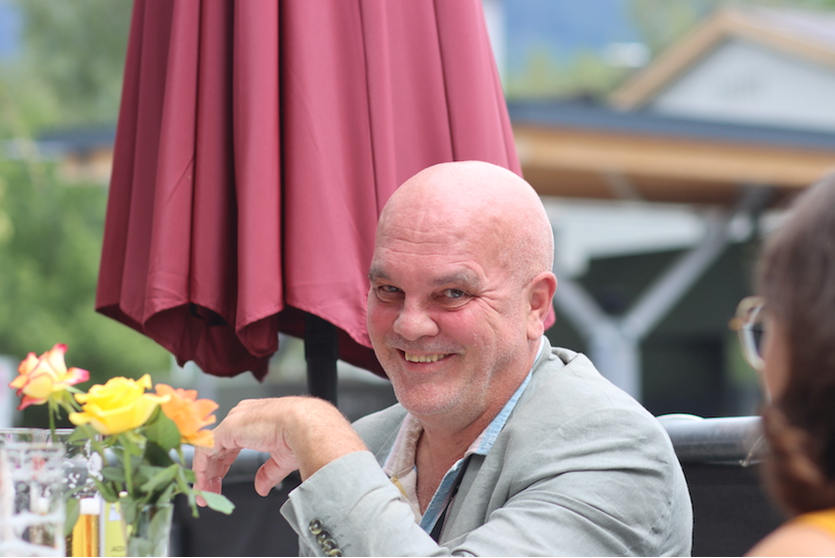
He gave me the day off. He just said, "okay, it's fine". And I went back to my father and said, "The director has allowed me to go to Berlin with my friends". So he couldn't say anything against that. And at four in the morning we went to Berlin by bus, it was 1985. That was a super experience for me. Miles Davis was playing at the Philharmonie. So it was the real venue. And so from that on, I had a kind of contact and I started to get as much information in this field as I could get. I read all the books and my friend Franz Herzog, a vinyl collector, copied LP's on cassettes, because cassettes were affordable. I couldn't afford vinyl. He copied hundreds of cassettes with, let's say some of the most important recordings in the jazz history. I still have the cassettes at home. He wrote the lineup, the title on the cassettes. For me that was the most important information I could get.
He's here today, he's still around and I'm very thankful. Because without that information, I wouldn't get this kind of knowledge about the music. I read all the necessary books. In a very short time, I got a good overview about the history, about the development, about the contemporary scene. And then I was trying to figure out all possibilities and I could do that because the people from the jazz club supported me because I went with them to Munich, Sonny Rollins was playing there, or John Zorn, and many others, ... We went just to hand out the leaflets there. Because they needed someone to distribute the information of what was going on here. I Also went at other festivals like Hollabrunner Augustwiesn or Nickelsdorf. Moers Festival was also a very important one. I was there at a very young age, somehow I was still a teenager. And I believe that was also the reason I got the attention of different other people. Because it's unusual that a young guy is really trying to figure out all these things, what I tried to do.
I met a lot of musicians. And the next point maybe also quite important. I think the first festival was in 79, and the first concerts were around 76. And then, it was done by freaks somehow. And those freaks, they were people who went to the Isle of Wight Festival in 1970 and they were listening to Jimi Hendrix, The Doors and people like that. Also Miles Davis was playing there. So they recognized "ok, Jimi Hendrix is super great, but it's maybe not the only thing, which is interesting". So at one point they switched to jazz, they started with blues concerts and then they did the jazz festival. When I joined them, in 85, the people there couldn't speak English that good, and my English wasn't good either, but I was still in school where I learned English. Actually, I was the only one who could communicate with the agencies and with the musicians.
Of course, the other ones also could talk a bit: "hello, nice that you're here". Things like that. But it was not really possible for them to do an interview in English. So they said, "okay, come on, speak with them because you can handle that". But, we had to speak about fees and things like that, but I wasn't responsible for that, I just had to translate somehow. It was a great time for me. I had a great time in school. I had a great time with those people. I had a great time playing basketball with them. We trained twice a week in the evening, and after that we always went to a bar. With a couple of beers we spoke about music and we regularly always ended up in the only place which was open here, which was a discotheque. We stayed there speaking about music, speaking about whatever till three or four in the morning. Then I went back to my home and the next day at seven I had to go to school and at that time it was no problem. I just did it. It was a lot of fun. It was a lot of experience. And that was a time I learned a lot.
Then, I progressed in this kind of hierarchy, in the club, and I became responsible for logistics. I was responsible for a couple of other things too. And in the end, but in a very early stage also, I was part of the programming team because I already had a lot of knowledge about that, although I still was only 18. The guy who was running the festival, the chief, was Gerhard Eder, I worked with him for, probably more than 15 years. With a lot of difficulties, of course, but, that opened a different world for me. I finished school in 88, and then I went to Vienna to study, but I didn't really know what to study. So I studied sports and science, which was logical because I was in a sports school here in Saalfelden. But I never wanted to work in this kind of environment. It was a great study. I enjoyed the time a lot. I finished the study and then at that time, just before I finished, I got the opportunity to join Mathias Rüegg and the Porgy and Bess because they started in fall 1993, and I joined them in late fall 93.
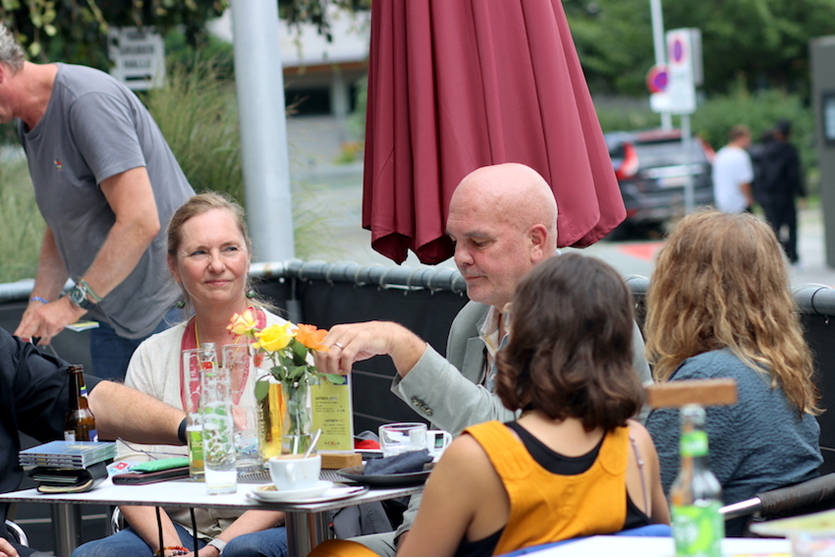
So that was the next step or at least a different step. But I didn't lose the contact with the people in Saalfelden, also because of the fact that I started this “Shortcut series” in 1995, this was already the time when I was engaged also at Porgy. But the festival was in the Summer, and then we had “Summer intermission”. I know that Gerhard Eder didn't really enjoyed the situation, he would have preferred that I just did the Saalfelden stuff. But that's what happened. And the “Shortcuts” I did for 4 years, the first “Shortcuts” was in 1995. Then I did it for 3 or 4 years. I don't really remember. And finally I quit. Because there also was kind of a tension between Saalfelden and Vienna. And also, I did a concept for the “Shortcuts” stuff and I had always interfered in different kind of things. And I said, “okay, it's fine with me. It's working great. And do it yourself”. So, I think I finally quit in the late 90s or maybe early 2000 and not really quit in terms of that. I had still great respect towards the people and towards the Festival, but I quit working for the Festival. Then I just tried to figure out how many festivals I witnessed. When I remember well, this year is the 40th festival I'm attending. My mother is still living here, so I come to Saalfelden for the festival and for my mother.
I have to admit that I have very positive feelings for this festival because it's a different festival than I knew in the 80s or in the 90s. Nevertheless it's still an interesting festival. And of course, it's necessary to change things. I'm grateful for the possibility. It's my musical socialization. Without that, I wouldn't be the director of Porgy and Bess, for sure. And that's something I have to admit, which is like a groundbreaking thing concerning my development. For me, it's just my passion. I have this kind of emotion towards this kind of music, which was always like underground stuff. It's not popular music. It's not like that, a lot of people have no idea. And a lot of people say, “that's not music” or things like that.
Interview and photos © Federico Garcia, 2026
Other
In case you LIKE us, please click here:

Foto © Leentje Arnouts
"WAGON JAZZ"
cycle d’interviews réalisées
par Georges Tonla Briquet
our partners:






Luchthavenvervoer zonder stress
Hotel-Brasserie
Markt 2 - 8820 TORHOUT
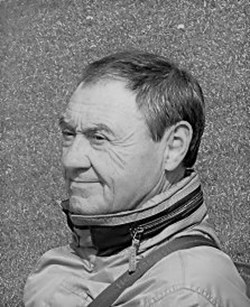
Silvère Mansis
(10.9.1944 - 22.4.2018)
foto © Dirck Brysse
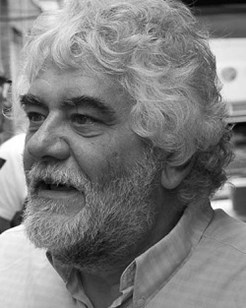
Rik Bevernage
(19.4.1954 - 6.3.2018)
foto © Stefe Jiroflée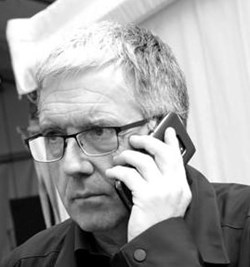
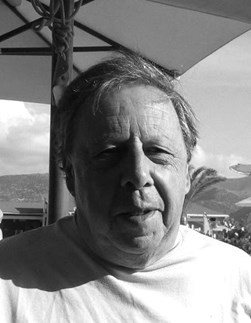
Philippe Schoonbrood
(24.5.1957-30.5.2020)
foto © Dominique Houcmant
Claude Loxhay
(18.2.1947 – 2.11.2023)
foto © Marie Gilon
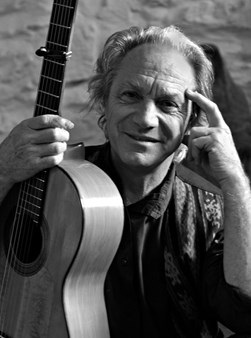
Pedro Soler
(8.6.1938 – 3.8.2024)
foto © Jacky Lepage
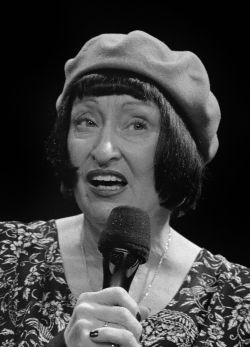
Sheila Jordan
(18.11.1928 – 11.8.2025)
foto © Jacky Lepage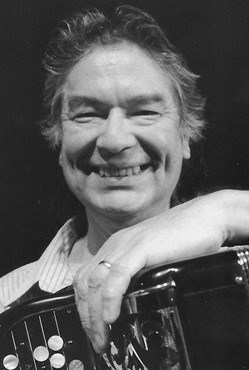
Raúl Barboza
(22.5.1938 - 27.8.2025)
foto © Jacky Lepage
Special thanks to our photographers:
Petra Beckers
Ron Beenen
Annie Boedt
Klaas Boelen
Henning Bolte
Serge Braem
Cedric Craps
Luca A. d'Agostino
Christian Deblanc
Philippe De Cleen
Paul De Cloedt
Cindy De Kuyper
Koen Deleu
Ferdinand Dupuis-Panther
Palma Fiacco
Anne Fishburn
Federico Garcia
Jeroen Goddemaer
Robert Hansenne
Serge Heimlich
Dominique Houcmant
Stefe Jiroflée
Herman Klaassen
Philippe Klein
Jos L. Knaepen
Tom Leentjes
Hugo Lefèvre
Jacky Lepage
Olivier Lestoquoit
Eric Malfait
Simas Martinonis
Nina Contini Melis
Anne Panther
France Paquay
Francesca Patella
Quentin Perot
Jean-Jacques Pussiau
Arnold Reyngoudt
Jean Schoubs
Willy Schuyten
Louise Stubbe
Frank Tafuri
Jean-Pierre Tillaert
Tom Vanbesien
Jef Vandebroek
Jean-Marie Vandelannoitte
Geert Vandepoele
Guy Van de Poel
Cees van de Ven
Donata van de Ven
Maurits van Hout
Harry van Kesteren
Geert Vanoverschelde
Roger Vantilt
Patrick Van Vlerken
Marie-Anne Ver Eecke
Karine Vergauwen
Frank Verlinden
Jan Vernieuwe
Anders Vranken
Didier Wagner
and to our writers:
Mischa Andriessen
Robin Arends
Marleen Arnouts
Werner Barth
José Bedeur
Henning Bolte
Paul Braem
Erik Carrette
Danny De Bock
Denis Desassis
Jean-Pierre Devresse
Pierre Dulieu
Ferdinand Dupuis-Panther
Federico Garcia
Paul Godderis
Stephen Godsall
Jean-Pierre Goffin
Claudy Jalet
Chris Joris
Bernard Lefèvre
Mathilde Löffler
Claude Loxhay
Ieva Pakalniškytė
Anne Panther
Etienne Payen
Quentin Perot
Jacques Prouvost
Jempi Samyn
Renato Sclaunich
Yves « JB » Tassin
Herman te Loo
Eric Therer
Georges Tonla Briquet
Henri Vandenberghe
Jean-Jacques Vandenbroucke
Peter Van De Vijvere
Iwein Van Malderen
Jan Van Stichel
Olivier Verhelst