Christoph Cech, a conversation at Jazzfestival Saalfelden 46
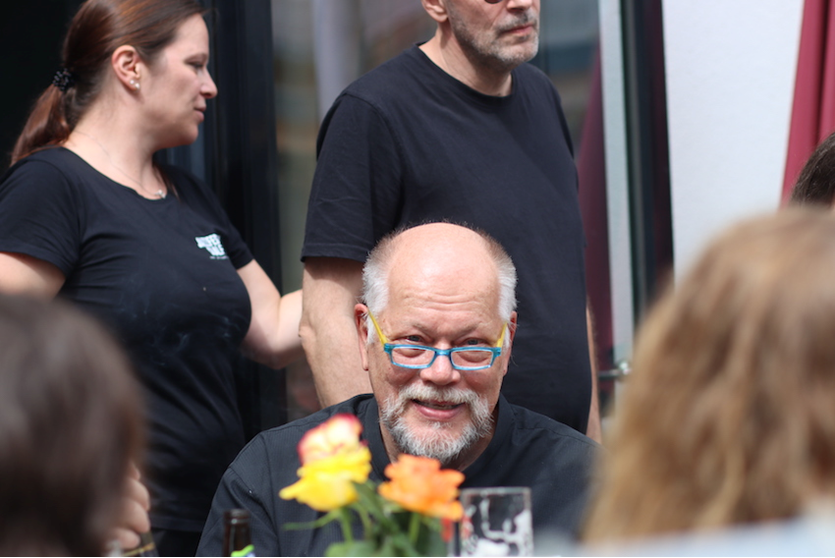
On the second day of the 46th Jazzfestival Saalfelden, Friday, August 21, 2026, I had a fascinating conversation with Christoph Cech after the fantastic Shortcut concert he performed at the Kunsthaus Nexus stage with his quartet, Christoph Cech & oenm, in “Satiesfaction”.
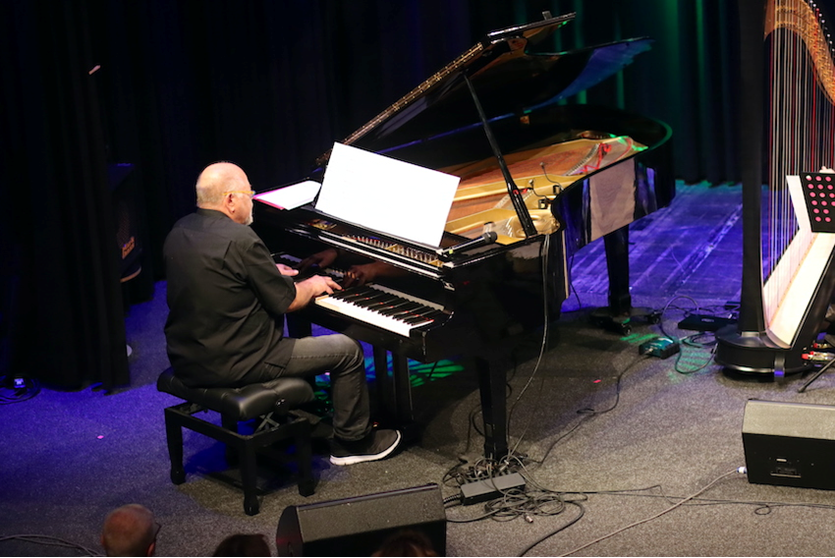
The quartet featured Valentina Cinquini on harp, Dušan Kranjc and Stefan Konzett on trombone, and Christoph Cech on piano and composition. It was a remarkable concert featuring brilliant new compositions by the virtuosic Austrian pianist, music director, composer, and teacher Christoph Cech.
Christoph Cech has just performed an incredible concert with great virtuosity. The way he moves his left and right hands across the piano is amazing. He is an outstanding composer and interpreter, performing with an extraordinary quartet featuring an instrument I’ve never seen before: the bass trumpet. There are also trombones and an incredible harpist, an Italian woman who plays beautifully. They all have an incredible dialogue. It’s a beautiful, romantic interaction between the strings of the piano and those of the harp. It was amazing.
How do you feel about performing today for this audience at the Nexus stage? I believe you have played here before...
Christoph Cech: Yes. A few years ago, I was here with my big band—the Christoph Cech Jazz Orchestra Project—and it’s always wonderful to play here. First of all, there’s an exquisite group of artists, and I know many of them, so I’m always happy to see them again. You hear fantastic projects here, and I would say it’s the most important jazz festival in Austria. For many decades now, it has had an excellent direction and has reached out toward musical qualities that you don’t very often hear in jazz. That’s why this year I was asked to write a program for two people—harp and piano. I think that’s something that has probably never been done before. For me, it was important to present my personal connection between new music, jazz, and possibly also classical music. I have a strong relationship with Franz Schubert, and I wanted to express that in this program.
We’ve already managed to do that. It’s always risky, because this was the premiere. We played it for the first time today as a quartet. But you have to look for places like this nowadays—places where you can find an audience that is able to appreciate experiments in chamber music like this. So that’s really wonderful. I very much hope that our audience—including many younger people—will also become interested in more intricate music: music that doesn’t speak in just one straightforward language, but is ambiguous and open to different interpretations. I would like that. But it’s always wonderful to be here. Fantastic.
I am not an expert, but what you played was so exquisite, delightful, and refined. As you mentioned, the compositions were inspired by the classical genius Franz Schubert. Where does your inspiration come from? You are playing new jazz and new music, and it is very complex. Are you perhaps transferring classical musical ideas into your jazz and your own music?
Christoph Cech: Something that might be interesting is that I grew up in Vienna as a child who played classical music. I started playing the piano when I was seven. But when I was twelve, improvisation happened to me. My mother always used to say, “He’s fantasizing.” And that’s how I came to jazz, really. I then bought the records that seemed appropriate and moved into jazz. Throughout my life, I’ve been a curious person. Whenever I liked something, regardless of where it came from, I thought, “I’ll take that—I want that too.” That’s how my personal style developed, I would say.
I don’t rank the different influences. There are many different influences that have stayed with me. There’s nothing I want to hide; all of it together makes up my music.
As you already mentioned, my particular passion is rhythmic counterpoint—in other words, a complex approach to rhythm. Twenty or thirty years ago, it was much more difficult to find players who could perform this really well. By now, it has become part of the language.
It’s wonderful to see what has happened with rhythmic languages in jazz during the twentieth century. It now reaches a point where you have these complex structures in which people essentially play only against the pulse—but not even against one particular pulse pattern or clave. Different people play with different claves, and, for example, they all meet again on the first beat after thirty-three eighth notes.
It’s very difficult to perform, because you first have to trust yourself—that what you’re doing is correct—and trust that the resulting structure will work with what the others are doing. You have to play very precisely.
We could really see, as you said, the trust and the bonds between you and your three amazing musicians. How did you come to work with these musicians? How did you meet them, and how did you choose them for your quartet? How did it all come about?
Christoph Cech: I taught at the Anton Bruckner Private University in Linz from 2000 to 2025, and I was head of the jazz department there for fifteen years. As a result, I trained many young musicians, and I have a large pool of wonderful people whom I can invite to play with me.
That’s an interesting phenomenon too. Two musicians from my generation still play in my big band, but the age range goes all the way down to very young musicians—around nineteen or twenty. That’s beautiful. A critic once wrote that you don’t get the feeling that a big band is sitting onstage; rather, it feels like a large family. That was a lovely comment, and it also reminded me of Hermeto Pascoal, whom I admire enormously. It’s sad that he has passed away. I was still able to see him perform a few years ago.
I also have many different professional roles. I’m a conductor, and I work in contemporary music. I have an ensemble for new music, so I have a very large pool of musicians from a wide range of backgrounds.
But it’s important to say that there’s no longer such a thing as a purely “real” jazz musician or a purely classical musician. Because of the patchwork nature of building a career and making a living, musicians have become extremely flexible and perform their music in many different contexts.
I always say that the renewal that music is currently undergoing, comes from the players, not from the compositions themselves. And it’s wonderful that I have such a huge family.
You taught at the Bruckner University in Linz, so you are very familiar with the music scene in two realms: contemporary music and jazz. I always say that Austria has a very unique approach to jazz. Perhaps we could even speak of an Austrian jazz tradition. My first question is: How do you see the future of jazz with the new generations? As a promoter and teacher, you have worked with many young and talented people who have come to Austria or were born here. And what is your message to jazz lovers and to people like me, who are not experts in the musical process? What would you say to those who want to become musicians and perform onstage?
Christoph Cech: Okay, those were a lot of questions. I think what may be distinctive about Austria is that this small country is, of course, very strongly oriented toward the preservation of classical music. We have these great composers, and that tradition is very important to us. As a result, jazz was not accepted for a long time, because the country’s cultural identity was essentially based on classical music—or on folk music for tourism. I always think that when musicians have to fight a little for recognition, more interesting music emerges. That may be part of the reason why this small country, Austria, has so many outstanding jazz musicians.
I should also say that I’m a critical listener. I always told my students: “You play like nobody else in the world. You don’t need to compare yourself with anyone, because you are unique. There’s no one who plays like you. So forget the pressure, and don’t think, ‘That person plays better,’ or ‘She plays better.’ Just do your own thing—but do it consistently.”
One criticism I sometimes have is that I would like jazz—which is political music from the outset, because the individuals places themselves within time and improvise freely—to engage more with that aspect. It is a profoundly democratic process: taking the freedom to invent sounds and noises in the present moment. The players need to be conscious of that. Sometimes the whole thing feels too apolitical to me, and I would like people to think more about why they play this music and what they really want to communicate through it.
There is sometimes a great longing for beautiful music and pleasant sounds. But at times that feels a little superficial to me, because I was shaped by a different period—the 1970s and ’80s, when people also undertook wild experiments. The soundscapes were much more uncompromising and raw—unclear in the recording. That was the environment that formed me. Naturally, we also rebelled against the musical establishment.
So, in answer to the third question, I would say: be authentic, take a position on what is happening around you, and transform it into your music. Produce beautiful things, but also produce things that make people think—perhaps even things that disturb them. Because, as I said, where words end, music begins, and that carries a great responsibility.
You told me outside about your experiences performing in Mexico. When did that happen, and what was the highlight of your trip to Mexico and your encounter with the Zapatistas?
Christoph Cech: There were some very funny experiences. I was in Mexico in 1994 and 1997, each time on a longer tour. In 1994, I was there with my friends Tibor Kövesdi and Christian Mühlbacher in a trio—a piano trio.
We travelled to Chiapas, where the Zapatista revolution had taken place shortly beforehand, and we were warned about it. Even the ambassador said, “I can’t protect you there,” and repeatedly emphasized Austria’s peacekeeping mission.
In the end, nothing happened, of course, but it was interesting. We also played a lot in university settings, and those were wonderful experiences. It’s so enjoyable to be somewhere where absolutely nobody knows you. The Mexican audience was very enthusiastic, and I introduced the music in slightly broken Spanish. That’s important too. So those were wonderful tours, and there are countless funny stories from that period. We can’t tell them all now—perhaps next time.
Text and photos © Federico Garcia
Other
In case you LIKE us, please click here:


Foto © Leentje Arnouts
"WAGON JAZZ"
cycle d’interviews réalisées
par Georges Tonla Briquet
our partners:






Luchthavenvervoer zonder stress
Hotel-Brasserie
Markt 2 - 8820 TORHOUT
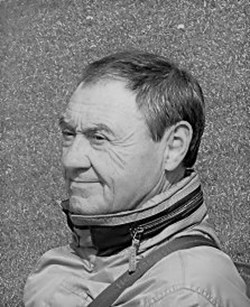
Silvère Mansis
(10.9.1944 - 22.4.2018)
foto © Dirck Brysse
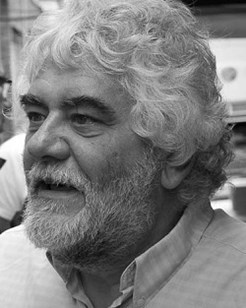
Rik Bevernage
(19.4.1954 - 6.3.2018)
foto © Stefe Jiroflée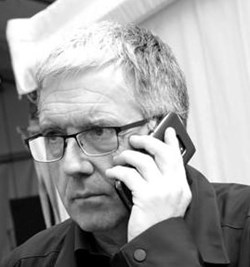
Philippe Schoonbrood
(24.5.1957-30.5.2020)
foto © Dominique Houcmant
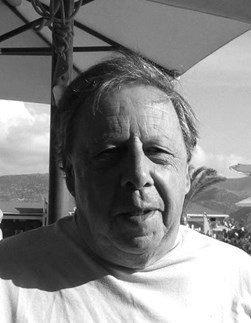
Claude Loxhay
(18.2.1947 – 2.11.2023)
foto © Marie Gilon
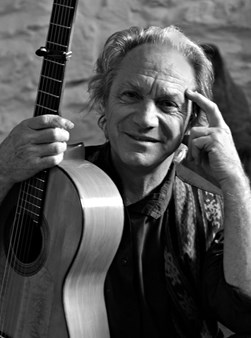
Pedro Soler
(8.6.1938 – 3.8.2024)
foto © Jacky Lepage
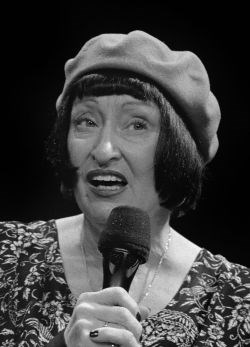
Sheila Jordan
(18.11.1928 – 11.8.2025)
foto © Jacky Lepage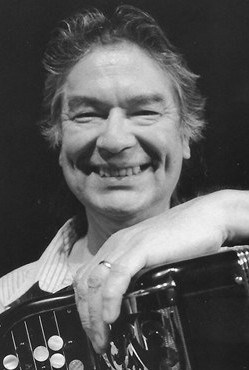
Raúl Barboza
(22.5.1938 - 27.8.2025)
foto © Jacky Lepage
Special thanks to our photographers:
Petra Beckers
Ron Beenen
Annie Boedt
Klaas Boelen
Henning Bolte
Serge Braem
Cedric Craps
Luca A. d'Agostino
Christian Deblanc
Philippe De Cleen
Paul De Cloedt
Cindy De Kuyper
Koen Deleu
Ferdinand Dupuis-Panther
Palma Fiacco
Anne Fishburn
Federico Garcia
Jeroen Goddemaer
Robert Hansenne
Serge Heimlich
Dominique Houcmant
Stefe Jiroflée
Herman Klaassen
Philippe Klein
Jos L. Knaepen
Tom Leentjes
Hugo Lefèvre
Jacky Lepage
Olivier Lestoquoit
Eric Malfait
Simas Martinonis
Nina Contini Melis
Anne Panther
France Paquay
Francesca Patella
Quentin Perot
Jean-Jacques Pussiau
Arnold Reyngoudt
Jean Schoubs
Willy Schuyten
Louise Stubbe
Frank Tafuri
Jean-Pierre Tillaert
Tom Vanbesien
Jef Vandebroek
Jean-Marie Vandelannoitte
Geert Vandepoele
Guy Van de Poel
Cees van de Ven
Donata van de Ven
Maurits van Hout
Harry van Kesteren
Geert Vanoverschelde
Roger Vantilt
Patrick Van Vlerken
Marie-Anne Ver Eecke
Karine Vergauwen
Frank Verlinden
Jan Vernieuwe
Anders Vranken
Didier Wagner
and to our writers:
Mischa Andriessen
Robin Arends
Marleen Arnouts
Werner Barth
José Bedeur
Henning Bolte
Paul Braem
Erik Carrette
Danny De Bock
Denis Desassis
Jean-Pierre Devresse
Pierre Dulieu
Ferdinand Dupuis-Panther
Federico Garcia
Paul Godderis
Stephen Godsall
Jean-Pierre Goffin
Claudy Jalet
Chris Joris
Bernard Lefèvre
Mathilde Löffler
Claude Loxhay
Ieva Pakalniškytė
Anne Panther
Etienne Payen
Quentin Perot
Jacques Prouvost
Jempi Samyn
Renato Sclaunich
Yves « JB » Tassin
Herman te Loo
Eric Therer
Georges Tonla Briquet
Henri Vandenberghe
Jean-Jacques Vandenbroucke
Peter Van De Vijvere
Iwein Van Malderen
Jan Van Stichel
Olivier Verhelst