Ensemble Ensemble - Live at Atelier du Plateau
E
BMC
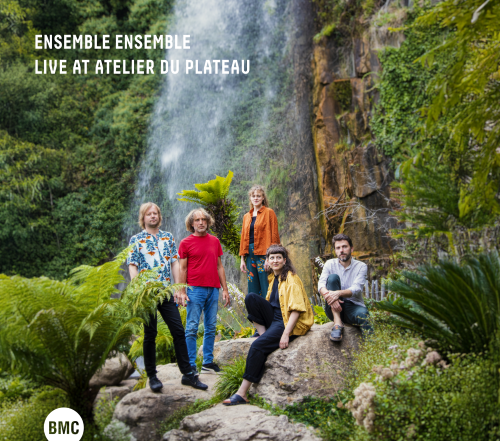
Ensemble Ensemble (EnsEns) is a French/Norwegian/Dutch/Romanian unit founded by pianist Eve Risser in 2019 comprising Mari Kvien Brunvoll (voice, electronics), George Dumitriu (violin, viola), Kim Myhr (guitar), Toma Gouband (drums, percussion) and Eve Risser – ((prepared) piano, alto flute, vocal).
In a recent article that dealt with music of the Ukrainian trio of Maryana Golovchenko/Anna Antipova/Kateryna Ziabliuk inspired and accompanied by the 1965 cinematic work “Shadow of Our Forgotten Ancestors” of Sergej Parajanov I wrote about folk music as mother of all music and the creation of deep ambient music in the adoption of Ukrainian folk music (from the Carpathians) by that Ukrainian trio. The cinematic work of Parajanov is a strong example of a deep artistic adoption (and recreation) of folk traditions and folk tales.
Folk music as the mother of all music can be translated and transformed in many ways, in original, raw authentic ways, in softening folksy ways, in the style of classical music, in ‘modernised’ styles or in adulterating manner as in turbo-folk etc.. Actually folk music sources and elements permeate all kinds of music without us realising it.
Both moments, folk music sources and ambient mode/style of music appear in the accompanying text of this Ensemble Ensemble album: the music is characterised as combination of Norwegian folk music heritage, electronic experimentation with improvised jazz. The musicians “equally absorb elements of oral and written, experimental and folk, electronic and analogue, vocal and instrumental cultures, ultimately forming a flow of sounds closely related to ambient music.” So, what about the flow of sounds in its recorded state of aggregation on this album, a live recording from two consecutive concerts at the Paris venue Atelier du Plateau?
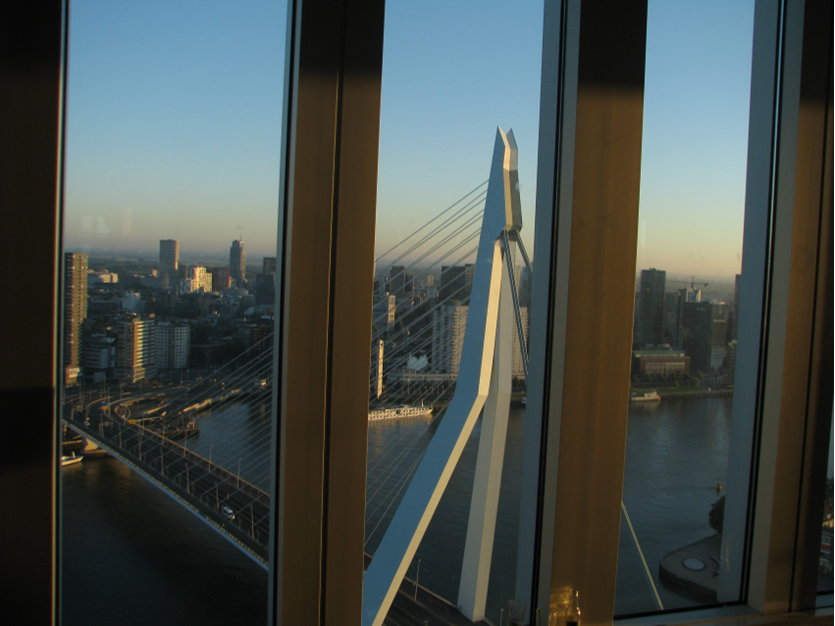
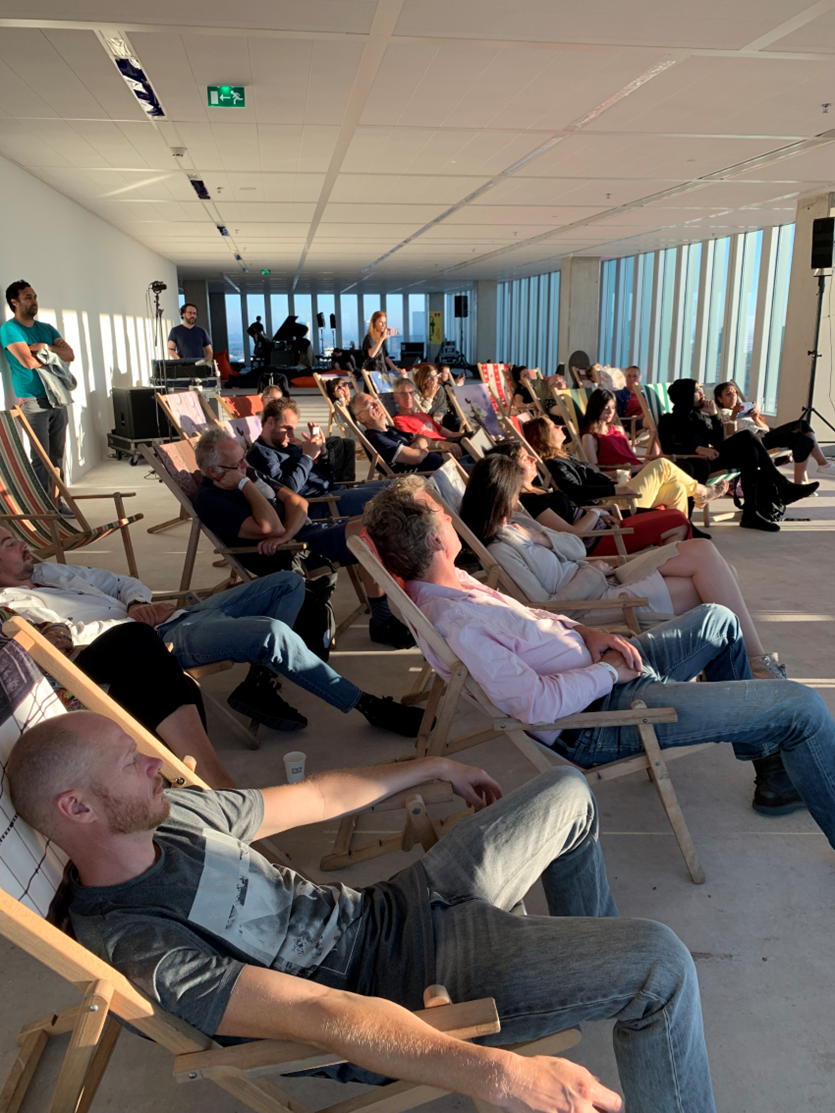
I had a special indelible experience with EnsEns. I saw it in June 2019 in Rotterdam and a few months earlier, in March, in Athens at Onassis Stegi Cultural Center, which was an extra motivation to write about the now released live-album. The 8-hours Rotterdam night concert was the longest concert in the highest venue (31st floor) I have experienced so far. There is a testimony of my experience at the end of this text so that you can decide to read it beforehand, afterwards or not at all.
The album has five pieces between 5 minutes and the 16 minutes of the opening piece “En Route”. It is maybe a bit inadequate to speak of flow to give an indication of this music. The sounds or tones set, feel for me as something that ‘just happens’ - without a clearly perceptible origin or direction. They gain direction gradually from an inner potential that emerges and slowly unfolds, find each other and ways itself, seemingly develop from within itself - what sometimes also is indicated as ‘the music is playing itself’ or ‘the music’s shape is coming into being by an invisible hand.' These circumlocutions have to do with the intentionality-strength, the conscious control and forward pushing energy. The music doesn’t feel like the common way of developing together a thematic.
It is performed in a way that it subconsciously evokes the impression that the music is playing itself and that the sound/tone events find to each other in a way ‘from within themselves’. We also say in that kind of cases the music comes into being by an invisible hand. In a more subject-oriented description you could say that the musicians draw circles, which they slowly, gradually narrow to allow certain directions, thematic or melodious contours to emerge. In that way the group creates diverse sound images that gradually condense and solidify, resulting in an atmosphere of lost in sound in self-forgetfulness. It is a way of listening and considering a certain amount of patience and waiting.
Playing great themes/melodies more or less straight can be a wonderful pleasure and increase memorability but it can also lead to its fossilisation. At the same time it restricts the listeners (musical) perception and can also lead to its fossilisation. Finding new ways into great themes/melodies is a main endeavour of jazz and improvised music and realisable in different ways.
EnsEns works on this live album with one traditional melody, "En Sang om Døden/A Song About Death" (Johan Hufthammer/Dorothe Engelbretsdatter). The theme is not played straight but the music finally comes close to a traditional melody. The other four pieces are more open, of different length, and get shape in different ways in the invisible-hand-mode. What does it mean then that it is a flow of sound closely related to ambient music and informed by electronic experimentation, free improvisation and traditional folk music elements? It’s an indication that the musical themes are not played straight and do not totally go up in free improvisation. It’s something in between both modes. While in free improvisation sounds are often explored through deformation/distortion, in this mode sounds are explored ‘from within’ as described above. The musicians ‘let it flow slow’ and gradually as in ambient music. The music has a less straight jacket.
"En Route/On The Way" starts with small musical gestures quasi pointillistic, and with great patience gradually unfolds more comprehensive sound gradually transformed into expanding vibrant sound. After six minutes, in this tonally vibrant space the buried and muted vocals of Brunvoll fully arise with her singing in Norwegian, alternating between diving and surfacing. The manifold sounds in curving air remain enigmatic in their origin and keep the tension (and patience) in the music. In "Venter" toms sound, a dark piano enters and a lighting-up guitar, flute, synthesiser, plucked violin - it is like temple music. In "En Sang Om Døden/A Song About Death" an old traditional song with lyrics is transformed in pointillistic manner into a ghost-song of Munchian characteristics. "Ka Da/What then" is the most carried by an expanding continuous melody that is multiple mirrored. "Framtida/Future" starts right away with violent thrusts and is then continuously dominated by Brunvoll's clear voice, which magically repeats an incantation formula. It should be clear that EnsEns adopt various manners to realise their more loose approach.
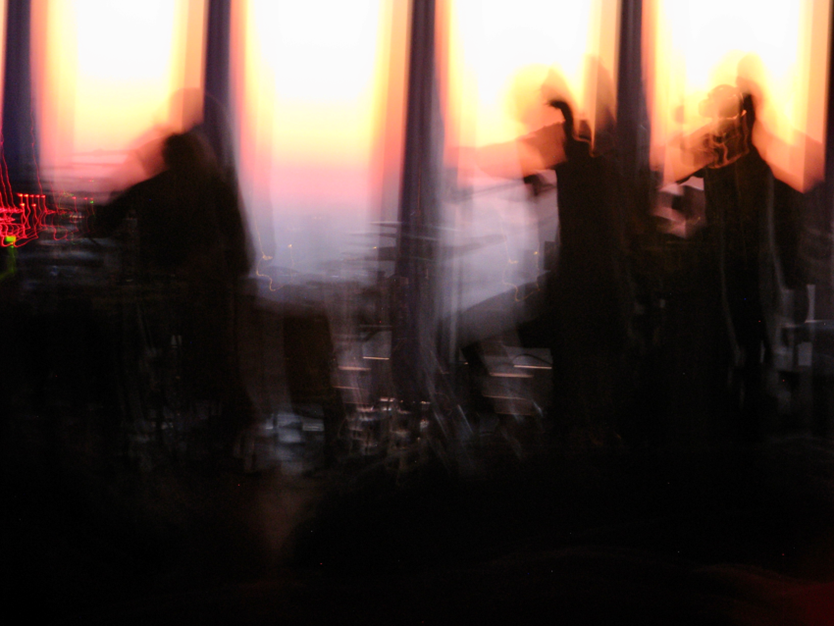
The 2019 DAWN-Trilogy experience
I had a special indelible experience with EnsEns. I saw it in June 2019 in Rotterdam and a few months earlier, in March, in Athens at Onassis Stegi Cultural Center, which was an extra motivation to write about the now released live-album. The 8-hours Rotterdam concert was the highest and maybe longest concert I have experienced so far. Here is a testimony of my experience.
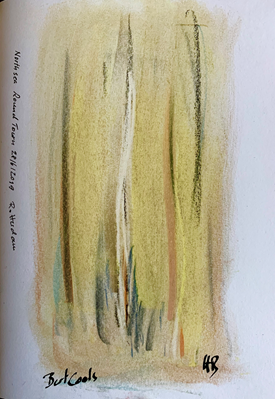
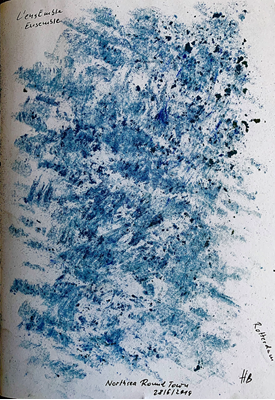
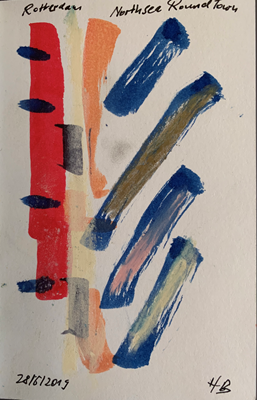
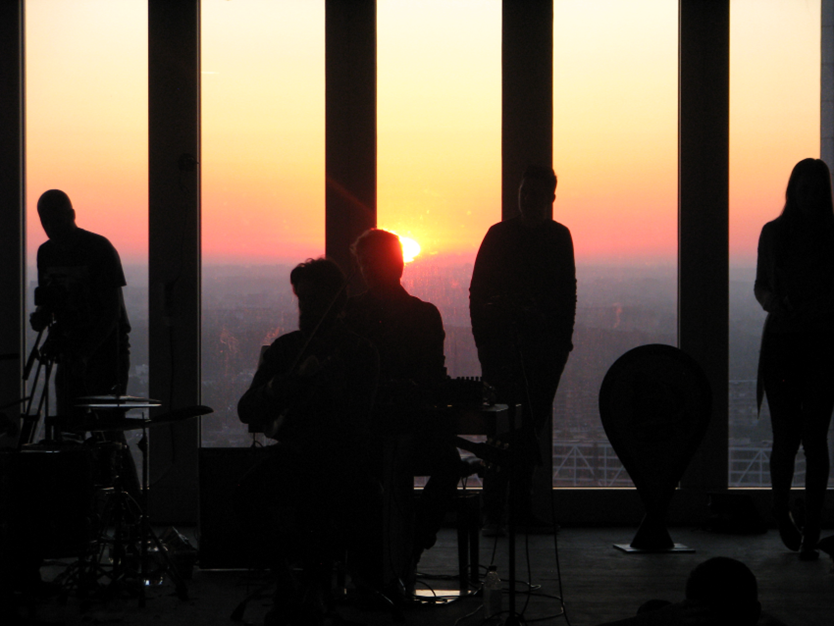
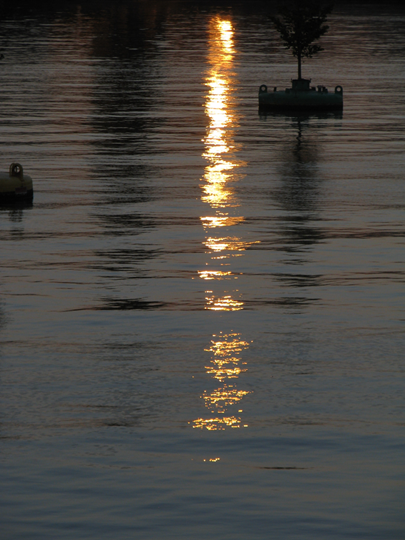
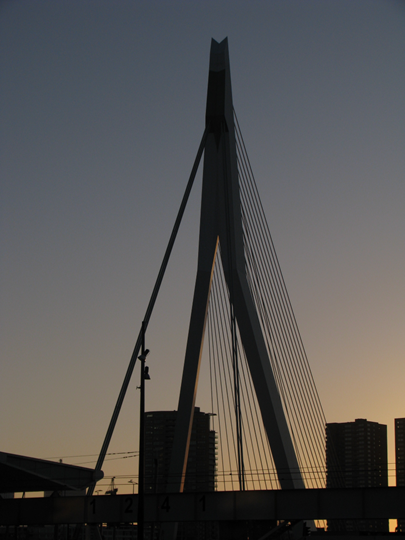
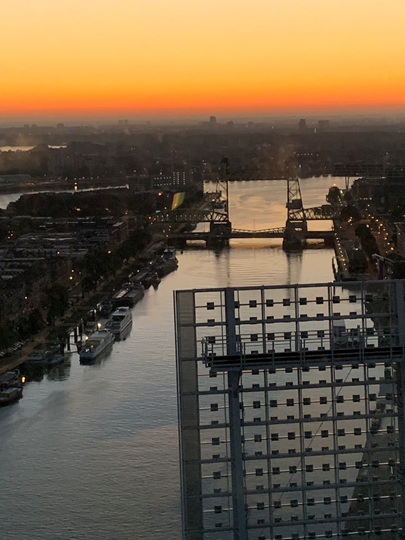
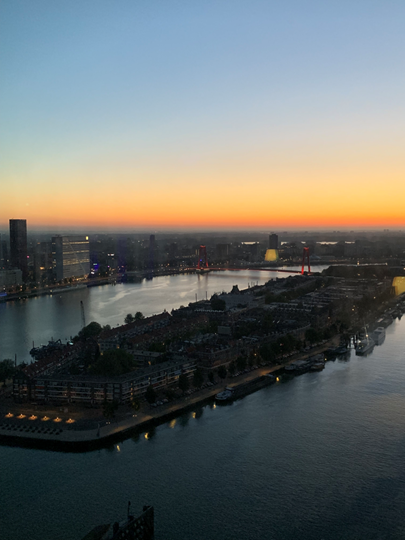
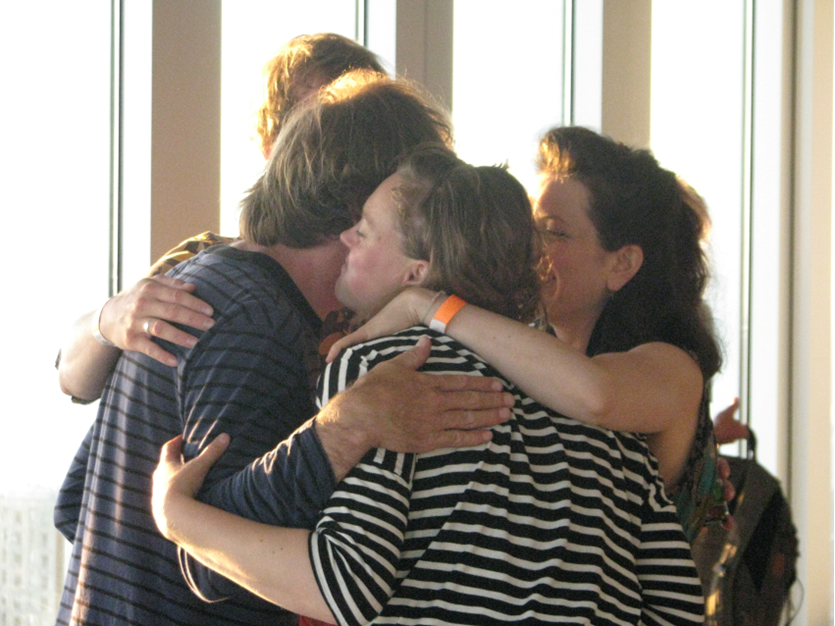
It was part of the 8-hours (**) DAWN-Trilogy in the Northsea Roundtown Festival (*) that took place at the 31th floor of DE ROTTERDAM office tower (designed by Rem Koolhaas) on the Wilhelmina pier above the 800-meter long iconic cable-stayed Erasmus Bridge (crossing the Meuse river) with its139-meter high. The high concert floor offered a grand 360’-degree panoramic view across the city, the river and the harbour. The concert initiated by the program-curator of North Sea Round Town Festival (*), Raluca Baicu, started at midnight and went in three parts until the 8:30 breakfast in the morning: WHITE MOON (2 hour solo by Belgian guitarist Bert Cools from Antwerp), BLUE HOUR (4 hour improvisation by Ensemble Ensemble) and GOLDEN LIGHT (2 hour concert of the trio of clarinetist Alex Simiu, trombonist Matthias Konrad and violinist/guitarist George Dumitriu (***) performing Simu’s score for Dutch movie “Beyond Sleep” (after the novel of Willem Frederik Hermans). It was an exceptional occasion to experience the urban ambience from such an extraordinary viewpoint through the night and the upcoming dawn with and through the emerging music.
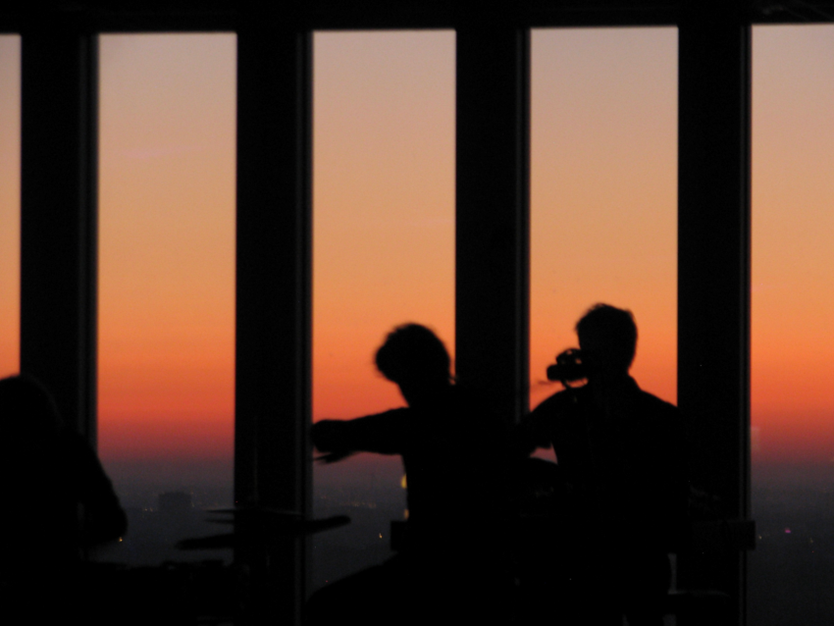
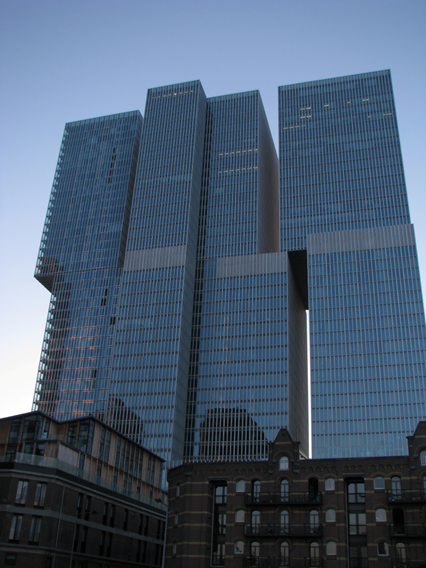
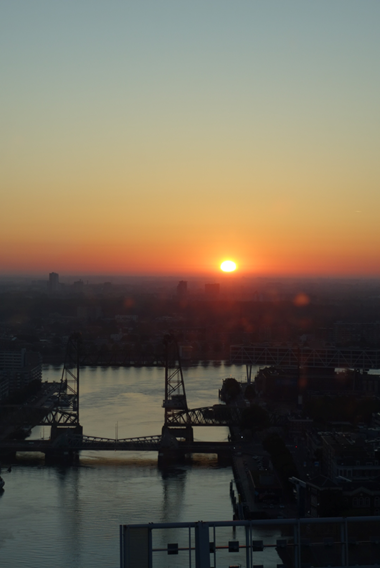
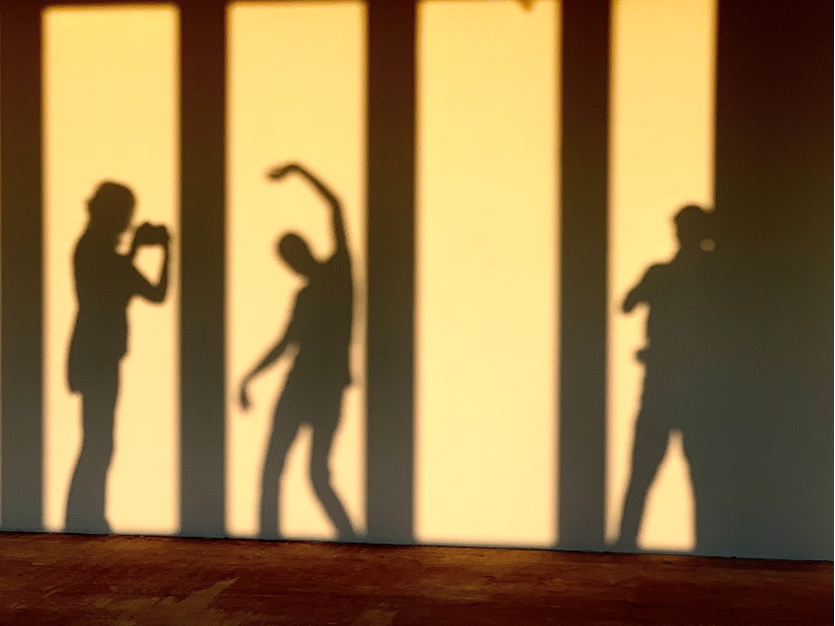
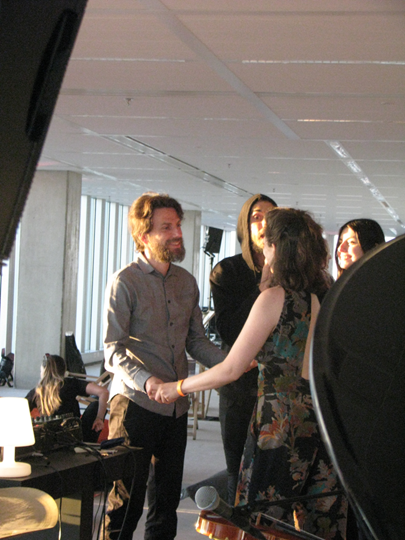
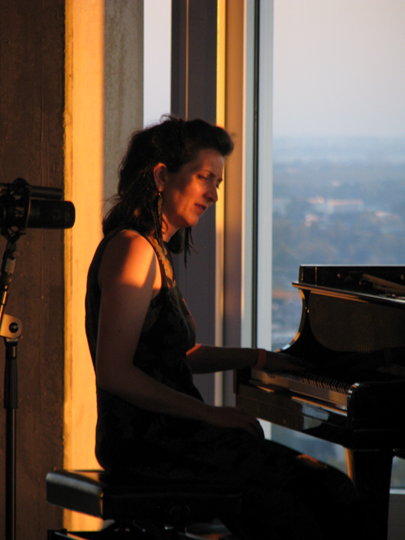
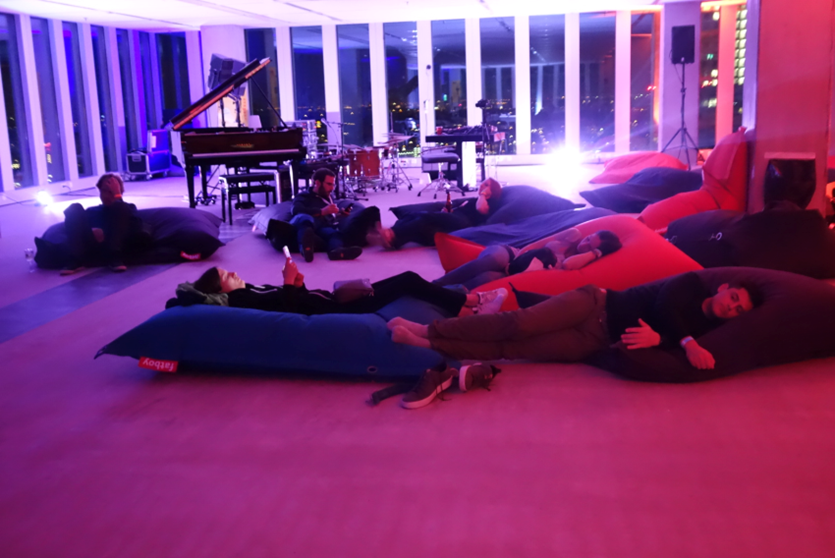
The BLUE-HOUR-part of EnsEns went without a break into/through the core of the night.
REVIEW QUOTES (from 2019)
The Trilogy was an affair of little tunes emerging from far away and disappearing behind distant horizons, of playful particles wondrously floating and amalgamating in free improvisation, permeating and transforming the space of the 31st floor, enchanting and expanding the senses of the audience in an hours-long continuous stream. The improvised music generated significant sonic gestures and moments, which worked as a soundtrack for the surrounding real urban life at the gates of dawn. The building served as a relay between the ongoing music, the inner world of the audience members, and the sensations from the exterior, the urban activities and the shifting night—a real dream. The shifting light of the night sky and the gleaming and flickering urban lights tinged the experience of the music and the music intensified the experience of the night sky. The decision to attend was a decision to step out of one's own ordinary daily routine, not knowing if you will fall asleep, stay in a waking dream, enter a trance, or drop out after a while.
It was an exceptional occasion to experience the urban ambiance in a different way by watching it from inside out at such an exquisite location. Musicians and audience were privileged inhabitants of the vacant 31th floor with its surround view for that night.
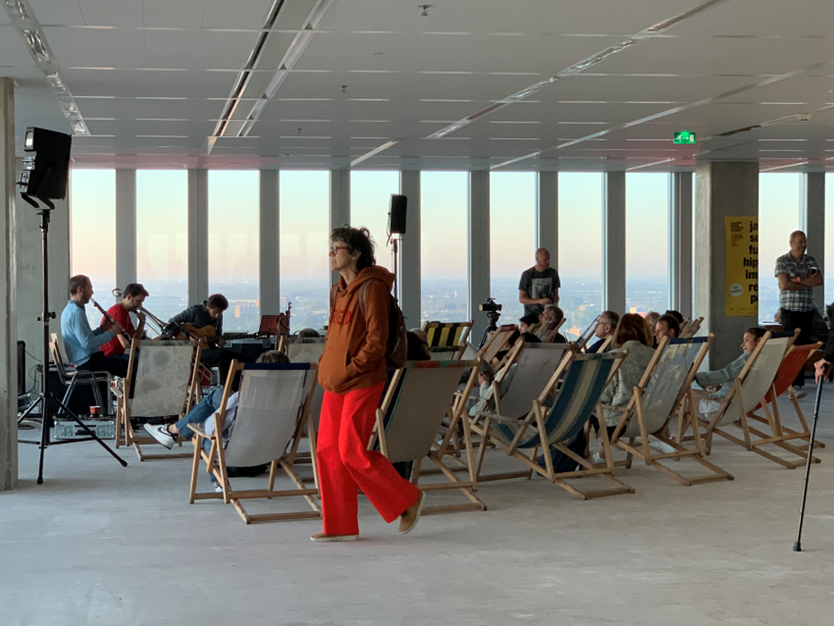
For the complete review of the Athens and Rotterdam concert of Ensemble Ensemble see "2019: Striking A Balance In Review, Part 1 article @ All About Jazz"
Text/Photos © Henning Bolte
(*) North Sea Round Town Festival 2019
(**) I know of two recent lengthy concert: the 10, 5 hours (19:58-06:32 = between sunset and sunrise) in the Stefanos Crater of the active volcano on the Island Nisyros in August 2016 organised Onassis Stegi in cooperation with sis d.o.g.s with 15 musicians and the 6 hours Anthony Braxton’s Sonic Genome with 60 musicians from Australia, Germany, UK and USA at Gropius Bau as part of Jazzfest Berlin 2019.
https://www.onassis.org/whats-on/634-minutes-inside-volcano
(***) George Dumitriu played 6 hours in succession.