TS035
Tingling skin, buzzing wires
Stephen Godsall
purchase on BANDCAMP
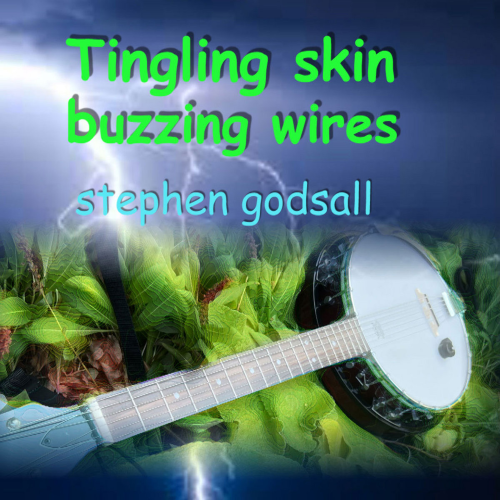
STEPHEN GODSALL - TINGLING SKIN, BUZZING WIRES
1. Erratic
2. Helium
3. Deciduous, featuring Ian Ellis
4. Outside, featuring Laura Taylor
5. Welsh Highland
6. Hitting the small time
7. The last hillwalker, featuring Steve Waterman
8. The Force
9. Forest Fugue
10. Beacons
11. Sea song
12. Birthday yodel
“Tingling skin, buzzing wires” is banjo unchained
Stephen Godsall's new album drives the banjo kicking and screaming into new territory, miles away from its traditional roles in bluegrass, jazz and traditional music. Each track has different tone combinations – banjo alongside flugelhorn, Wurlitzer piano, piccolo, Hammond organ, tenor sax and more. Rhythms are striking, with shifting tempos and time signatures alongside crazy syncopation. There are driving, riff driven tunes alongside dreamy ambience, with a mix of pungent and lush harmonies to match.
Composer and multi instrumentalist Godsall explains: “I've been drawn increasingly to the banjo; the clangorous tones, rhythmic incisiveness and relative unfamiliarity. It seems underused in modern jazz and improvised music, particularly in Europe. And it's so expressive – different tones, articulations and string bends.
The banjo and I have a long history. My very first paid gigs were playing banjo ukulele in a Ceilidh band – an old calf-skin model whose resonance changed dramatically with the weather, one of the challenges and joys of the instrument.
My favourite player in those days was Earl Scruggs and I still love bluegrass, as well as Irish banjo music. More recently Béla Fleck is one of today's most interesting musicians, expanding the banjo's territory; his duet albums with Chick Corea are just wonderful.
When I've wanted to highlight a melody in a new piece, I've been drawn increasingly to the banjo. The clangorous tones, rhythmic incisiveness and relative unfamiliarity give it a stand-out character. It seems to me that banjo is very underused in modern jazz and improvised music, particularly in Europe. And it's very expressive – different tones, articulations and string bends.”
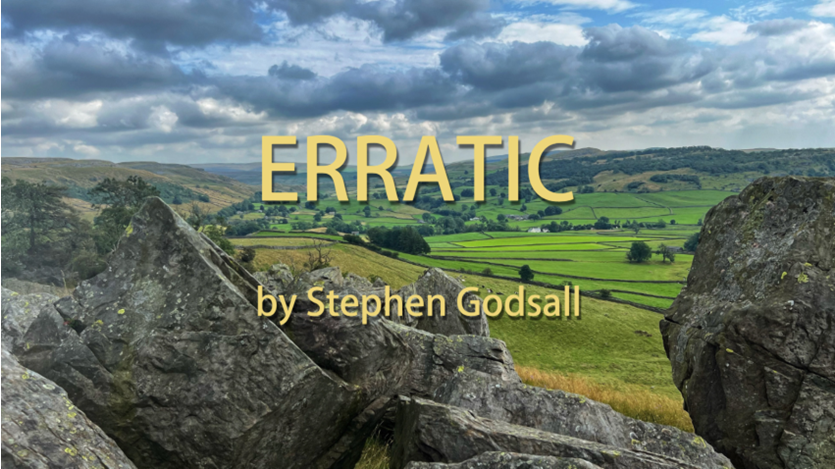
Opening track “Erratic” is a for banjo, bass and hand percussion, introducing “sprung rhythm” which combines swing and tempo modulation. Electronics open out the soundscape, with echoes which shift pitch and speed as they fade away. The tune is built on the 7 note bass riff at the beginning. Percussion is played on a Dorset Knob biscuit tin, which produces a combination of metallic hand-drum and miniature gong sounds. The music is inspired by the Norber Erratics, hundreds of boulders on a plateau in the Yorkshire Dales limestone country. "Erratics" are large boulders moved by a glacier to an alien location, where they differ from the bedrock and erode into unusual shapes.
“Helium” the lightest gas known to man? This one has banjo alongside trombone, guitar, bass and drums, with a Horace Silver influence - filtered through Steely Dan.
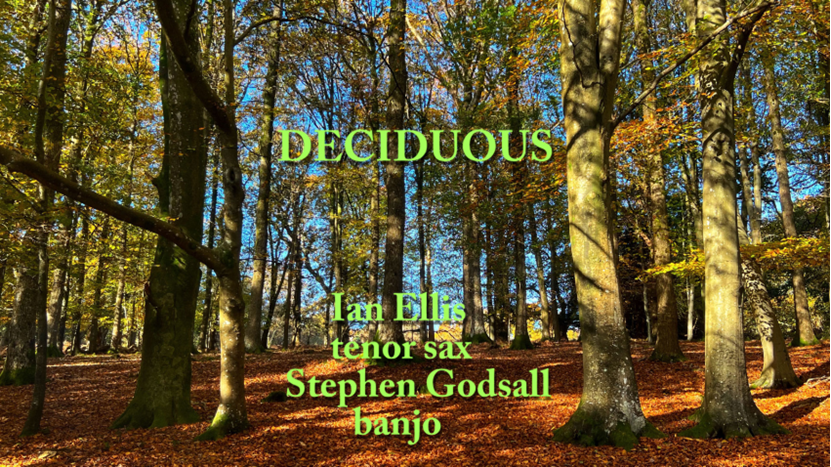
"Deciduous" is a duet with Ian Ellis on tenor sax, who plays the Autumnal theme before unleashing gusts of improvisation in one-take.
"Outside" was recorded with my brothers; Richard Godsall piano/organ and Andrew Godsall drums, and one of our favourite vocalists Laura Taylor. It's a new take on the “Wuthering Heights” story; “Sometimes you have to step outside, to see which way the wind blows”.
"Welsh Highland" celebrates the wheezing, clanking and moaning of my favourite narrow gauge railway, rolling through the hills, shifting speed and intensity as it navigates sharp bends. It's also a feast of counterpoint, with electronic bassoon, organ, bass, piccolo, metallic percussion and nylon strung guitar.
"Hitting the small time" has drums duelling with banjo, a collision of riffs, fills and Hendrix style chording with organ holding the whole thing together, and electronic spices creating another wild soundscape.
"The last hillwalker" is a spacious duet for banjo and flugelhorn, hauntingly played by guest Steve Waterman alongside some wide-angle “campanella” style arpeggios. It's a response to the book by John D. Burns, which explores the melancholy idea that hillwalking is dying out. On a recent trip to Snowdonia I was pleased to meet dozens of younger people hiking, climbing, wild camping and generally appreciating life above 3000 feet. I overtook a few of them on the way up - but they were faster on the way down! This track also references the idea of 1930s Polish/American philosopher Alfred Korzybski that "the map is not the territory" which very much applies to improvised music. The composition is a one page melody with chords which Steve expands into something much more extensive.
"The Force" lives up to its title with drums and bass pitching 7/8 time against 4/4, while the banjo drives chiming chords over the top. I had in mind a cross between hip hop grooves and Hot Club jazz. “Force” is a Northern English word for waterfall.
"Forest Fugue" explores the warm sonorities available by combining banjo, ukulele and nylon strung guitar before accelerating into fugal counterpoint. The first time I went to Grizedale Forest I got lost, for hours in heavy rain. A compass is of limited use against thick undergrowth and water hazards. People that showed us the way out said "Don't worry, everyone gets lost here!"
The second time I visited I met Bill Grant, head forester, who had the idea of creating landmarks around the forest with sculptures. Since then hundreds have been created, many of them now reverted to nature. The interesting thing about woodland sculpture is its ability to make you look at things differently, to imagine all sorts of shapes and designs within the natural world.
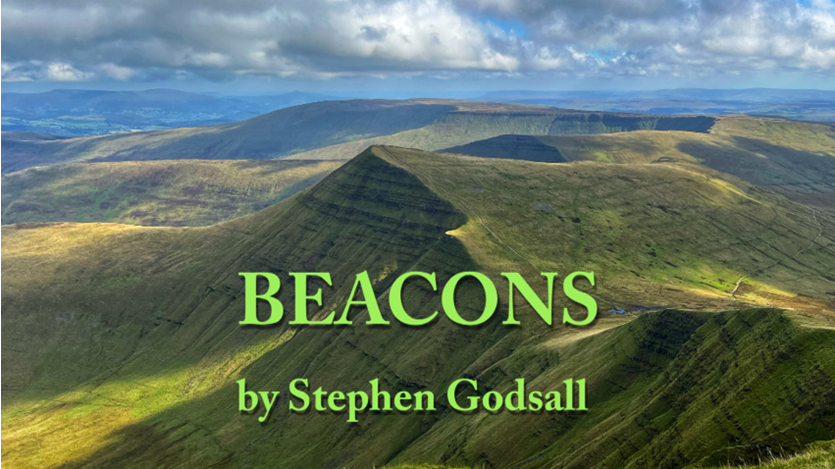
“Beacons” explodes the traditions of Welsh music with mountainous arpeggios and sitar-like sympathetic strings vibrating from the “tingling skin” of the banjo. “Welsh Highland” evokes the wheezing, clanking and moaning of a narrow gauge railway rolling through the hills, shifting speed and intensity as it navigates sharp bends. It's also a feast of counterpoint, with electronic bassoon, organ, bass, piccolo, metallic percussion and nylon strung guitar.
The album includes extensive sleevenotes and artwork illustrating the story behind each track.
Musicians:
Stephen Godsall, banjo, synths, electronics, guitar, bass, ukulele, banjo-ukulele, percussion
Laura Taylor, vocal
Steve Waterman, flugelhorn
Ian Ellis, tenor sax
Richard Godsall, Wurlitzer piano, Hammond organ
Andrew Godsall, drums
Diane Annear, piccolo
All tracks composed and produced by Stephen Godsall
REVIEWS:
“The banjo as you have never heard it before”
"If you think you know what a banjo sounds like, think again. Multi-instrumentalist and composer Stephen Godsall’s ‘Tingling Skin, Buzzing Wires’ presents the banjo in different ways, accompanied by flugelhorn, tenor sax, Wurlitzer piano, Hammond organ, piccolo, and more. Using combinations of instruments helps Godsall demonstrate the banjo’s potential and how we should perhaps look at this underrated instrument with new eyes and ears. The banjo, in the right hands, is presented as both an ensemble and solo instrument, and Godsall finds impressive methodology to plumb the depths and take the banjo into new territories. The musicians accompanying Godsall on this album do well to assist him on his quest. They comprise Laura Taylor on vocals, Steve Waterman on flugelhorn, Ian Ellis on tenor sax, Richard Godsall on Wurlitzer piano and Hammond organ, Andrew Godsall on drums, and Diane Annear on piccolo with Stephen Godsall on banjo, ukulele, guitar, bass, synths, and percussion.
Of the recording, Godsall comments, “When I’ve wanted to highlight a melody in a new piece, I’ve been drawn increasingly to the banjo. The clangorous tones, rhythmic incisiveness, and relative unfamiliarity give it a stand-out character. It seems to me that the banjo is very…"
The opening track, ‘Erratic’ sets off at a pace. It is a trio for banjo, bass, and hand percussion, with the concept of ‘sprung rhythm’ that combines swing and tempo modulation. Electronics open out the soundscape, with echo effects that shift pitch and speed as they fade away. There is a beautiful quirkiness, both in the reverberation of the banjo and the steadfast bass line that underpins the track.
‘Helium’ is a soft-rock, gentle melodic number with the banjo setting an eight-bar theme, across which the flugelhorn sings. The banjo plays both accompanying rhythmic chords and intricate diversions.
‘Deciduous’ features Ian Ellis on saxophone and is a gorgeous duet between banjo and saxophone — a combination that might not spring readily to mind but works well. The melodic playing of the saxophone, supported by gentle banjo, is beautifully emotive, with Ellis’s unbridled improvisation working wonders.
‘Outside’ features vocalist Laura Taylor and is a number that takes the listener outside to find the wonders of the natural world in all its wonder, the lyrics supported by the ensemble, and an engaging middle section. This track connects us to nature and something bigger. It features the core band of banjo, piano/organ, and drums, and is a new take on the ‘Wuthering Heights’ story, according to Godsall. “Sometimes you have to step outside to see which way the wind blows.”
‘Welsh Highland’ is a journey both figuratively, with train noise at the start to help you with the imagery, and musically, as the ensemble gives the listener a variety of sounds, tempos, rhythms, and colour, evocative of the title. The banjo, played now in melody and now slightly off kilter, adds to the sensation of journeying and being slightly unsure of the destination. The featured element is counterpoint, which emanates from all directions. Gorgeous and intriguing. The woodwind is a delight on this track.
‘Hitting The Small Time’ is aptly named and has drums duelling with the banjo in a collision of riffs, rhythm changes, and worked chording with the bass line underpinning everything. The drum solos are delirious while the banjo counters with its own solos and quirky grooves which develop and eddy back on each other to create spirals of sound.
A duet for flugelhorn and banjo, ‘The Last Hillwalker’ explores the concept of a changing world with the flugelhorn soaring, accompanied by some ‘campanella’ style arpeggios. It is thoughtful, spacey, and the flugelhorn is perfectly pitched to grab and keep the attention of the listener. Waterman uses the ascending rises to give a sense of soaring and rising above, as if to observe the changes from an airborne perspective.
'The Force' develops into a powerful track with drums and bass pitching 7/8 time against 4/4. Godshall’s notes comment that on this track, “the banjo drives chiming chords over the top; imagine a cross between hip hop grooves and Hot Club jazz.” I would not argue with that but would add that the driving lilt and the tripsy timings of the track only enhance the groove.
‘Forest Fugue’ is an interesting combination of strings with banjo, nylon guitar, and ukulele in an acoustic number, which demonstrates another sonic exploration. The clashing sounds create a sound that is at once melodic and gentle, yet simultaneously slightly jarring, with a folksy underlying influence. As a creative piece, it works well and certainly awakens the senses.
'Beacons' has an Eastern feel, with sitar-like vibrations from the banjo and delicately plinked strings alongside steady melodic rolling tunes that change tempo, driving the music forward with relentless energy and alternating emphasis.
‘Sea Song’ is an interesting track combining ukulele with banjo, and the rare combination feels fitting for a song inspired by crashing waves and journeying. There is calm in the music, but also hidden depths and surprising currents to take the listener unaware, with percussive insertions that emphasise the off-beat rhythms of an unpredictable sea.
‘Birthday Yodel’ closes out the album and is a play on the familiar number of ‘Happy Birthday’ but with ukulele and banjo trying various yodelling techniques in a jokey combination of traditional English and Austrian tunes.
This album proves the banjo fits just as well into an ensemble as it does when it is a solo instrument. It is an experimental album that works a treat in most places and is a find and a half for anyone who wants to explore combinations of instruments and the banjo. It elevates the humble banjo to new heights and is fun and intrinsically musical.
Godsall describes the album as ‘the shock of the banjo untamed,’ and with that, I might argue because the instrument is in the hands of this explorative musician, and he has worked with understanding and equally explorative musicians.
Together they create musical soundscapes that take the listener beyond this world and into who knows where with a mind more open than before hearing the music.
The album includes extensive sleeve notes and artwork illustrating the story behind each track. Available on Jazz'halo Bandcamp."
© Sammy Stein, https://medium.com/@sammystein Feb. 2026 - Platinummind.net
"Zum Hintergrund des Musikers und seiner Intention für das vorliegende Album diese einleitenden Zeilen: „The banjo and I have a long history. My very first paid gigs were playing banjo ukulele in a Ceilidh band – an old calf-skin model whose resonance changed dramatically with the weather, one of the challenges and joys of the instrument. My favourite player in those days was Earl Scruggs and I still love bluegrass, as well as Irish banjo music. More recently Bela Fleck is one of today's most interesting musicians, expanding the banjo's territory; his duet albums with Chick Corea are just wonderful.“ (Stephen Godsall)
Banjo und Ukulele sind ähnlich wie der akustische Kontrabass ohne Verstärkung Saiteninstrumente mit geringer Resonanz. Vielfach klingt das Banjo, das vor allem im Bluegrass und in der Country Music von Bedeutung ist, nach einem kurzatmigen Plong-Plong, eher nach Plonk-Plonk. Da ist der Bass schon eher mit einem Saiten-Schnalzen und -schwirren zu vernehmen. Und die Ukulele mit zierlichem Korpus ist auch nicht ein Instrument, das den Klangraum wirklich einnimmt. Nun also liegt ein Album eines Banjo-Spielers vor, der durchaus auch im Jazz bewandert ist, auch wenn das Banjo eher im Genre Dixieland zu finden ist. Durch die Kombination mit anderen Instrumenten mit mehr Klangvolumen wie Saxofon und Posaune jedoch findet das Banjo eine Nische, vor allem in Richtung auf Perkussion und Rhythmik.
Eröffnet wird das Album mit dem Track „Erratic“: Zu hören sind Banjo, Bass und Perkussion, dabei eine Zinnkeksdose verwendend. Sehr rhythmisch kommt das Stück daher. Das Banjo hört sich streckenweise wie eine Daumenharfe (Kalimba) an. Die Klänge sind trocken. Voll dagegen erscheint in seinen Klangäußerungen der Bass. Auf unterschiedlichen Klangbahnen bewegen sich Banjo und Bass. Das ist reizvoll, vor allem angesichts eines durchaus tempostarken Spiels mit wiederkehrenden Modulen. Sie lassen an Tap-Dancer denken, die mit ihren „Nagelschuhen“ für Rhythmus sorgen. Beim zweiten Stück namens „Helium“ fällt auf, dass das Banjo ähnlich klingt wie eine Saz oder Guembri. Eine „jaulende Trompete“ im Geist von New Orleans Jazz ist zu hören und eine „zartbesaitete“ Gitarre. Nach Aussage von Stephen Godsalls sei in dem Stück eine Melange konzipiert worden, die Horace Silver und Steely Dan vereint.
Herbstlich geht es im musikalischen Sinne bei „Deciduous“ zu. Ian Ellis am Tenorsaxofon fällt es in Klangbildern zu, für die Herbstwinde und das niederfallende Laub der Bäume zu sorgen. Sonor ist sein Spiel. Bei den Weichzeichnungen des Saxofonisten ist man geneigt an Indian Summer zu denken und nicht an garstige Herbststürme, die den kommenden Winter ankündigen. „Outside“ wurde mit den Brüdern von Stephen Godsall, Richard Godsall (piano/organ) und Andrew Godsall (drums), eingespielt. Für die Lyrik des Songs ist die Vokalistin Laura Taylor zuständig, die allerdings hier und da stimmliche Schwächen offenbart und sich auch nicht definitiv für eine Tonlage entscheiden konnte. Manchmal hat der Zuhörer den Eindruck, die Vokalistin sucht nach den Tönen! Inspiration für das Stück ist der Roman von Emily Brontë namens „Wuthering Height“, so erfahren wir aus den Liner Notes. Übrigens „Wuthering Height“ gilt heute als das Beispiel für den britischen Roman des 19. Jahrhunderts.
„Welsh Highland“ lässt den Zuhörer mit einer Schmalspurbahn durch rollende Hügel reisen. Die Instrumentierung des Stücks ist außergewöhnlich: elektronisches Fagott, Orgel, Bass, Piccolo-Flöte und akustische Gitarre mit Nylon-Saiten. Und auch das Banjo hört man hier und da. Flötentöne, die eingewoben sind, lassen uns an die Signale der historischen Eisenbahnen denken, wenn sie sich einem Bahnübergang näherten. Sehr melodisch agiert die Gitarre im Wechselspiel mit Flöte und Banjo. Oder hören wir statt Banjo einen Bass oder die Gitarre? Im Hintergrund wird durch die Orgel ein zart gewebter Klangteppich ausgerollt. Und dann ist auch das rau sowie heiser klingende Fagott wahrzunehmen. Und weiter geht die Reise, immer weiter mit und ohne Piccolo-Passagen. Der Piccoloflöte gehört im Übrigen der letzte Ton der Bahnfahrt!
Nach „Hitting the small time“ mit Anlehnungen an den Stil für den Hendrix in der Rockmusik stand, folgt „The last hillwalker“. Übrigens, bei „Hitting the small time“ weiß der Drummer Andrew Godsall, was die Zeit schlägt. Und Stephen Godsall lässt Hendrix im Geiste mit dabei sein, verfolgt man seinen Stil auf dem Banjo. Das Duett von Banjo und Flügelhorn, gespielt von Steven Waterman, ist der musikalische Leckerbissen im Stück „The last hillwalker“. Teilweise muss man beim Hören an sakrale Musik in einer gotischen Kirche denken. Zugleich versteht Waterman auch, die Weite der Landschaft in Klangfärbungen zum Ausdruck zu bringen, auch jenseits von Gabareks Fjord-Sound.
„The Force“ nimmt teilweise Bezug auf die Musik vom Hot Club de France, insbesondere in den Gitarrensequenzen. Einst war es der legendäre Django Reinhardt, der in diesem Ensemble spielte und die europäische Art des Swings kultivierte. Und nun erleben wir mit eigener Spielauffassung, aber mit Bezug zu dem oben genannten Gitarristen Stephen Godsall.
„Forest Fugue“, eine Erinnerung an eine Wanderung in Grizedale Forest in heftigem Regen und durch Godsalls Gitarrenspiel im Muster einer Fuge konzipiert, ist ebenso auf dem Album zu finden wir „Beacons“. Fingerpicking Style oder was? - das kommt dem Zuhörer nach wenigen Takten in den Sinn, zugleich muss man an die Rhythmik von Irish Folk Music denken, besonders an Reels. Hier und da blitzt der Gedanke auf, es werde eine Sitar zum Klingen gebracht. Doch es ist wohl n u r ein Banjo mit speziellem Saitenschlag.
Zum Ende dann nimmt Godsall für „Birthday Yodel“ Anlehnungen an traditionelle englische und österreichische Musik. Von Jazz ist dann gar keine Spur zu finden. Das ist dann zum Mitsingen, da das bekannte „Happy Birthday“ auf Jodelklang trifft. Fazit: Die Hard Jazz-Jünger müssen für das vorgelegte Album offene Ohren haben, da hier und da doch Folk und nicht Jazz die Tracks bestimmt, Impro hin oder her."
© ferdinand dupuis-panther (Jazz'halo), 2026
In case you LIKE us, please click here:


Foto © Leentje Arnouts
"WAGON JAZZ"
cycle d’interviews réalisées
par Georges Tonla Briquet
our partners:






Luchthavenvervoer zonder stress
Hotel-Brasserie
Markt 2 - 8820 TORHOUT
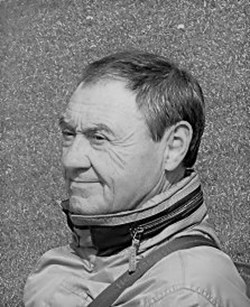
Silvère Mansis
(10.9.1944 - 22.4.2018)
foto © Dirck Brysse
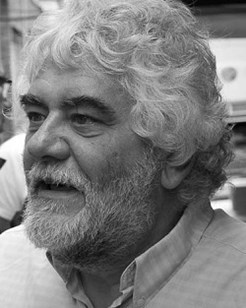
Rik Bevernage
(19.4.1954 - 6.3.2018)
foto © Stefe Jiroflée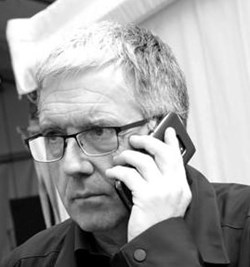
Philippe Schoonbrood
(24.5.1957-30.5.2020)
foto © Dominique Houcmant
Claude Loxhay
(18.2.1947 – 2.11.2023)
foto © Marie Gilon
Pedro Soler
(8.6.1938 – 3.8.2024)
foto © Jacky Lepage
Sheila Jordan
(18.11.1928 – 11.8.2025)
foto © Jacky Lepage
Raúl Barboza
(22.5.1938 - 27.8.2025)
foto © Jacky Lepage
Special thanks to our photographers:
Petra Beckers
Ron Beenen
Annie Boedt
Klaas Boelen
Henning Bolte
Serge Braem
Cedric Craps
Luca A. d'Agostino
Christian Deblanc
Philippe De Cleen
Paul De Cloedt
Cindy De Kuyper
Koen Deleu
Ferdinand Dupuis-Panther
Palma Fiacco
Anne Fishburn
Federico Garcia
Jeroen Goddemaer
Robert Hansenne
Serge Heimlich
Dominique Houcmant
Stefe Jiroflée
Herman Klaassen
Philippe Klein
Jos L. Knaepen
Tom Leentjes
Hugo Lefèvre
Jacky Lepage
Olivier Lestoquoit
Eric Malfait
Simas Martinonis
Nina Contini Melis
Anne Panther
France Paquay
Francesca Patella
Quentin Perot
Jean-Jacques Pussiau
Arnold Reyngoudt
Jean Schoubs
Willy Schuyten
Frank Tafuri
Jean-Pierre Tillaert
Tom Vanbesien
Jef Vandebroek
Jean-Marie Vandelannoitte
Geert Vandepoele
Guy Van de Poel
Cees van de Ven
Donata van de Ven
Maurits van Hout
Harry van Kesteren
Geert Vanoverschelde
Roger Vantilt
Patrick Van Vlerken
Marie-Anne Ver Eecke
Karine Vergauwen
Frank Verlinden
Jan Vernieuwe
Anders Vranken
Didier Wagner
and to our writers:
Mischa Andriessen
Robin Arends
Marleen Arnouts
Werner Barth
José Bedeur
Henning Bolte
Paul Braem
Erik Carrette
Danny De Bock
Denis Desassis
Jean-Pierre Devresse
Pierre Dulieu
Ferdinand Dupuis-Panther
Federico Garcia
Paul Godderis
Stephen Godsall
Jean-Pierre Goffin
Claudy Jalet
Chris Joris
Bernard Lefèvre
Mathilde Löffler
Claude Loxhay
Ieva Pakalniškytė
Anne Panther
Etienne Payen
Quentin Perot
Jacques Prouvost
Jempi Samyn
Renato Sclaunich
Yves « JB » Tassin
Herman te Loo
Eric Therer
Georges Tonla Briquet
Henri Vandenberghe
Jean-Jacques Vandenbroucke
Peter Van De Vijvere
Iwein Van Malderen
Jan Van Stichel
Olivier Verhelst