Morgenland Festival 2026
May 30,31, June 1, Osnabrück diverse venues
Context
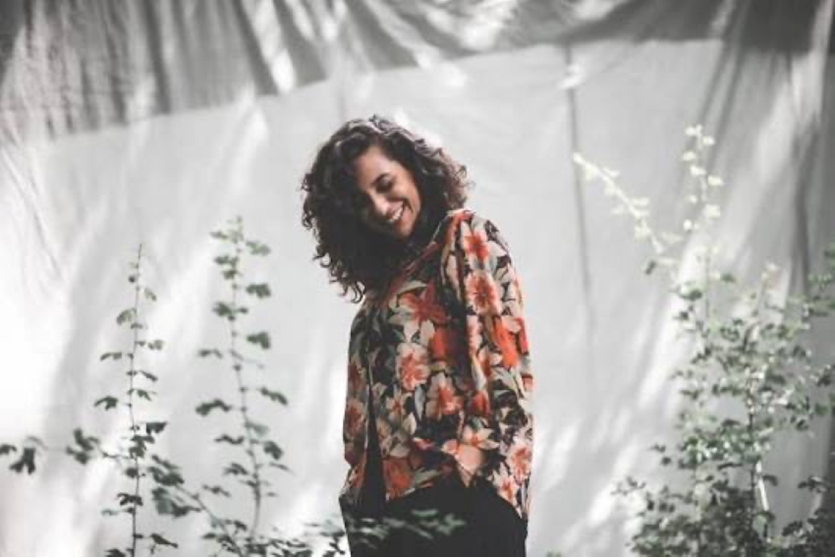
Shabnam Parvaresh
The Morgenland-Festival/Oriental-Festival of the Northern German town of Osnabrück founded in 2005 and lead by Michael Dreyer, is now in its 22nd year and its artistic direction has passed now into the hands of Shabnam Parvaresh, an Osnabrück inhabitant and young musicienne and fine artist of Iranian origin (for her musicianship see my review of her Sheen Trio HERE). This year’s edition was her impressing premiere where she put down a clear and courageous future oriented artistic profile with a focus on “Voices of Diaspora”. The festival is characterized by its multidisciplinarity, encom-passing dance and visual arts alongside music, and its genre-independent, development-oriented approach. This review covers three of the 9 festival days and five of the 20 performances.
These three days included performances by Sanem Kalfa Miraculous Layers, Tania Giannouli Trio, Saba Alizadeh & Pietro Caramelli, Joolaee Trio feat. Golnar Shahyar, Babak Radmehr “Friedensschritte”, Kit Downes & Shiva Feshareki, Ensemble Musikfabrik.
There are three steps in the meeting with musical universes of the orient: meeting and getting acquainted (1), confrontation with musical crossover (2), immersion into new forms of (creation of) music (3). All attended performances could be preeminently considered as appearances of (3). Concept and atmosphere coincided to a high degree, enabling a high quality of the unfolding of daring music making as well as rich, colourful and thrilling, captivating experience for the audience.
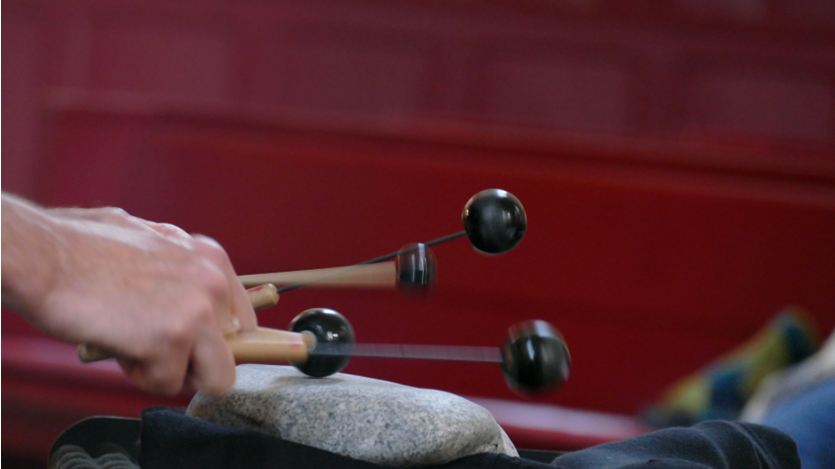
Dirk Rothbrust, Musikfabrik
Ways of live performing
The concerts not only had a great variety of musical sources to dig in, to use and to transform. There were also different ways of live performing pieces of music. Broadly speaking, we can distinguish between three approaches: the more deductive approach (A), the more inductive approach (B) and the real-time creation approach (C).
A. starts from a firmly pre-structured, through-composed frame-work to render it in the purest possible and best and strongest sounding quality and especially most adequate dynamics and good timbre realisable in the performance situation and personal mood/temperature
B. starts from a sphere sensitive sounds and movements to find a context-specific way into a pre-conceived piece and enters a playful circling around piece’s themes. It is quite an art to do it so, that strength, power and beauty of a theme every time shine surprisingly and in a new light.
C. relies on the real-time creation, à l’improviste, of a piece during and through the performance.
The proportion of improvised parts increases from A to C. Sanem Kalfa’s Miraculous Layers practised (B) while Tania Giannouli’s Trio and the Joolaee Trio tended more to practising A. Turntablist Shiva Feshareki and her organ-playing partner tended strongly to (B) and partly (C). The constellations of Musikfabrik performed five through-composed pieces in the (A)-approach.
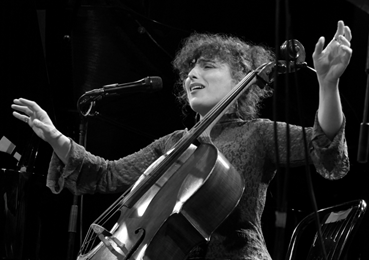
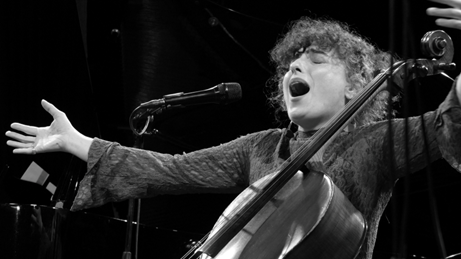
Sanem Kalfa
Sanem Kalfa
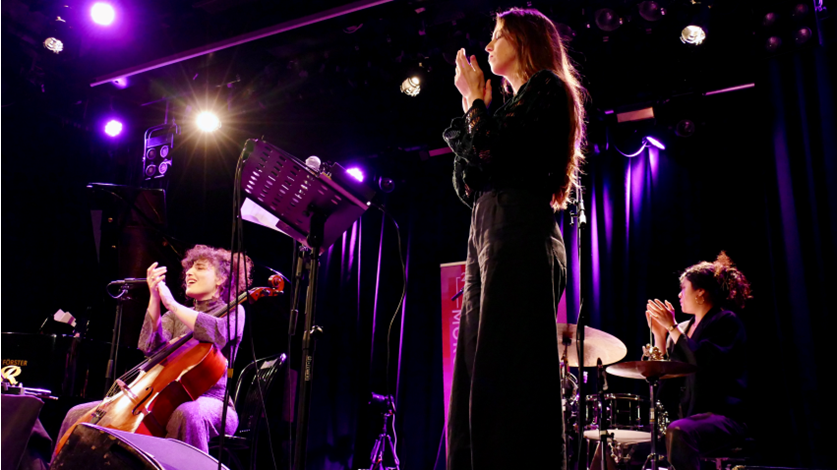
Miraculous Layers
The (B)-approach is deeply anchored in Sanem Kalfa’s (and her fellow musicians’) performance practice in the group Miraculous Layers comprising Marta Warelis (p), Liva Dumpe (voc), Sun-Mi Hong (dr), a group musiciennes from Amsterdam of Turkish, Polish, Lettone and Korean origin.
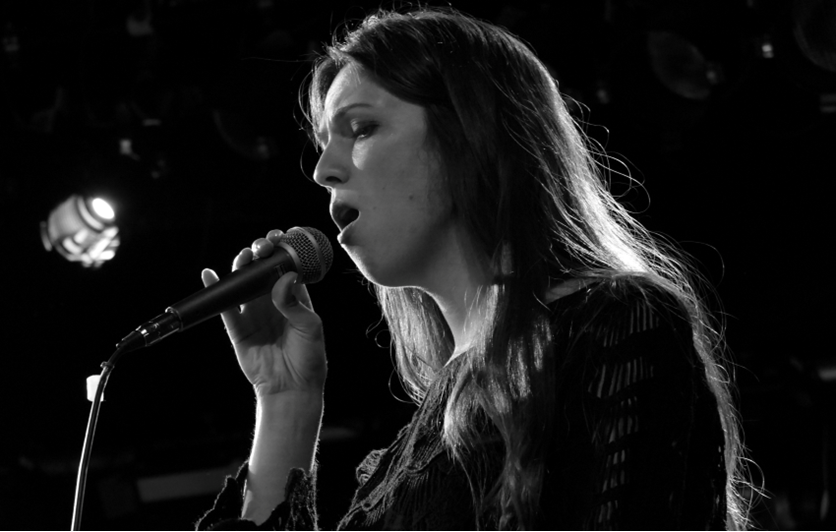
Liva Dumpe
They are completely in their element, totally absorbed in it. Through this enrichment not only new elements enter but fixed elements sound differently, have a closer impact to the listeners, to the audience. The interaction within the group possessed a kind of intuitive intensity that was difficult to grasp or predict, but infallibly felt. A hidden energy was released - in its very own permanence.
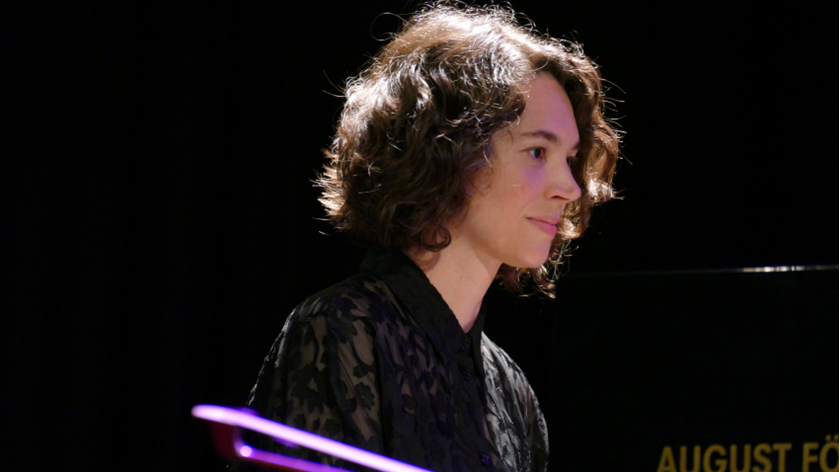
Marta Warelis
This kind of unfolding of Miraculous Layers’ charming music laid the ground from which all of a sudden a totally stunning, breathtaking solo of excellent pianist Marta Warelis bursted. And this is an understatement of what happened at that moment. The Osnabrücker Zeitung wrote :
“Warelis plays a thunderous solo of full-bodied chords; her solo is like an explosion the Morgenland Festival has never seen with such intensity – and the lineup of superb pianists, from Florian Weber to Salman Gambarow to Tigran Hamasyan, is truly impressive. Drummer Sun Mi Hong complements this with her complex and confident playing and thunderous breaks, and overall, this quartet, with its epic storytelling, already marks a highlight of this year's festival – and one of its history.”
I have seen Marta Warelis playing many many times but this was indeed an unparalleled highlight which crowned the profound as playful music of the group. Kalfa’s playfulness goes hand in hand with effortlessness.
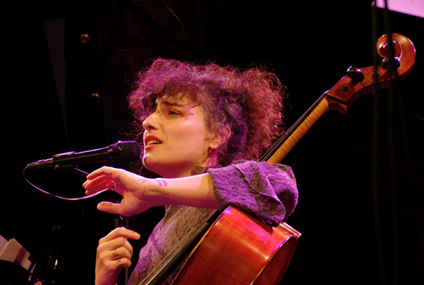

Sanem Kalfa
When Kalfa performs, she more and more alights everydayness in an elusive way and at the same time seems to connected to the fragility and volatility of daily life. This mode of being is not something instant but something prospering in and through the fearless and effortless unfolding of her bodily vocalising - a result of a long living in and through sound(making). She doesn’t play something but ‘IS’ the playing. It seems she is from a different planet but also closely connected to earthy affaires.
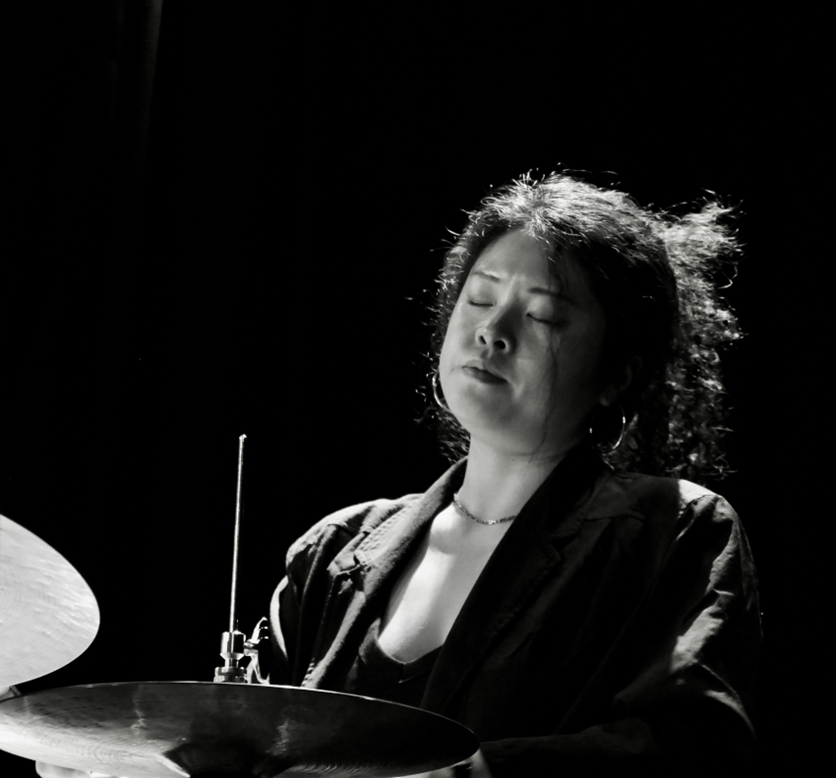
Sun-Mi Hong
Oh, and where is it all coming from, what unifies and merges in her performances? To pinpoint it, is like catching one’s own shadow. In her case a folk song and an experimental piece have similar ingredients witness her recent solo album “If A Tree Falls In The Forest And No One Is Around To Hear It , Does It Make A Sound?” released on the Norwegian label Sonic Transmissions (see my review HERE).
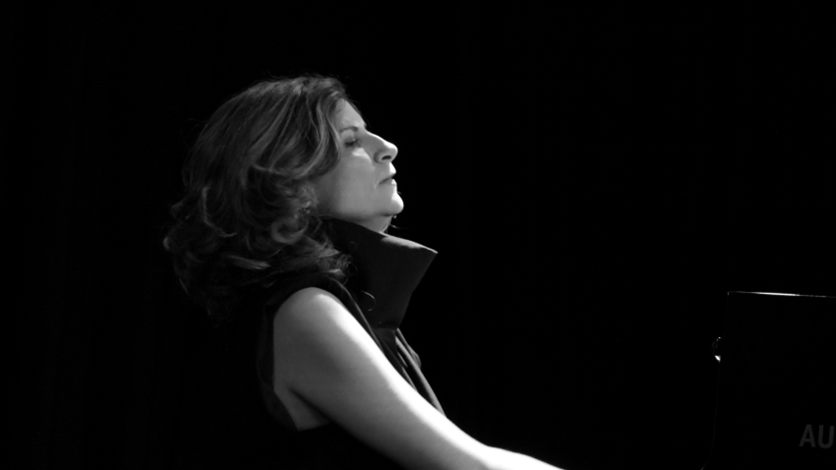
Tania Giannouli
Tania Giannouli
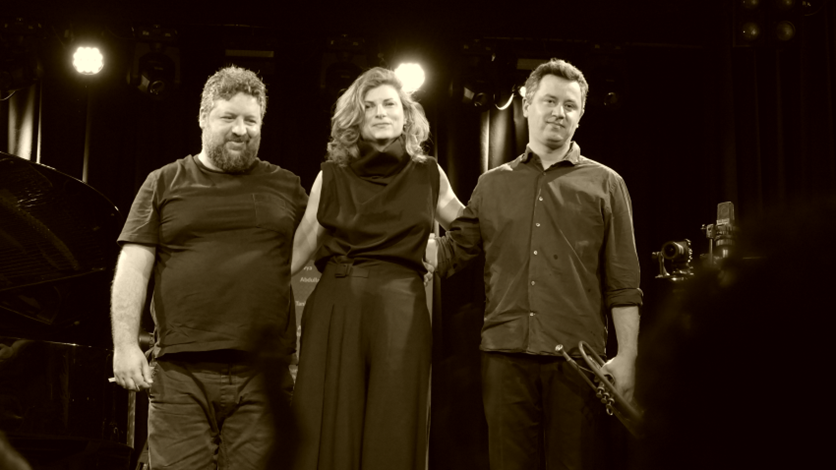
Tania Giannouli’s Trio
The trio of Greek pianist and composer Tania Giannouli with oud played by Kyriakos Tapakis from Athens and trumpet played by Jean-Paul Estiévenart from Brussels has a unique instrumentation. It’s an ideal vehicle for her profound compositions. She is a musician with a strong inner and outer rhythm and her music making has the elegance of classical masters as Ravel or Stravinsky permeated by a Byzantine shimmering and instilled by the rhythmic intensity of oriental music and even by rock music.
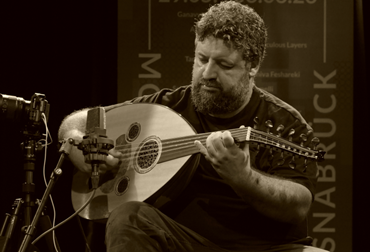
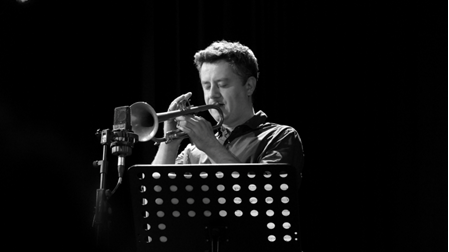
Kyriakos Tapakis & Jean-Paul Estiévenart
It is not music cobbled together from a diversity of sources, but music that has been grasped and shaped in its unique gestalt and dynamic wholeness. It's cast in one piece. This wholeness demands more an (A)-approach in the live performance. Variability manifested itself in the textural design, in emphasis, tempo and temperature. In this trio she only plays her own compositions. It’s different in her duos with Swiss pianist Nik Bärtsch and Norwegian trumpeter Nils-Petter Molvær. Her music impacts deeply on the mood side and speaks strongly to the imagination of listeners. In her forceful rhythmic playing she paired a certain rigidity with a high degree of passion and fire. She offered a very compact , original and cohesive concert with radiant oud sounds and a lyrical, rounding influence of Estiévenart's trumpet sound - no double-bass and drums/percussion needed here to transport and convey the full essence.
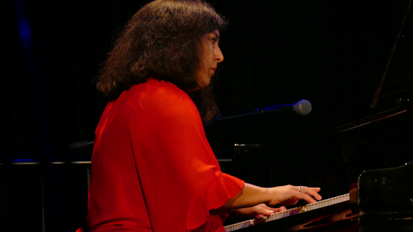
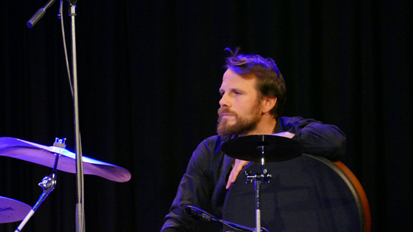
Schaghajegh Nosrati & Sebastian Flaig
Misagh Joolaee
The concert of kemenche player Misagh Joolaee was indeed astonishing. Because? Because it went beyond expectations. Because ‘everything’ fell into place surprisingly smoothly, and at the same time it turned out to be something really new. The three musicians of this trio, Misagh Joolaee (kemenche), Schaghajegh Nosrati (piano) and Sebastian Flaig (1983) (percussion), bring in a diversity of backgrounds and influences in their effort to over- come and leave behind the artificial separation of East and West.
Schaghajegh Nosrati (1989), born in Bochum, Germany, to Iranian parents, is a classical music heavy weight and internationally renowned Bach specialist (see her biography HERE).
But (how) does it work? Is it ultimately neither one nor the other? Or is it sometimes this and then sometimes that? Or is it something strangely bent or distorted? We know about the centuries-long migration of music around the world and we know that we often don’t know very well where certain songs and musical pieces originally are coming from. This long term ‘natural’, mostly subconscious process is nowadays done in a conscious, purposeful way.
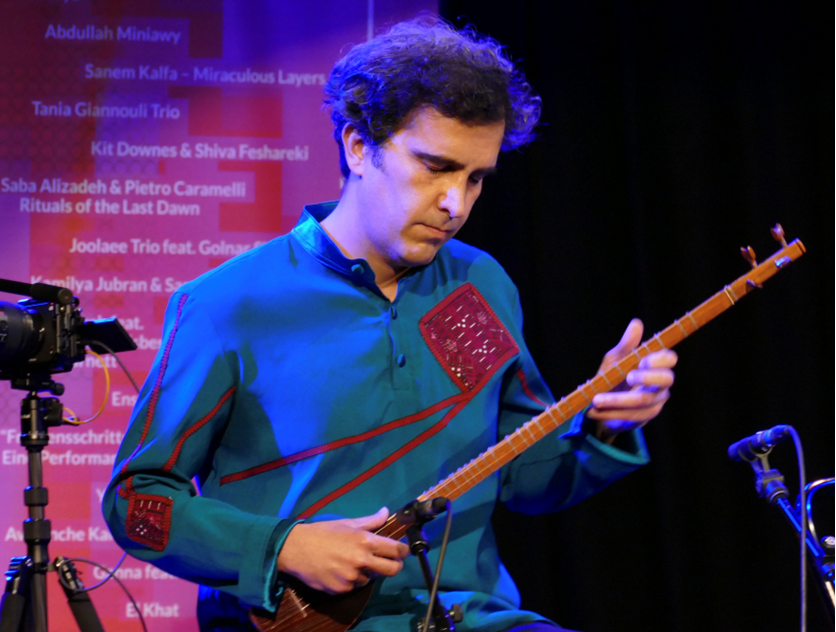
Misagh Joolaee
My impression of the coming together of heterogeneous elements became more nuanced as listening to their music progressed. Elements from both, Eastern and Western side, sounded differently in that context. How and where did hey shift?
I recognised a mirroring process meaning that elements from one side were mirrored in elements of the other side vice versa. No idea, if that was something musicians or composer did intentionally or only i did it because the music triggered it or gave me the opportunity to do it (often listeners hear something that is really played). Astonishing was that the music as a whole had a quite natural flow and simultaneously triggered/allowed some kind of ‘meta-listening’. It also made accessible and enjoyable favourite sounds and dynamics. In short, it was a rich, rewarding and challenging musical experience.
For a deeper dive into transcultural music making I recommend a video-lecture by Iraqui-American musician Amir ElSaffar for the Knox College :
In the second part of the concert vocalist and multi-instrumentalist Golnar Shahyar (1985) from Vienna joined the trio with her strong voice and versatile vocals. Next to Iranian song sources she brought a flexible jazz spirit to the table. Shahyar, already a known guest at Morgenland Festival, is a lernschnell individual, operating and developing on a broad musical field and meanwhile sternly positioned (to get more insight in it, see the truly astonishing interview with her here in JAZZHALO). She possesses a powerful assertive voice that she can easily send into both brighter, high registers as well darker, low registers. The vocals enriched the trio’s music in exquisite way. Their first album “Morgenwind” (1924) earned the prestigious Preis per Deutschen Schallplattenkritik.
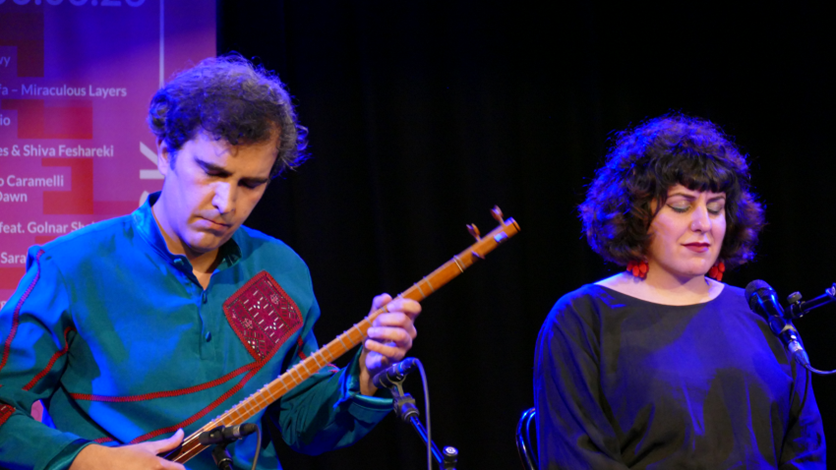
Misagh Joolaee & Golnar Shahyar
A Conversation with Golnar Shahyar
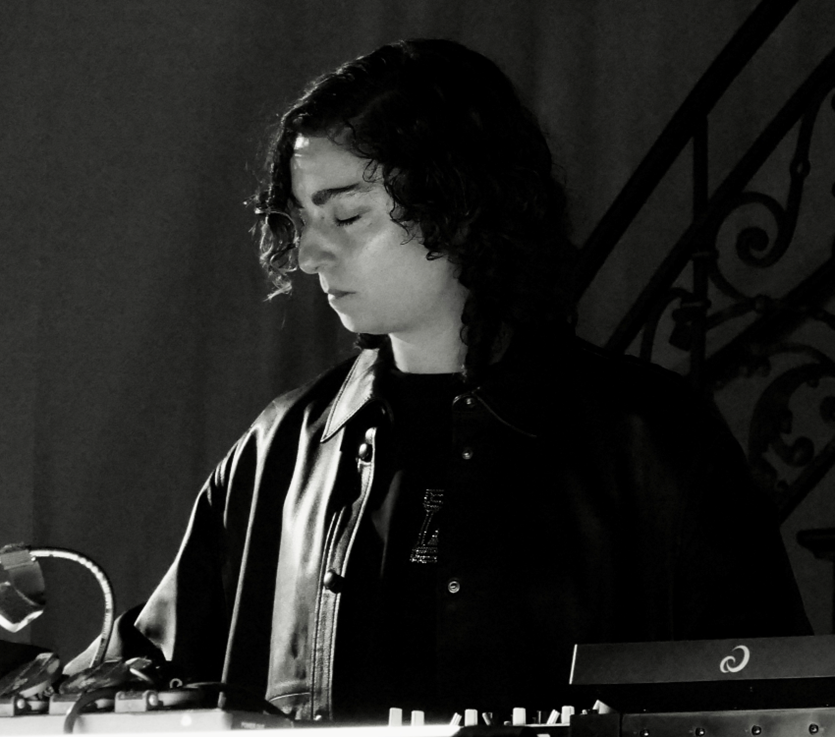
Shiva Feshareki
Shiva Feshareki
Shiva Feshareki (1987) is a composer and turntablist from London. She was programmed for a duo performance with Kit Downes at the organ of the Bergkirche in Osnabrück. Due to sickness Kit Downes had to cancel on very short term but Downes and the festival succeeded in getting young German Berlin pianist Sandro Sáez (1998) as sub.
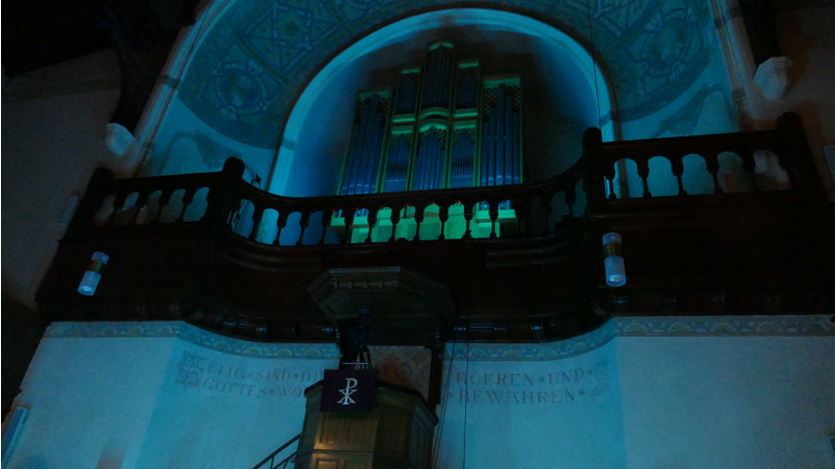
Orgel Bergkirche Osnabrück
I was fascinated by the physicality of the sounds and noises Feshareki swirled into space piercing the huge church dome with its sharp, flickering flashes accompanied by the sliding sounds of the organ stops and the piping. It raised experiencing the church space to a higher, dynamic-incantational quality. It was an intense immersing affair that also presented me with some puzzles.
It started with the introduction of Feshareki as composer contemporary classical music and turntablist, not a common combination. On the one hand, I surrendered to the emerging sounds she generated and immersed myself in them. On the other hand, I also tried to observe and understand how she created these sound crashes and sound flashes with her turntabling mostly with eyes closed. I sat ‘to low’ to see en detail how she operated with the turntables on her podium worktop.
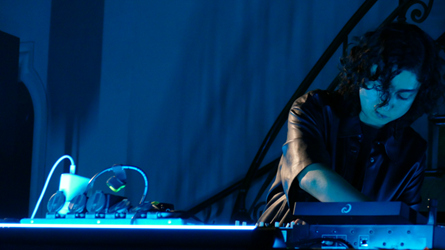
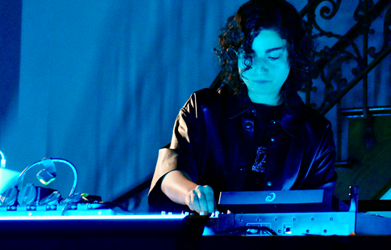
Shiva Feshareki
It is interesting to get to know more about how turntabling got into that central place in her music making and how it relates to contemporary composership. She discovered that the first time that a turntable was used in contemporary music was in 1949 by English electronic pioneer Daphne Oram (1925-2003). From her short description of her turntable practise it is clear that you can’t see or observe everything during a performance and that it is not coming so much from ordinary electronics.
“My turntabling practice can be described as a manipulation of pre-recorded sound to create new gestural movements and textures not always apparent in the record being manipulated. I often modify and prepare the turntables using sculptures that use the electricity, magnetism and circulation of the turntables to create sound and shapes.”
This way of working stems from early personal fascination and continuous development.
“I have been working closely with turntables within an experimental classical context since I was a teenager. I love the physicality and movement of the records and how that affects how I manipulate sounds and how I relate to other instrumentalists. It is so intricate and expressive in comparison to other ways of achieving electronic manipulation. I was working quite independently on this, as I chose not to acknowledge DJ-ing or dance music culture at first, until I had refined my practice the way I wanted to as an experimental classical composer.”
Her way of using sampling is clearly a case of the (B)-approach to live performance
“Sampling is an important part of my compositional practice as it allows me to give a respectful nod to history. At the same time, the samples within one piece of my music can be ever-changing depending on performance context, performer or the time in which the piece is being performed: This means the same composition is always moving and evolving with time and people, and has a specific meaning to that moment in time or that occasion.”
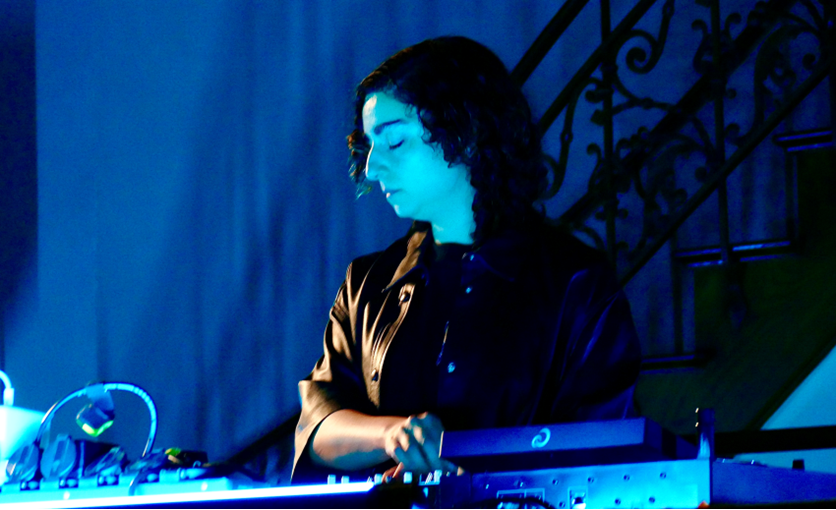
Shiva Feshareki
Sound and space experience are mutually dependent.
It reminded me of a prehistoric experiment by a group around Hermeto Pascoal, who transformed a cave room through musical use of the stalactites there. Acoustic archeological research recently found that locations in caves with strong acoustics were marked in the rocks, markings that couldn’t be explained hitherto. Transforming and conjuring spatial experience was therefore practiced already in prehistoric times.
It was then quite something to experience in such a trenchant way the physical sound forces of her music making in transforming the Bergkirche church space as an immersive music happening..
Ensemble(s) Musikfabrik
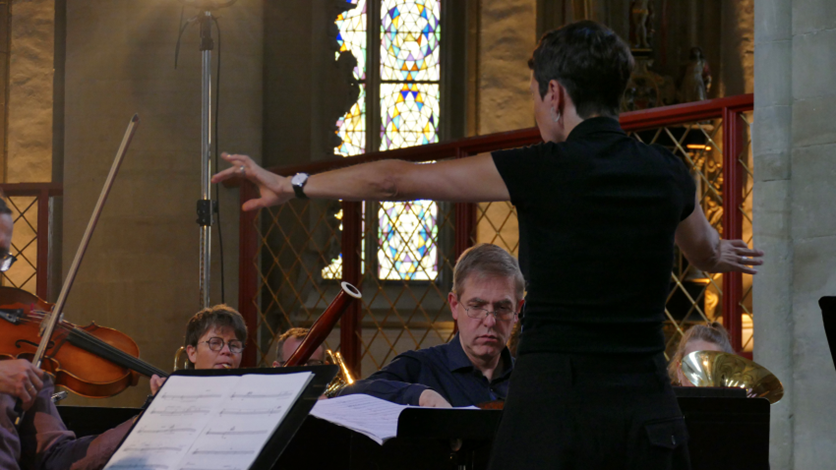
Ensemble Musikfabrik conducted by Susanne Blumenthal
While Feshareki reached into cutting edge territory with her performance established Musikfabrik from Cologne curated an own program for its appearance and dug into three more Iranian composers Farzia Fallah (1980) from Cologne, Shayan Gorzin (2007) from Graz and Mazyar Kashia, also from Cologne, presented together with work of Malika Kishino (1971), a female Japanese composer from Cologne, and Violeta Dinescu (1953), a Romanian composer from Oldenburg. Their works were performed in different line-ups of the Musikfabrik ensemble in the St. Marien church:
Malika Kishino “Nox” (Gold and Silver) II for hobo, clarinet and String Quartet (2023)
Mayzar Kashian “Rondo de Facto” for Kieselstein/pebble solo (2020) - performed by Dirk Rothbrust
Shayan Gorzin “Spannungsfeld” for Brass Quartet (2026)
Farzia Fallah “I did not paint the war, I lived the war - one Aubade” (2025) - conducted by Susanne Blumenthal
Violetta Dinescu “Cime lointaine” (1990) - Peter Veale (hobo)
It was a demanding program of processual music, implemented at a high level with great precision and vibrancy.
Personally the most impression made on me the piece by Farzia Fallah. See the film portrait of her. The piece will go for performances to New York, Warsaw (September) and Amsterdam (October 2).
As exciting and good as I found the performances in St. Marien, for this piece of Fallah I would have wished for a different, rougher, more barren location and environment for the performance, in which the very special sounds and their development could have come out even more strongly, directly and intimately, into the face and on the skin of the audience.
Ausklang/Fazit
These three days of the festival clearly manifested and demonstrated the focus on "Diaspora," which continued throughout the rest of the festival. I was already familiar with a couple of Iranian musicians, but after visiting Morgenland, it became clear that Iranian musicians in Germany, Austria, United Kingdom or Netherlands (I think Belgium too) were not isolated personalities, but rather that there are strong connections and interactions among them. They are musicians and composers who all have strong ambitions, often operate at the forefront of the musical scene and development, and are all clearly committed to constructive cultural dialogue. They do this both subtly (avoiding exoticism ornamentation) and decisively. This is miles away from the multiculti syndrome. The three festival days showed a multitude of modes and ways to develop new forms of creative music with intercultural elements absorbed, woven in or colouring each other and without imitation and without loss of substance.
High degrees of originality, authenticity, and personality permeated the individual acts. And, the excellent quality of the daily video coverage of the festival on social media should not go unmentioned. This is attributable to the individual musicians/group as well as the festival’s media crew and the quality of the curatorial work of Shabnam Parvaresh. She was an interested, patient, and enthusiastic observer in herself also before she took this curatorial task and she succeeded to use this gift to bring musicians and audiences together in a continuously animated sphere. With its transcultural modus operandi Morgenland Festival is a radiating event delivering a quite relevant musical as well cultural contribution.
The city of Osnabrück is fortunate to host such an extraordinary festival. The ‘morgen’ in the festival's title can therefore rightly be understood also in the sense of ‘music of/for tomorrow’.
Text and photography © Henning Bolte, Amsterdam
Other
In case you LIKE us, please click here:

Foto © Leentje Arnouts
"WAGON JAZZ"
cycle d’interviews réalisées
par Georges Tonla Briquet

our partners:






Luchthavenvervoer zonder stress
Hotel-Brasserie
Markt 2 - 8820 TORHOUT
Silvère Mansis
(10.9.1944 - 22.4.2018)
foto © Dirck Brysse
Rik Bevernage
(19.4.1954 - 6.3.2018)
foto © Stefe Jiroflée
Philippe Schoonbrood
(24.5.1957-30.5.2020)
foto © Dominique Houcmant
Claude Loxhay
(18.2.1947 – 2.11.2023)
foto © Marie Gilon
Pedro Soler
(8.6.1938 – 3.8.2024)
foto © Jacky Lepage

Sheila Jordan
(18.11.1928 – 11.8.2025)
foto © Jacky Lepage
Raúl Barboza
(22.5.1938 - 27.8.2025)
foto © Jacky Lepage
Special thanks to our photographers:
Petra Beckers
Ron Beenen
Annie Boedt
Klaas Boelen
Henning Bolte
Serge Braem
Cedric Craps
Luca A. d'Agostino
Christian Deblanc
Philippe De Cleen
Paul De Cloedt
Cindy De Kuyper
Koen Deleu
Ferdinand Dupuis-Panther
Palma Fiacco
Anne Fishburn
Federico Garcia
Jeroen Goddemaer
Robert Hansenne
Serge Heimlich
Dominique Houcmant
Stefe Jiroflée
Herman Klaassen
Philippe Klein
Jos L. Knaepen
Tom Leentjes
Hugo Lefèvre
Jacky Lepage
Olivier Lestoquoit
Eric Malfait
Simas Martinonis
Nina Contini Melis
Anne Panther
France Paquay
Francesca Patella
Quentin Perot
Jean-Jacques Pussiau
Arnold Reyngoudt
Jean Schoubs
Willy Schuyten
Louise Stubbe
Frank Tafuri
Jean-Pierre Tillaert
Tom Vanbesien
Jef Vandebroek
Jean-Marie Vandelannoitte
Geert Vandepoele
Guy Van de Poel
Cees van de Ven
Donata van de Ven
Maurits van Hout
Harry van Kesteren
Geert Vanoverschelde
Roger Vantilt
Patrick Van Vlerken
Marie-Anne Ver Eecke
Karine Vergauwen
Frank Verlinden
Jan Vernieuwe
Anders Vranken
Didier Wagner
and to our writers:
Mischa Andriessen
Robin Arends
Marleen Arnouts
Werner Barth
José Bedeur
Henning Bolte
Paul Braem
Erik Carrette
Danny De Bock
Denis Desassis
Jean-Pierre Devresse
Pierre Dulieu
Ferdinand Dupuis-Panther
Federico Garcia
Paul Godderis
Stephen Godsall
Jean-Pierre Goffin
Claudy Jalet
Chris Joris
Bernard Lefèvre
Mathilde Löffler
Claude Loxhay
Ieva Pakalniškytė
Anne Panther
Etienne Payen
Quentin Perot
Jacques Prouvost
Jempi Samyn
Renato Sclaunich
Yves « JB » Tassin
Herman te Loo
Eric Therer
Georges Tonla Briquet
Henri Vandenberghe
Jean-Jacques Vandenbroucke
Peter Van De Vijvere
Iwein Van Malderen
Jan Van Stichel
Olivier Verhelst